Nikhil Prasad Fact checked by:Thailand Medical News Team Apr 20, 2026 5 months, 2 weeks, 3 hours, 47 minutes ago
Medical News: A growing body of scientific evidence is shining a spotlight on an unconventional approach to cancer care—using diet to influence how tumors grow and respond to treatment. A newly published scientific review is now exploring how the ketogenic diet, a high-fat, very low-carbohydrate eating plan, could play a role in slowing lung cancer progression and improving treatment outcomes.
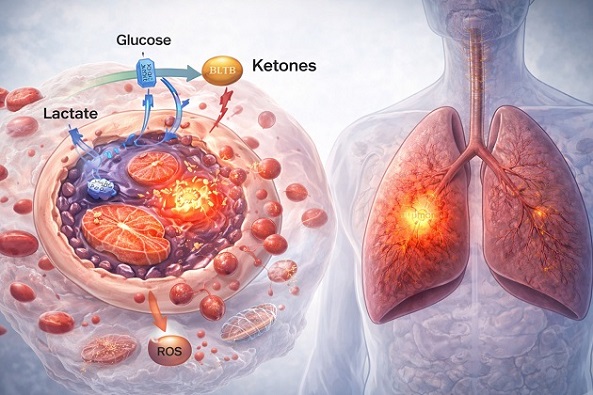 Low-carb ketogenic diets may disrupt tumor energy supply and enhance cancer treatment response
Understanding Cancer’s Sugar Addiction
Low-carb ketogenic diets may disrupt tumor energy supply and enhance cancer treatment response
Understanding Cancer’s Sugar Addiction
Cancer cells behave very differently from normal cells when it comes to energy use. Instead of efficiently producing energy, they rely heavily on glucose, a phenomenon known as metabolic reprogramming. This process allows tumors to grow rapidly, survive under stress, and resist treatments.
The ketogenic diet aims to disrupt this dependency by drastically reducing carbohydrate intake. With less glucose available, the body shifts to producing ketones from fat, forcing cells to use a different energy source. While healthy cells adapt well to this shift, cancer cells often struggle, potentially slowing their growth.
How the Diet May Impact Tumors
Researchers found that limiting glucose may interfere with several cancer-promoting processes. Reduced sugar levels can lower insulin and growth signals that tumors rely on. At the same time, the buildup of ketones may increase oxidative stress within cancer cells, making them more vulnerable to damage.
The diet may also influence the tumor microenvironment. High levels of lactate, a byproduct of cancer metabolism, help tumors spread and evade the immune system. Evidence suggests that ketogenic diets can reduce lactate production, potentially weakening these defenses.
Evidence from Laboratory and Early Studies
Preclinical studies using lung cancer models have shown encouraging results. In animal experiments, ketogenic diets reduced tumor size, slowed growth, and enhanced the effects of radiation and chemotherapy. Some findings suggest that combining the diet with standard treatments increases oxidative damage within tumors, making therapies more effective.
Small clinical observations have also hinted at potential benefits. A few patients with advanced lung cancer who followed a strict ketogenic regimen experienced prolonged disease stability. However, these cases remain rare and cannot yet be generalized.
Challenges in Real Patients
Despite promising biological mechanisms, applying the ketogenic diet in real-world cancer care is not straightforward. Many lung cancer patients already struggle with weight loss and malnutrition. Strict dietary restrictions can worsen these issues if not carefully managed.
Adherence is another major challenge. Studies show that many patients find the diet difficult to maintain due to its restrictive nature and side effects like fatigue or digestive discomfort. In one clinical trial, only a small fraction of participants were able to complete the dietary intervention.
Expert
Caution and Clinical Reality
This
Medical News report highlights that while the ketogenic diet shows potential as a supportive strategy, it is not a replacement for conventional treatments. Experts emphasize that any dietary intervention must be supervised by healthcare professionals to avoid complications and ensure proper nutrition.
Currently, major oncology guidelines do not recommend ketogenic diets as standard care for lung cancer. More large-scale clinical trials are needed to determine who might benefit most and how the diet can be safely integrated into treatment plans.
Institutions Behind the Research
The study involved researchers from multiple institutions including the General Hospital of Thessaloniki “G. Papanikolaou,” General Hospital of Thessaloniki “Ippokrateio,” University of Thessaly, Hellenic Mediterranean University, Aristotle University of Thessaloniki, and associated clinical and research units in Greece.
Conclusion
The ketogenic diet represents an intriguing frontier in cancer research, offering a metabolic approach to weakening tumors. While laboratory and early clinical findings are promising, the evidence remains incomplete. The complexity of cancer biology, combined with challenges in patient adherence and nutritional risks, means that this strategy must be approached cautiously. Future research will be critical in determining whether ketogenic therapy can move from experimental concept to a practical tool in lung cancer care, and if so, which patients are most likely to benefit.
The study findings were published in the peer reviewed journal: Cancers.
https://www.mdpi.com/2072-6694/18/8/1279
For the latest cancer research, keep on logging to Thailand
Medical News.
Read Also:
https://www.thailandmedical.news/articles/cancer
https://www.thailandmedical.news/articles/diets-and-nutrition




 Share
Share
 Tweet
Tweet
 Share
Share

































