Nikhil Prasad Fact checked by:Thailand Medical News Team Apr 29, 2026 5 months, 5 days, 15 minutes ago
Medical News: Celiac disease has traditionally been viewed as a digestive disorder triggered by gluten, but a new study is reshaping that understanding in a dramatic way. Scientists have discovered that the condition may cause widespread cellular damage throughout the body—even in areas far removed from the gut and even in patients strictly following a gluten-free diet.
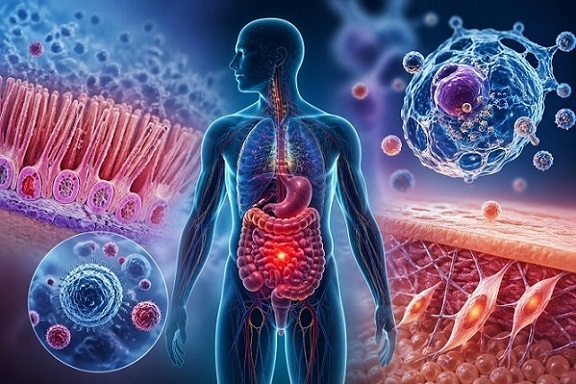 Researchers uncover widespread cellular damage beyond the gut in celiac disease patients
Looking Beyond the Gut
Researchers uncover widespread cellular damage beyond the gut in celiac disease patients
Looking Beyond the Gut
Celiac disease affects roughly 1 percent of the global population and is typically associated with intestinal inflammation and digestive symptoms. However, researchers are now recognizing that the disease is far more complex and may involve long-lasting changes at the cellular level across multiple tissues.
In this study, scientists focused on dermal fibroblasts—cells taken from the skin of celiac patients. These cells are not directly exposed to gluten and are distant from the intestines, making them ideal for studying underlying biological abnormalities that are not driven by active inflammation.
The research was conducted by scientists from the University of Salerno, the University of Sannio, Federico II University Hospital, the European Laboratory for the Investigation of Food-Induced Diseases (ELFID), and the University of Naples Federico II, all based in Italy.
Massive Protein Changes Detected
Using advanced mass spectrometry techniques, researchers analyzed over 3,200 proteins within these skin cells. They identified 177 proteins that behaved differently in celiac patients compared to healthy individuals. Specifically, 78 proteins were found at higher levels, while 99 were reduced.
These proteins were not random. Many were involved in critical cellular functions such as stress response, structural organization, and communication between cells. The findings suggest that celiac disease fundamentally alters how cells function, even outside the digestive system.
The study also examined phosphorylated proteins—those that have been chemically modified in ways that affect their activity. Out of more than 800 such proteins identified, 26 showed significant differences in celiac cells, pointing to disruptions in key signaling pathways.
Persistent Cellular Abnormalities
One of the most striking discoveries was that these changes were present in patients who had been on a gluten-free diet for several years. This indicates that celiac disease leaves behind a lasting cellular signature that does not simply disappear when gluten is removed from the diet.
A key enzyme linked to celiac disease, type 2 transglutaminase (TG2), was found at lower levels in the affected cells. At the same time, its functional regulation appeared altered due to differences in phosphorylation. This could influence inflammation, cellular stress responses, and immune signaling.
This
Medical News report highlights
that such persistent abnormalities may explain why some patients continue to experience complications or extraintestinal symptoms despite strict dietary control.
Disruption of Cellular Systems
The study revealed major disturbances in vesicular trafficking—the process cells use to transport materials internally. Proteins associated with extracellular vesicles, including exosomes, were significantly altered, suggesting impaired communication between cells.
Researchers also observed disruptions in calcium balance, protein folding mechanisms, and autophagy, the system cells use to remove damaged components. These processes are essential for maintaining cellular health, and their dysfunction can lead to chronic stress and inflammation.
Changes were also found in proteins responsible for maintaining cell structure, particularly those linked to the cytoskeleton. This may explain previously observed abnormalities in the shape and behavior of cells from celiac patients.
A Shift in Understanding
These findings reinforce the idea that celiac disease is not just a reaction to gluten but a condition involving deep-rooted cellular dysfunction. The alterations seen in skin cells—far removed from the intestine—highlight how widespread the disease’s effects can be.
The researchers believe that these protein patterns could serve as a molecular signature of celiac disease, potentially opening the door to new diagnostic tools and treatments that go beyond dietary management.
Conclusion
The study provides compelling evidence that celiac disease affects the body at a fundamental cellular level, extending far beyond the digestive tract. Even in patients who strictly avoid gluten, persistent abnormalities in protein expression, signaling pathways, and cellular maintenance systems remain. These findings suggest that managing celiac disease may require more than dietary changes alone. Future research could lead to therapies that directly target these underlying cellular disruptions, offering hope for better long-term outcomes and improved quality of life for patients worldwide.
The study findings were published in the peer reviewed International Journal of Molecular Sciences.
https://www.mdpi.com/1422-0067/27/9/3938
For the latest on Celiac Disease news, keep on logging to Thailand
Medical News.
Read Also:
https://www.thailandmedical.news/articles/gastroenterology




 Share
Share
 Tweet
Tweet
 Share
Share

































