Nikhil Prasad Fact checked by:Thailand Medical News Team Apr 14, 2026 5 months, 2 weeks, 6 days, 28 minutes ago
Medical News: Why current treatments are failing patients
Glioblastoma remains one of the deadliest forms of brain cancer, with most patients experiencing tumor recurrence even after aggressive treatment. Standard care typically includes surgery followed by radiation and chemotherapy, yet survival outcomes remain poor and relapse is almost inevitable.
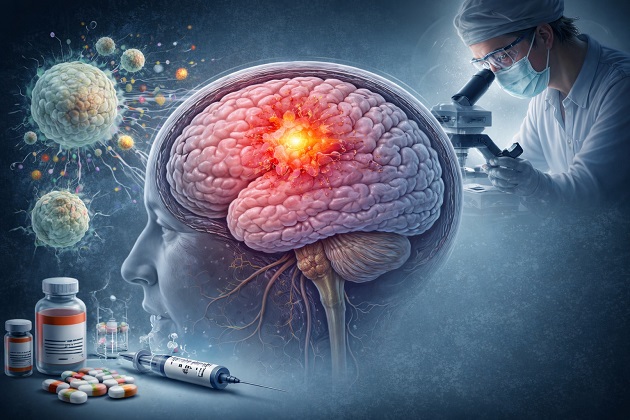 New research shows eliminating dormant cancer cells could prevent deadly brain tumor relapse
A new scientific review by researchers from the Department of Medical and Surgical Sciences and the Department of Clinical and Experimental Medicine at the University Magna Graecia of Catanzaro in Italy, along with the University of Calabria in Italy, reveals a critical reason why current therapies fail to deliver lasting results.
The study highlights that while conventional treatments are effective at damaging tumor cells, they often do not eliminate them completely. Instead, many cancer cells enter a dormant but active state known as therapy-induced senescence.
The dangerous double-edged nature of senescence
Senescence was once believed to be beneficial because it stops damaged cells from dividing. However, this research reveals that these cells do not simply remain inactive. They continue to function metabolically and begin releasing a range of signaling molecules that actively influence their surroundings.
These secretions create a pro-inflammatory environment that supports tumor survival, encourages resistance to treatment, and promotes regrowth. Over time, this altered environment becomes highly favorable for cancer progression.
Even more concerning is the ability of some of these dormant cells to escape their arrested state. Once reactivated, they can resume rapid division and contribute directly to tumor recurrence, often in a more aggressive and treatment-resistant form.
How the tumor environment is reshaped
The study explains that senescent cells play a central role in remodeling the tumor microenvironment. They interact with surrounding brain cells such as astrocytes and immune cells, creating a complex network of signals that supports tumor survival.
Key biological pathways become activated, enhancing cancer cell survival and suppressing the body’s natural immune response. These changes not only protect the tumor but also make it more invasive and harder to treat.
This evolving microenvironment effectively acts as a hidden engine driving tumor recurrence, even after initial treatment appears successful.
A new treatment concept emerges
To address this problem, researchers are proposing a new therapeutic approach known as the “one-two punch” strategy. This method involves using standard treatments first to push cancer cells into senescence, followed by a second phase that specifically targets and eliminates these dormant cells.
This
Medical News report highlights
that this approach aims to remove the underlying source of recurrence rather than just reducing tumor size.
Promising drugs that target dormant cancer cells
A range of senolytic agents is currently being studied for their ability to selectively destroy senescent cells.
Navitoclax is one of the leading candidates, working by blocking survival proteins that senescent cells depend on, thereby triggering cell death. Natural compounds such as quercetin and fisetin have also shown significant potential, acting on multiple cellular pathways to dismantle survival mechanisms and promote apoptosis.
Another promising approach involves combining dasatinib with quercetin, which has demonstrated the ability to reduce inflammatory signaling and eliminate senescent cells more effectively than single agents alone. Additionally, artesunate has shown potential in preventing cancer cells from repairing DNA damage, pushing them toward destruction instead of dormancy.
Challenges in bringing this therapy to patients
Despite encouraging laboratory findings, several major challenges remain before these treatments can be widely used in clinical settings. One of the biggest obstacles is the blood-brain barrier, which limits the ability of drugs to reach brain tumors effectively.
Tumor diversity also complicates treatment, as different cell populations may respond differently to senolytic therapies. Researchers emphasize that timing will be crucial, with evidence suggesting that senolytics should be administered after initial treatment rather than alongside it.
Personalized treatment strategies based on individual tumor characteristics are likely to play a key role in maximizing effectiveness.
Conclusion
This study provides a crucial new perspective on why glioblastoma remains so difficult to treat, identifying therapy-induced senescence as a hidden but powerful driver of recurrence. By revealing how these dormant cells actively support tumor regrowth and resistance, the research opens the door to a new generation of targeted therapies. The “one-two punch” strategy offers a promising way to eliminate not only active tumor cells but also the underlying reservoir responsible for relapse. However, successful clinical application will depend on overcoming challenges related to drug delivery, treatment timing, and patient selection. If these hurdles can be addressed, senolytic therapies could significantly improve outcomes and offer new hope for patients facing this devastating disease.
The study findings were published in the peer reviewed journal: Cancers.
https://www.mdpi.com/2072-6694/18/8/1220
For the latest on brain cancers, keep on logging to Thailand
Medical News.
Read Also:
https://www.thailandmedical.news/articles/cancer




 Share
Share
 Tweet
Tweet
 Share
Share