Nikhil Prasad Fact checked by:Thailand Medical News Team Mar 22, 2026 6 months, 2 weeks, 13 hours, 26 minutes ago
Medical News: A natural compound found in berries may hold surprising power to protect the brain from aging and memory loss, according to new research that is drawing attention in the scientific community.
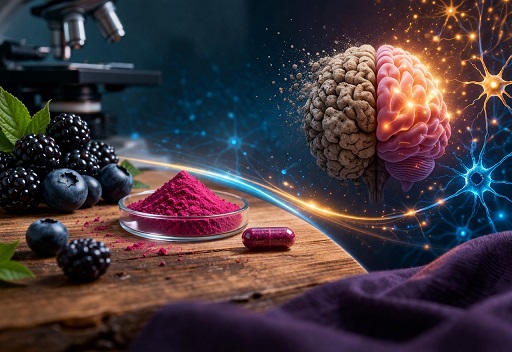 Natural berry compound shows powerful potential to restore memory and protect aging brains
In this
Medical News report, researchers discovered that cyanidin-3-O-glucoside (C3G), a plant-based antioxidant commonly found in foods like blueberries and blackberries, significantly improved memory and reduced brain damage in aging mice.
Study Background and Research Team
The study was conducted by scientists from the Department of Geriatrics at Peking University First Hospital in Beijing, China, the Key Laboratory of Geriatric Nutrition and Health at Beijing Technology and Business University, and the National Center of Technology Innovation for Dairy in Hohhot, China. Their goal was to explore whether this natural compound could slow down brain aging and protect against memory decline.
How the Study Was Done
Researchers used a well-established aging model where mice were injected with D-galactose, a substance known to speed up aging-like symptoms, including memory loss and brain damage.
The mice were then divided into groups and given either low or high doses of C3G daily for 13 weeks.
To test memory and learning, scientists used a water maze experiment where mice had to find a hidden platform. This test is widely used to measure how well the brain functions.
Major Improvements in Memory and Learning
The results were striking. Mice treated with C3G showed significantly improved memory and learning ability compared to untreated aging mice. They found the hidden platform faster, remembered its location better, and showed more organized search patterns. High-dose C3G almost completely restored memory performance to normal levels.
This suggests that the compound can effectively reverse some of the cognitive decline associated with aging.
Visible Brain Protection
When researchers examined the brain tissue, especially the hippocampus (the area responsible for memory), they found clear damage in untreated aging mice. Cells were disorganized, damaged, and reduced in number. However, mice treated with C3G showed much healthier brain structures, with more intact and orderly neurons.
This indicates that the compound not only improves memory but also protects the brain physically.
Powerful Antioxidant Effects
One of the key findings was that C3G dramatically improved the brain’s antioxidant defenses.
Aging mice typically showed high levels of harmful molecules and low levels of protective enzymes. But after treatment, levels of important antioxidants like SOD and GSH-Px increased, while harmful oxidative damage markers dropped
.
This means C3G helps the brain fight off damage caused by aging-related stress.
Reduced Inflammation in the Brain
The study also found that C3G reduced inflammation, which is a major driver of brain aging.
Levels of inflammatory markers like TNF-α, IL-1β, and IL-6 were significantly lowered, especially in mice given higher doses.
This dual action—reducing both oxidative stress and inflammation—appears to be key to its protective effects.
How It Works at the Molecular Level
At a deeper level, the compound works by activating protective pathways and blocking harmful ones.
It boosts the Nrf2 pathway, which strengthens the body’s natural defenses, while suppressing the NF-κB pathway, which is responsible for inflammation.
Together, these changes create a healthier environment in the brain, allowing neurons to survive and function better.
Conclusion
The findings from this study are highly promising, showing that cyanidin-3-O-glucoside can significantly improve memory, protect brain cells, and reduce both oxidative stress and inflammation in aging models. While these results are based on animal studies, they offer strong evidence that natural compounds found in everyday foods could play an important role in slowing brain aging. However, further research in humans is needed before any firm conclusions can be made about its use in preventing or treating age-related cognitive decline.
The study findings were published in the peer reviewed journal: Nutrients.
https://www.mdpi.com/2072-6643/18/6/992
For the latest on treating brain inflammation associated with aging, keep on logging to Thailand
Medical News.
Read Also:
https://www.thailandmedical.news/articles/herbs-and-phytochemicals




 Share
Share
 Tweet
Tweet
 Share
Share