Indonesian Researchers Discover That Phytochemicals from Cinnamon Can Regulate Cell Signals in Metabolic Diseases
Nikhil Prasad Fact checked by:Thailand Medical News Team Feb 07, 2026 6 months, 3 weeks, 2 days, 16 hours, 14 minutes ago
Medical News: A New Look at Cinnamon Beyond Blood Sugar Control
Cinnamon has long been associated with better blood sugar control, but new scientific insights now suggest its benefits go much deeper. Researchers have found that compounds in cinnamon may directly influence how cells communicate, especially in conditions like type-2 diabetes and obesity. Instead of acting only as antioxidants or enzyme blockers, cinnamon appears to work at the cell membrane level, where critical metabolic signals are first processed, according to this
Medical News report.
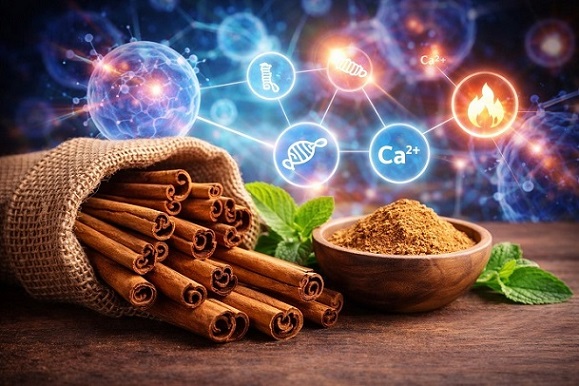 Cinnamon bioactive compounds may improve insulin release energy use and inflammation by restoring healthy cell signaling in metabolic diseases
How Cells Communicate in Metabolic Disorders
Cinnamon bioactive compounds may improve insulin release energy use and inflammation by restoring healthy cell signaling in metabolic diseases
How Cells Communicate in Metabolic Disorders
Metabolic diseases are increasingly seen as disorders of faulty cellular communication rather than simple chemical imbalances. Cells rely on ion channels and special receptors known as G protein coupled receptors (GPCR) to sense nutrients, hormones, and energy status. When these systems malfunction, insulin release, appetite control, inflammation, and energy burning are disrupted. The new review highlights that cinnamon derived phytonutrients interact directly with these signaling systems, helping restore balance.
Key Cinnamon Phytochemicals and Their Actions
The review identifies cinnamaldehyde, eugenol, and several polyphenols as the most active cinnamon phytochemicals. Cinnamaldehyde, responsible for cinnamon’s aroma, can activate ion channels that allow calcium to enter cells. This calcium movement is essential for insulin release from pancreatic cells. Eugenol and polyphenols further support signaling pathways that improve glucose uptake, reduce fat storage, and calm inflammatory responses.
Improving Insulin Release and Appetite Control
One of the most significant findings is how cinnamon influences insulin secretion without overstimulating the pancreas. By activating specific ion channels, cinnamon compounds can gently enhance insulin release while also boosting hormones like GLP-1 that improve insulin sensitivity. At the same time, these compounds reduce hunger signals by lowering ghrelin levels and slowing stomach emptying, which helps prevent sharp blood sugar spikes after meals.
Boosting Energy Burning and Reducing Inflammation
Cinnamon’s effects extend to fat tissue as well. Activation of sensory ion channels increases energy expenditure and encourages fat burning, particularly in brown and beige fat cells. This process supports weight control without requiring extreme dietary changes. Additionally, cinnamon derived compounds appear to reduce low grade inflammation, a key driver of insulin resistance and metabolic decline.
Why This Discovery Matters
The review reframes cinnamon as a membrane active nutraceutical that works across multiple systems at once. Rather than targeting a single pathway, cinnam
on coordinates insulin release, appetite signals, energy use, and inflammation. This systems level approach may explain why cinnamon shows consistent benefits in metabolic health studies and could complement existing diabetes treatments.
Study Conclusions
The findings suggest that cinnamon is not merely a traditional spice with mild health benefits but a biologically active modulator of cellular signaling. By targeting ion channels and receptor networks, cinnamon helps restore metabolic balance in a coordinated and natural way. These insights support further research into cinnamon as part of precision nutrition strategies for managing diabetes and obesity more effectively.
Researchers And Institutions
The study was conducted by scientists from Atma Jaya Catholic University of Indonesia, Dexa Laboratories of Biomolecular Sciences at Dexa Medica, Universitas Sumatera Utara, Bina Nusantara University, Universitas Airlangga, the Medical Research Center of Indonesia, and the State Islamic University of Sunan Kalijaga.
The study findings were published in the peer reviewed journal: Nutrients.
https://www.mdpi.com/2072-6643/18/3/547
For the latest on Herbs and Phytochemicals, keep on logging to Thailand
Medical News.
Read Also:
https://www.thailandmedical.news/articles/herbs-and-phytochemicals




 Share
Share
 Tweet
Tweet
 Share
Share