Nikhil Prasad Fact checked by:Thailand Medical News Team Apr 06, 2026 4 months, 3 weeks, 5 days, 12 hours, 51 minutes ago
Medical News: A newly documented clinical case is raising fresh concerns about the potential long-term effects of COVID-19 on eye health, particularly in individuals who experience reinfection. Doctors have reported a rare presentation of Multiple Evanescent White Dot Syndrome (MEWDS), where symptoms persisted far longer than expected and worsened after a second COVID-19 infection, suggesting a possible link between repeated viral exposure and prolonged retinal inflammation.
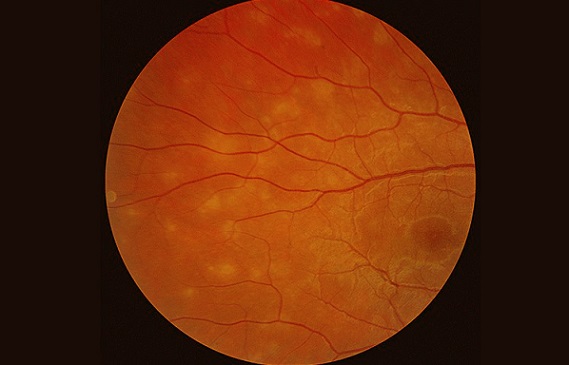 Rare retinal condition linked to COVID-19 reinfection shows prolonged symptoms and unexpected recurrence
Understanding MEWDS and Its Typical Course
Rare retinal condition linked to COVID-19 reinfection shows prolonged symptoms and unexpected recurrence
Understanding MEWDS and Its Typical Course
Multiple Evanescent White Dot Syndrome is a rare inflammatory condition affecting the outer retina and inner choroid. It is most commonly seen in young, otherwise healthy individuals and tends to affect women more frequently. Patients usually present with sudden visual disturbances such as blurred vision, blind spots, and flashes of light known as photopsias.
In most cases, MEWDS is self-limiting. Symptoms typically resolve within a few weeks, and patients regain normal vision without requiring treatment. The condition has often been associated with viral infections, which are believed to trigger an abnormal immune response leading to localized inflammation in the retina.
Details Of the Reported Case
Researchers from the University of Rochester School of Medicine and Dentistry and the University of Rochester Medical Center in the United States documented the case of a healthy woman in her late twenties who developed unusual visual symptoms following COVID-19 infection.
Her symptoms began approximately two weeks after her first confirmed infection and included persistent flashes of light and mild blurring in one eye. Unlike the typical course of MEWDS, her symptoms did not resolve within weeks. Instead, they continued for nearly eight months, indicating an atypical and prolonged disease progression.
Impact Of COVID-19 Reinfection
The clinical situation became more complex when the patient contracted COVID-19 a second time. Following reinfection, her symptoms worsened significantly, prompting further medical evaluation.
Advanced imaging techniques revealed multiple small yellow-white lesions scattered across the retina. Fundus autofluorescence imaging showed numerous bright punctate spots, while fluorescein angiography demonstrated early hyperfluorescent lesions. Indocyanine green imaging revealed corresponding hypofluorescent areas, and optical coherence tomography confirmed disruption in the retinal layers, specifically the ellipsoid zone.
Despite these findings, her visual acuity remained normal. No treatment was initiated, and within four weeks, the retinal lesions resolved and imaging returned to normal, consistent with the self-limiting nature of MEWDS.
Prolonged Symptoms Raise New Questions
One of the most unusual aspects of this case was the persistence of photopsias for nearly ten months. This is highly atypical, as such symptoms usually disappear once the retinal inflammation
subsides.
This
Medical News report highlights that the prolonged nature of these symptoms may be linked to long COVID, a condition characterized by ongoing symptoms that persist well beyond the initial infection. Researchers believe that lingering immune activation or low-grade inflammation may continue to affect sensitive tissues such as the retina, leading to extended visual disturbances.
Possible Mechanisms Behind Recurrence
Recurrence of MEWDS is considered rare, but this case suggests that repeated immune stimulation, such as reinfection with COVID-19, may trigger a second episode or worsen an existing one. The timing of symptom exacerbation following the second infection supports the theory of an immune-mediated mechanism.
COVID-19 has already been associated with a range of ocular complications, including uveitis and other inflammatory retinal conditions. This case adds to growing evidence that the virus may have prolonged and multifaceted effects on the eye.
Although laboratory findings did not reveal significant systemic inflammation, the clinical pattern strongly suggests localized immune dysregulation as a contributing factor.
Importance Of Early Evaluation
Accurate diagnosis in this case relied heavily on multimodal imaging, which allowed clinicians to differentiate MEWDS from other retinal diseases with similar presentations. Conditions such as acute posterior multifocal placoid pigment epitheliopathy and multifocal choroiditis were ruled out based on imaging characteristics and clinical presentation.
The case underscores the importance of seeking medical attention for persistent or unusual visual symptoms, particularly following COVID-19 infection.
Conclusion
This case provides important insight into how COVID-19 may influence eye health in ways that are not yet fully understood. The unusually prolonged symptoms and their worsening after reinfection suggest that MEWDS may behave differently in the context of repeated viral exposure. While the condition remains largely self-limiting and visual outcomes are generally favorable, the extended duration of symptoms and potential for recurrence highlight the need for increased awareness, careful monitoring, and further research. Understanding these patterns will be essential in guiding clinicians in the diagnosis and management of similar cases, especially as the long-term effects of COVID-19 continue to emerge.
The study findings were published in the peer reviewed journal: Cureus.
https://www.cureus.com/articles/435609-multiple-evanescent-white-dot-syndrome-mewds-following-covid-19-infection-a-presumed-recurrence#!/
For the latest COVID-19 news, keep on logging to Thailand
Medical News.
Read Also:
https://www.thailandmedical.news/articles/coronavirus
https://www.thailandmedical.news/articles/long-covid
https://www.thailandmedical.news/articles/ophthalmology-(eye-diseases)




 Share
Share
 Tweet
Tweet
 Share
Share