Nikhil Prasad Fact checked by:Thailand Medical News Team Jan 07, 2026 6 months, 2 weeks, 2 days, 7 hours, 42 minutes ago
Medical News: Seasonal influenza A (H3N2) remains one of the most troublesome flu subtypes, frequently linked with severe illness in older adults and children and periodic vaccine mismatch. As resistance to older antivirals such as amantadine and rimantadine (M2 blockers) has become widespread, interest has grown in drugs with new mechanisms of action. One unlikely contender is nitazoxanide, an antiparasitic medicine originally approved for treating Giardia and Cryptosporidium infections.
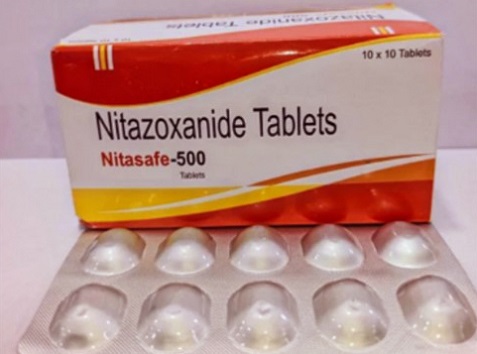 Nitazoxanide, a long-used antiparasitic, is emerging as a surprising new candidate in the
fight against H3N2 flu.
This
Medical News report looks at how nitazoxanide has emerged as a promising broad-spectrum antiviral that can inhibit H3N2 strains, including those resistant to traditional M2 blockers, by targeting a crucial step in influenza virus maturation.
How Does Nitazoxanide Work Against Influenza?
Nitazoxanide (and its active metabolite tizoxanide) acts mainly at the level of the host cell rather than directly attacking viral enzymes. Laboratory studies show that it blocks the post-translational maturation of viral hemagglutinin (HA), the surface protein influenza uses to bind and enter respiratory cells.
By interfering with host factors such as the endoplasmic reticulum protein ERp57, nitazoxanide prevents correct folding and trafficking of HA, so the virus cannot assemble and exit efficiently from infected cells. This host-targeted strategy gives the drug a high barrier to resistance, since the virus cannot easily mutate away from reliance on these cellular pathways.
Evidence Against H3N2, Including Drug-Resistant Strains
In vitro work has demonstrated that nitazoxanide inhibits a broad range of influenza A and B viruses, including H3N2 strains that are resistant to amantadine and even some neuraminidase inhibitor–resistant viruses. In these experiments, the drug significantly reduced viral replication in cell culture at concentrations achievable in humans.
A surveillance study of 210 circulating seasonal influenza viruses (A(H1N1)pdm09, A(H3N2), and B) found similar susceptibility to tizoxanide across all subtypes, supporting the idea that nitazoxanide’s anti-influenza effect is broad and not easily escaped by common resistance mutations.
Clinical Trial Data in Acute Uncomplicated Influenza
The most important clinical evidence so far comes from a phase 2b/3 randomized, double-blind, placebo-controlled trial in adults and adolescents with acute uncomplicated influenza conducted in U.S. primary-care clinics. Participants, many infected with seasonal H3N2 and other circulating strains, received nitazoxanide (300 mg or 600 mg twice daily) or placebo for five days.
Nitazoxanide significantly shortened the time to symptom resolution compared with placebo and reduced viral shedding. Importantly, its activity extended across multiple influenza types and subtypes, consistent with the lab findings. Side-effects were gen
erally mild and comparable to placebo, mostly involving gastrointestinal upset.
While the trial did not focus exclusively on M2-blocker-resistant H3N2, the combination of in vitro data and real-world clinical benefit supports nitazoxanide as a viable anti-influenza option, especially where resistance or intolerance limits use of older agents.
Synergy With Existing Antivirals
Because nitazoxanide targets HA maturation and not neuraminidase or the M2 ion channel, it can be combined with standard drugs such as oseltamivir. In cell-culture experiments, nitazoxanide showed synergistic antiviral effects when paired with neuraminidase inhibitors against a panel of human and avian influenza viruses, including H3N2 and drug-resistant strains.
This raises the possibility of combination therapy to improve outcomes in severe or high-risk H3N2 infections, though more clinical trials are needed to define the best regimens and patient groups.
Where Does Nitazoxanide Fit Today?
Nitazoxanide is already licensed in many countries as an antiparasitic, which makes it attractive for drug repurposing. Reviews of influenza antivirals now routinely mention nitazoxanide as a first-in-class host-targeted HA maturation inhibitor with broad activity and a favorable safety profile.
However, it is important to stress that:
• Regulatory approval for influenza varies by region.
• Data are strongest for uncomplicated flu; evidence in hospitalized or very high-risk patients is still emerging.
• Nitazoxanide should not be used for self-medication. Any use for suspected H3N2 or other flu infections must be guided by a qualified healthcare professional, considering local guidelines, comorbidities, and possible drug interactions.
As surveillance continues to reveal resistance to older antivirals, nitazoxanide stands out as a promising part of a more diversified arsenal against seasonal and potentially pandemic H3N2 influenza.
References:
https://www.sciencedirect.com/science/article/pii/S0166354214002137
https://www.jbc.org/article/S0021-9258(20)38191-6/fulltext
https://journals.asm.org/doi/10.1128/aac.03947-14
https://www.sciencedirect.com/science/article/pii/S0166354217305466
https://www.thelancet.com/journals/laninf/article/PIIS1473-3099(14)70717-0/fulltext
https://pubs.acs.org/doi/10.1021/acsinfecdis.7b00142
For the latest on H3N2 Flu Infections, keep on logging to Thailand
Medical News.
Read Also:
https://www.thailandmedical.news/articles/influenza-or-flu




 Share
Share
 Tweet
Tweet
 Share
Share