Nikhil Prasad Fact checked by:Thailand Medical News Team Mar 17, 2026 4 months, 2 weeks, 3 days, 22 hours, 44 minutes ago
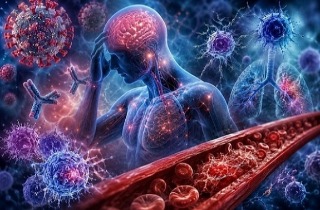
Medical News: A new scientific investigation has revealed a surprising and potentially dangerous effect of COVID-19 on the human body—its ability to weaken the very hormonal system that normally helps control inflammation and stress. The findings shed light on why some patients struggle to recover and why inflammation can spiral out of control during infection.
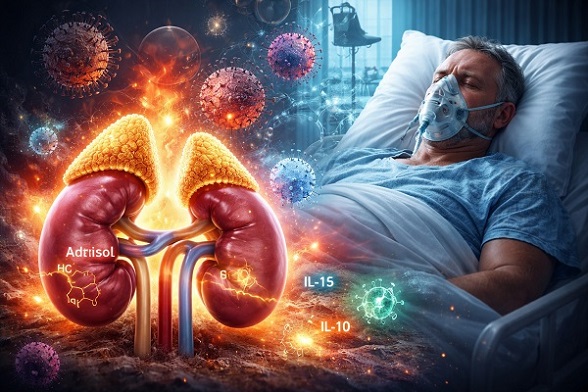 COVID-19 may disable the body’s stress hormone system, worsening inflammation and recovery outcomes
Researchers from the Clinic of Endocrinology and Metabolic Diseases at University Hospital “Dr. G. Stranski” in Pleven, Bulgaria, the Department of Cardiology, Pulmonology, Endocrinology and Rheumatology at Medical University Pleven, the Biology Division at the Department of Anatomy, Histology, Cytology and Biology at Medical University Pleven, and the Clinical Laboratory Division at the Department of Clinical Immunology at Medical University Pleven conducted this important study involving 101 participants.
COVID-19 Disrupts the Body’s Hormone Balance
The study focused on cortisol, often called the “stress hormone,” which plays a key role in calming inflammation. Surprisingly, researchers found that about two-thirds of patients with active COVID-19 had unusually low cortisol levels.
This is alarming because during illness, the body normally increases cortisol production to fight inflammation. Instead, COVID-19 appears to interfere with this natural defense system. According to the data, patients with active infection had the lowest cortisol levels, while healthy individuals had the highest.
Even months after recovery, many individuals still showed reduced cortisol levels, suggesting that the virus may cause longer-term hormonal disruption.
A Hidden Problem: Hormone Resistance
Beyond low hormone levels, scientists discovered another critical issue—glucocorticoid resistance. This means that even when cortisol is present, the body may not respond to it properly.
This happens because of reduced levels of a key receptor called glucocorticoid receptor alpha (GRα), which allows cortisol to work inside cells. The study found that GRα levels were lowest during active infection, partially improved after recovery, but still did not return to normal.
This finding is crucial because it explains why inflammation can remain uncontrolled in COVID-19 patients, even when treatments are given.
Inflammation and Hormone Breakdown Are Linked
The research also examined inflammatory markers—chemical signals in the body that rise during infection. Three important ones were studied: IL-17A, TNF-alpha, and IL-10.
During active COVID-19, these markers were closely linked to changes in cortisol and GRα levels. This suggests a dangerous cycle: inflammation disrupts hormone signaling, and weak hormone signaling allows inflammation to worsen.
Interestingly, these strong connections were only seen during active infection, highlighting how intense and uniq
ue the body’s response to COVID-19 can be.
Why This Matters for Patients
This
Medical News report highlights a key reason why some COVID-19 patients become severely ill. If the body cannot properly control inflammation due to hormone dysfunction, it can lead to complications affecting multiple organs.
The findings also suggest that simply measuring cortisol levels may not be enough. Doctors may need to consider how well the body is responding to cortisol, not just how much is present.
Key Study Findings
-Many COVID-19 patients have low stress hormone levels
-The body may also become resistant to these hormones
-This leads to poor control of inflammation
-Hormonal disruption may continue even after recovery
-The problem is strongest during active infection
Conclusion
The study clearly shows that COVID-19 does more than affect the lungs—it disrupts a critical hormonal system that helps regulate inflammation. This dual problem of low cortisol and reduced hormone sensitivity may explain severe disease and prolonged recovery in many patients. Understanding this mechanism could open the door to better treatments that target both inflammation and hormone function, potentially improving outcomes and saving lives in future outbreaks.
The study findings were published in the peer reviewed journal: COVID.
https://www.mdpi.com/2673-8112/6/3/47
For the latest COVID-19 news, keep on logging to Thailand
Medical News.
Read Also:
https://www.thailandmedical.news/articles/coronavirus
https://www.thailandmedical.news/articles/long-covid




 Share
Share
 Tweet
Tweet
 Share
Share