Nikhil Prasad Fact checked by:Thailand Medical News Team Jun 02, 2026 4 months, 3 days, 11 hours, 38 minutes ago
Medical News: Arsenic exposure remains a serious global health concern, especially in regions where drinking water, soil, or industrial activities contaminate the environment. Long-term exposure to arsenic has been linked to damage in multiple organs, with the kidneys being among the most vulnerable. Now, a new study has found that a phytochemical compound called morin, when delivered through advanced nanoparticles, may offer remarkable protection against arsenic-induced kidney injury.
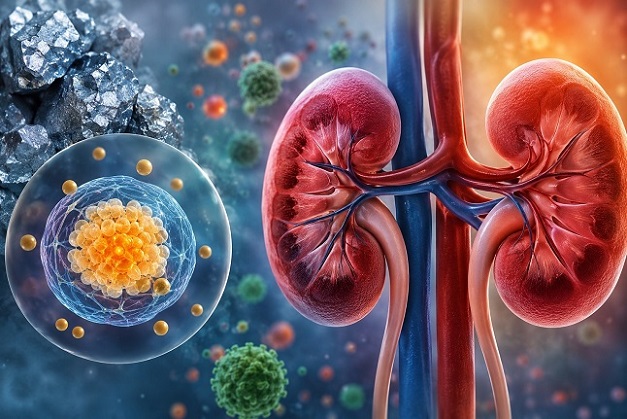 Novel morin-loaded nanoparticles dramatically reduced arsenic-induced kidney damage in animal studies by combating
oxidative stress, inflammation, fibrosis, and cell death
The study was conducted by researchers from Jouf University (Saudi Arabia), Northern Border University (Saudi Arabia), Jazan University (Saudi Arabia), Suez Canal University (Egypt), Mansoura University (Egypt), and Horus University-Egypt (Egypt).
What Is Morin?
Morin is a naturally occurring plant flavonoid found in fruits such as guava, figs, and mulberries, as well as in several medicinal herbs. It is known for its strong antioxidant and anti-inflammatory properties. Scientists have long been interested in the phytochemical morin because it can help neutralize harmful molecules known as free radicals, reduce inflammation, and protect cells from damage.
However, morin has one major drawback. When taken orally, less than 1 percent is absorbed by the body. It is also rapidly broken down by the liver, limiting its therapeutic potential. To overcome these problems, researchers encapsulated morin inside tiny biodegradable nanoparticles made from poly(lactic-co-glycolic acid), or PLGA, an FDA-approved material widely used in drug delivery systems.
How the Study Was Conducted
The researchers used 60 male Sprague Dawley rats divided into six groups. Some animals were exposed to arsenic, while others received morin or morin-loaded PLGA nanoparticles. The goal was to determine whether the nanoparticle formulation could protect the kidneys more effectively than conventional morin.
The specially designed nanoparticles measured about 118 nanometers in diameter and showed excellent stability and drug-loading efficiency. Laboratory testing demonstrated that the nanoparticles released morin slowly over a period of 72 hours, allowing sustained delivery of the protective compound.
Arsenic Triggered Severe Kidney Injury
The animals exposed to arsenic experienced significant kidney damage. Blood tests showed dramatic increases in urea, creatinine, uric acid, and kidney injury molecule-1 (KIM-1), all established indicators of impaired kidney function.
Microscopic examination revealed extensive structural damage, including shrinking glomeruli, damaged kidney tubules, inflammatory cell infiltration, vascular congestion, and mitochondrial injury. These changes confirmed that arsenic had caused substantial harm to the renal tissues.
Nanoparticle Morin Delivered Superior Protection
Both conventional morin and nanoparticle-loaded morin provided benefits, but the nanoparticl
e version consistently outperformed standard morin.
Animals receiving morin-loaded nanoparticles showed kidney function markers that were restored close to normal levels. Levels of KIM-1, an important biomarker of kidney injury, dropped dramatically and were almost indistinguishable from those seen in healthy animals.
The nanoparticles also preserved normal kidney architecture, prevented mitochondrial damage, and minimized cellular degeneration throughout the renal tissue.
Fighting Oxidative Stress at Its Source
One of the most important findings involved oxidative stress, a destructive process driven by excessive production of reactive oxygen species.
Arsenic exposure sharply reduced the activity of key antioxidant defenses, including superoxide dismutase, catalase, glutathione peroxidase, and the protective Nrf2/HO-1 signaling pathway. At the same time, harmful oxidative stress markers such as reactive oxygen species and malondialdehyde surged.
The nanoparticle formulation of morin effectively reversed these changes. Antioxidant enzyme levels rebounded, Nrf2 signaling was strongly restored, and oxidative damage markers fell back toward normal levels.
This
Medical News report highlights how the nanoparticle formulation appeared capable of strengthening the body's own antioxidant defense systems far more effectively than conventional morin.
Inflammation, Fibrosis and Cell Death Were Also Reduced
The study revealed that arsenic activated several inflammatory pathways, particularly the TLR4/NF-kB signaling cascade. This resulted in major increases in inflammatory molecules including TNF-alpha, IL-6, and IL-1 beta.
Morin-loaded nanoparticles substantially suppressed these inflammatory signals. In several cases, inflammatory markers returned to levels comparable to healthy controls.
The researchers also observed major reductions in fibrosis-related proteins such as transforming growth factor-beta 1 (TGF-β1) and fibronectin, both of which contribute to long-term scarring of kidney tissue.
Additionally, the nanoparticle treatment reduced levels of apoptosis-related proteins including caspase-3, caspase-8, and Bax while restoring protective Bcl-2 levels. This indicates that the treatment helped prevent programmed cell death and preserved healthy kidney cells.
Conclusion
The findings suggest that morin-loaded PLGA nanoparticles may represent a promising new strategy for protecting the kidneys from arsenic-induced injury. By improving morin's absorption, stability, and sustained release, the nanoparticle formulation was able to provide significantly greater protection than ordinary morin. The treatment simultaneously targeted oxidative stress, inflammation, fibrosis, and apoptosis, which are the major biological processes responsible for arsenic-related kidney damage. While the research was conducted in rats and further studies are needed before human applications can be considered, the results provide compelling evidence that nanotechnology-enhanced natural compounds could become valuable tools in preventing or treating environmental toxin-induced kidney diseases in the future.
The study findings were published in the peer reviewed journal: Pharmaceuticals.
https://www.mdpi.com/1424-8247/19/6/871
For the latest on herbs and phytochemicals, keep on logging to Thailand
Medical News.
Read Also:
https://www.thailandmedical.news/articles/nephrology-(kidneys)
https://www.thailandmedical.news/articles/herbs-and-phytochemicals




 Share
Share
 Tweet
Tweet
 Share
Share