Nikhil Prasad Fact checked by:Thailand Medical News Team Jun 18, 2026 3 months, 2 weeks, 2 days, 6 hours, 13 minutes ago
Medical News: Melanoma, the deadliest form of skin cancer, is notorious for its ability to adapt, survive treatment, and continue growing even when attacked by modern therapies. Now, researchers have discovered that a commonly prescribed diabetes drug, metformin, may dramatically boost the cancer-killing effects of an experimental compound known as 2-aminoethyl dihydrogen phosphate (2-AEH2P), potentially opening the door to a new strategy against this aggressive cancer.
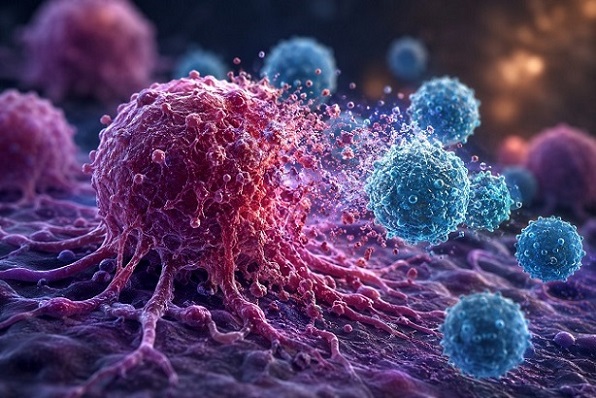 Researchers found that metformin dramatically boosts the cancer-killing effects of 2-AEH2P, triggering
mitochondrial collapse and cell death in melanoma cells
The research was conducted by scientists from the Graduate Program in Anatomy of Domestic and Wild Animals, School of Veterinary Medicine and Animal Science, University of São Paulo; the Development and Innovation Laboratory at the Butantan Institute in São Paulo; the Graduate Program in Biological Sciences at the State University of Maringá; and the Multidisciplinary Institute of Health at the Federal University of Bahia, Brazil.
Why Melanoma Is So Difficult to Treat
Unlike many cancers that rely on a single source of energy, melanoma cells are highly adaptable. They can switch between different metabolic pathways and often depend heavily on mitochondria—the tiny energy-producing structures inside cells. This metabolic flexibility helps melanoma resist treatment and continue spreading.
Because of this, researchers have increasingly focused on disrupting mitochondrial function as a way to selectively kill cancer cells.
A Powerful Combination Emerges
The study examined the effects of 2-AEH2P, an experimental bioactive phosphomonoester with known anticancer properties, and metformin, a widely used drug for type 2 diabetes that interferes with mitochondrial energy production.
When tested separately, both compounds reduced melanoma cell survival. However, when used together, their effects became dramatically stronger.
In human SK-MEL-28 melanoma cells, the combination reduced the amount of drug needed to kill half of the cancer cells by nearly tenfold compared to 2-AEH2P alone.
Similar results were observed in the aggressive mouse melanoma cell line B16-F10. Importantly, normal fibroblast cells were significantly less affected, suggesting a degree of selectivity toward cancer cells.
Cancer Cells Begin to Self-Destruct
Researchers observed striking physical changes in melanoma cells exposed to the combined treatment. The cancer cells lost their normal shape, detached from surfaces, rounded up, and formed clusters—classic signs that they were undergoing programmed cell death.
Further analysis revealed that the treatment disrupted the cancer cell cycle. Cells became trapped at critical stages of division and accumulated DNA damage, preventing them from reproducing normally. The combined therapy also sharply reduced the cells’ ability to proliferate, essentially halting their growth.
This
;Medical News report highlights that the dual-treatment approach attacks melanoma on multiple fronts simultaneously, making it much harder for cancer cells to adapt and survive.
Mitochondria Become the Main Target
One of the most important findings involved the mitochondria. The combination therapy caused major losses in mitochondrial membrane potential, a key indicator of mitochondrial health.
In human melanoma cells, mitochondrial dysfunction increased by more than 27%, while normal cells experienced only minimal changes. Once the mitochondria were damaged, they released cytochrome c, a protein that triggers a cascade of self-destruct signals inside the cell.
The researchers also detected increased activity of apoptosis-related proteins including caspase-3, caspase-8, p53, and Bad. At the same time, levels of Bcl-2, a protein that helps cancer cells avoid death, fell sharply. Together, these molecular changes pushed melanoma cells toward irreversible apoptosis, or programmed cell death.
Evidence of True Synergy
Using a scientific method known as Bliss independence analysis, the team confirmed that the two compounds worked synergistically rather than simply adding their effects together. The combination produced synergy scores well above the threshold considered significant, demonstrating that metformin actively enhanced the tumor-killing activity of 2-AEH2P.
Conclusions
The findings suggest that metformin may serve as a powerful enhancer of mitochondrial-targeted cancer therapies. By weakening the energy systems that melanoma cells depend upon and simultaneously amplifying mitochondrial damage caused by 2-AEH2P, the combination triggered extensive cancer cell death while showing comparatively lower toxicity toward normal cells. Although the research was conducted in laboratory cell models and further animal and human studies are still needed, the results provide strong evidence that targeting cancer metabolism and mitochondrial vulnerability at the same time could become a promising future strategy for treating melanoma.
The study findings were published in the peer reviewed International Journal of Molecular Sciences.
https://www.mdpi.com/1422-0067/27/12/5493
For the latest melanoma research, keep on logging to Thailand
Medical News.
Read Also:
https://www.thailandmedical.news/articles/cancer
https://www.thailandmedical.news/articles/med-news




 Share
Share
 Tweet
Tweet
 Share
Share

































