Nikhil Prasad Fact checked by:Thailand Medical News Team May 10, 2026 4 months, 3 weeks, 5 days, 4 hours, 49 minutes ago
Medical News: A new cardiovascular study from researchers in Türkiye is adding to growing evidence that COVID-19 may continue harming the heart long after the infection has resolved. Scientists have discovered that people who previously had COVID-19 were far more likely to develop a hidden heart circulation abnormality known as coronary slow flow, a condition linked to impaired blood movement through the heart’s tiny vessels despite the absence of major arterial blockages.
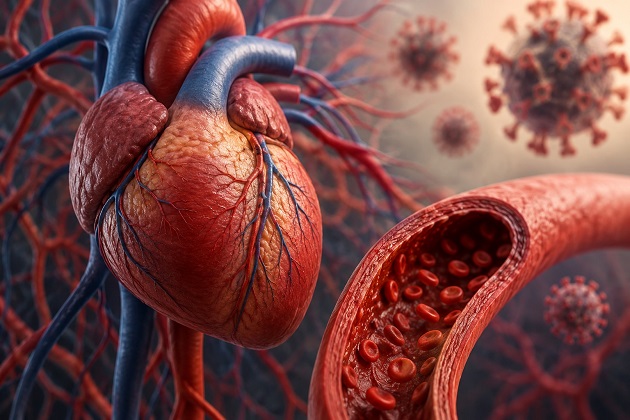 Researchers warn that COVID-19 may trigger long-lasting hidden damage to the heart’s microvascular circulation
months after recovery
The research was conducted by scientists from the Department of Cardiology and the Department of Radiology, Faculty of Medicine, Bolu Abant Izzet Baysal University, Bolu, Türkiye.
Hidden Heart Damage Detected Months After COVID-19
The study investigated 190 patients who were hospitalized with unstable angina, a serious form of chest pain caused by reduced blood supply to the heart.
Although all participants had normal-looking coronary arteries on angiography, researchers suspected that hidden microvascular damage might still be present. The patients were divided into two groups. One group consisted of 95 individuals who had recovered from COVID-19 within the previous six months, while the second group included 95 patients with no known history of COVID-19.
The findings revealed a striking difference between the groups. Researchers found that 18.9 percent of patients with a prior history of COVID-19 showed evidence of coronary slow flow compared to only 5.3 percent of patients without prior infection. This means the condition was nearly four times more common in those who had previously contracted SARS-CoV-2.
Coronary slow flow occurs when blood travels abnormally slowly through the coronary microcirculation. While major arteries may appear normal, the tiny vessels supplying oxygen to heart tissue fail to function properly. This can trigger chest pain, reduced exercise tolerance, irregular heart rhythms, and in some cases serious cardiac complications.
Researchers Measured Blood Flow in Three Major Coronary Arteries
To evaluate coronary circulation, the researchers used a specialized imaging method known as corrected TIMI frame count, or CTFC. This technique measures how many image frames are required for contrast dye to travel through coronary arteries during angiography.
Higher CTFC values indicate slower blood flow and worsening dysfunction in the heart’s small blood vessels.
The COVID-19 group showed significantly elevated CTFC values across all three major coronary arteries examined, including the left anterior descending artery, the left circumflex artery, and the right coronary artery.
Importantly, even after excluding patients already diagnosed with coronary slow flow syndrome, the COVID-positive group still demonstrated significantly impaired coronary blood movement. This suggests that subtle microvascular injury may persist even in patients who do not yet meet formal diagnostic thresholds.
&nb
sp;
The average time between COVID-19 infection and cardiac evaluation was approximately 6.2 months, indicating that the vascular effects of the virus can continue well into the post-acute recovery phase.
Endothelial Dysfunction May Be Driving the Problem
Researchers believe the underlying mechanism behind these findings is persistent endothelial dysfunction. The endothelium is the delicate inner lining of blood vessels that controls blood flow, clotting, and inflammatory responses.
COVID-19 has already been strongly associated with widespread inflammation, abnormal immune activation, blood clot formation, and direct vascular injury. According to the researchers, the virus may damage endothelial cells both directly and indirectly through inflammatory and immune-mediated pathways.
This
Medical News report notes that the study also identified prior COVID-19 infection as the strongest independent predictor of coronary slow flow, even after accounting for obesity, diabetes, smoking, hypertension, cholesterol levels, and other cardiovascular risk factors.
The researchers explained that ongoing endothelial injury may help explain why many Long COVID patients continue experiencing chest pain, fatigue, breathing difficulty, and exercise intolerance long after recovering from the initial infection.
Long-Term Cardiovascular Risks May Be Emerging
The scientists warned that many recovered COVID-19 patients could unknowingly carry persistent coronary microvascular abnormalities despite appearing healthy on standard cardiac scans. Because routine angiograms mainly evaluate large arteries, these subtle circulation defects can easily go unnoticed.
The researchers emphasized that clinicians should pay closer attention to persistent cardiovascular symptoms in COVID survivors and consider the possibility of underlying microvascular dysfunction even when conventional imaging appears normal.
The study concluded that COVID-19 may leave behind prolonged damage to coronary microcirculation and endothelial health, potentially increasing long-term cardiovascular risk in millions of people worldwide. The researchers stressed that further large-scale studies are urgently needed to determine how long these abnormalities persist and whether they may eventually contribute to more severe conditions such as chronic ischemic heart disease, heart failure, arrhythmias, or sudden cardiac events. They also highlighted the importance of ongoing cardiovascular monitoring for individuals recovering from COVID-19, especially those with lingering symptoms.
The study findings were published in the peer reviewed journal: Frontiers in Cardiovascular Medicine.
https://www.frontiersin.org/journals/cardiovascular-medicine/articles/10.3389/fcvm.2026.1814606/full
For the latest COVID-19 News, keep on logging to Thailand
Medical News.
Read Also:
https://www.thailandmedical.news/articles/coronavirus
https://www.thailandmedical.news/articles/long-covid




 Share
Share
 Tweet
Tweet
 Share
Share