Nikhil Prasad Fact checked by:Thailand Medical News Team Jan 21, 2026 8 months, 2 weeks, 12 minutes ago
Medical News: Researchers from Guangzhou Women and Children’s Medical Center at Guangzhou Medical University, the Department of Laboratory Medicine at Dongguan Hospital of Guangzhou University of Chinese Medicine, and the State Key Laboratory of Respiratory Disease and National Clinical Research Center for Respiratory Disease in Guangzhou, China, have uncovered new insights into how the human gut may influence viral infections, immune defenses, and even energy use at the cellular level. Their work focuses on a protein called ACE2, which became widely known during the COVID-19 pandemic as the main entry point for the SARS-CoV-2 virus into human cells.
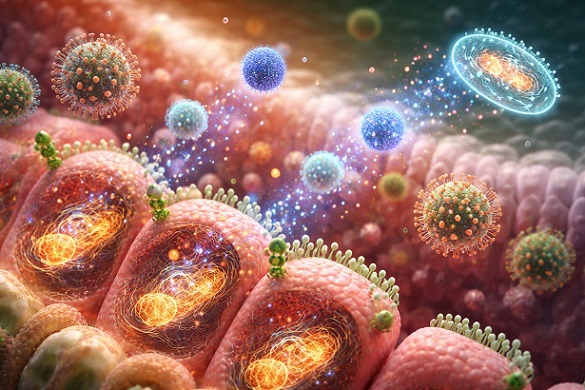 New research reveals how gut lining cells may influence viral defense and cellular energy use through ACE2 activity
Why ACE2 In the Gut Matters
New research reveals how gut lining cells may influence viral defense and cellular energy use through ACE2 activity
Why ACE2 In the Gut Matters
ACE2 is often discussed in relation to the lungs, but scientists have long suspected it also plays an important role in the digestive system. This
Medical News report highlights how ACE2 is found in especially high amounts in colonocytes, which are the cells lining the colon. These cells are not just involved in digestion. They also help regulate immune responses and maintain balance in the gut environment.
How The Study Was Conducted
The research team analyzed colon tissue from children with healthy intestines as well as those with inflammatory bowel conditions such as ulcerative colitis and Crohn’s disease. Using advanced single cell RNA sequencing, the scientists examined thousands of individual cells to see which genes were active. They then confirmed key findings by directly staining patient tissue samples to observe protein activity under the microscope.
Key Findings Explained Simply
The researchers found that colonocytes with high ACE2 activity also switched on many genes linked to viral sensing and early immune defense. These included genes involved in detecting viral genetic material and activating interferons, which are substances the body releases to slow down virus spread. At the same time, ACE2 rich cells showed strong links to genes involved in energy production, including how cells process fats and sugars to generate power.
Interestingly, not all immune functions were boosted. Some processes related to antibody production and certain forms of immune cell cleanup were less active in cells with higher ACE2 levels. This suggests ACE2 may help fine tune immune responses rather than simply turning them all up or down.
What This Means for Gut and Viral Health
In patients with inflammatory bowel disease, ACE2 levels in colon cells were similar to those seen in healthy individuals. However, these ACE2 positive cells showed stronger signs of antiviral readiness. This may help explain why many people with bowel inflammation do not experience worse viral outcomes despite having an already stressed immune system.
The findings also reinforce the idea that the gut could be an important site of viral interaction, not just the lungs. Understandin
g this relationship may help researchers develop better treatments that protect both respiratory and digestive health.
Conclusions and Broader Implications
Overall, the study shows that ACE2 in the colon is not just a viral doorway but also a key regulator of immune balance and energy metabolism. These dual roles suggest that targeting ACE2 related pathways could one day help manage viral infections without worsening inflammation or disrupting normal gut function. The results open new directions for research into how intestinal health influences whole body responses during viral illness and recovery.
The study findings were published in the peer reviewed journal: Scientific Reports,
https://link.springer.com/article/10.1038/s41598-026-36052-w
For the latest in Immunology, keep on logging to Thailand
Medical News.
Read Also:
https://www.thailandmedical.news/articles/immunology
https://www.thailandmedical.news/articles/coronavirus




 Share
Share
 Tweet
Tweet
 Share
Share

































