Nikhil Prasad Fact checked by:Thailand Medical News Team Aug 06, 2026 1 month, 4 weeks, 1 day, 3 hours, 20 minutes ago
Researchers are warning that COVID-19 may have far-reaching effects beyond the lungs, heart, and immune system. A new scientific review suggests the virus may also trigger long-lasting damage to the skeleton, increasing the risk of weaker bones, fractures, and impaired bone repair, even after people appear to have recovered from the infection.
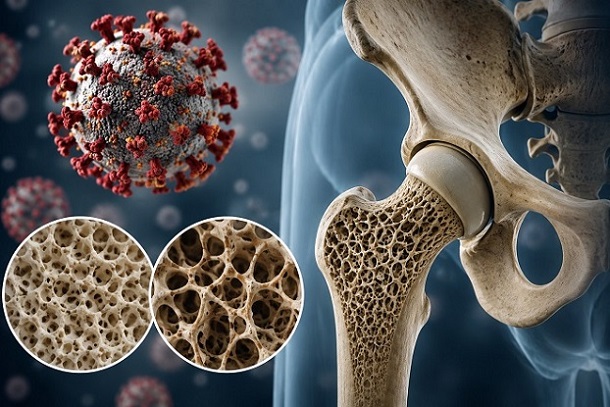 New research suggests COVID-19 may silently damage bone structure and increase fracture risk long after infection.
The research was conducted by scientists from the Department of Mechanical Engineering, Politecnico di Milano, Milan, Italy, and IRCCS Galeazzi-Sant'Ambrogio, Milan, Italy. The team reviewed growing evidence showing that COVID-19 can disrupt normal bone remodeling through multiple biological and mechanical pathways, making skeletal damage an underrecognized consequence of the disease.
COVID-19 May Disrupt the Body's Natural Bone Renewal Process
Healthy bones are constantly renewed through a balanced process in which old bone is removed and new bone is formed. According to the review, SARS-CoV-2 infection may upset this balance by increasing inflammation while reducing the body's ability to rebuild bone.
The virus appears to trigger powerful inflammatory responses that stimulate cells known as osteoclasts, which break down bone tissue. At the same time, the activity of osteoblasts, the cells responsible for building new bone, may be reduced. This imbalance gradually weakens bone structure and may leave bones more vulnerable to fractures.
Researchers also found evidence that COVID-19 can interfere with important biological systems that regulate bone health, including the ACE2 pathway, the renin-angiotensin system, and several inflammatory signaling pathways involved in bone remodeling.
Damage Extends from Large Bones Down to Microscopic Structures
One of the most striking findings is that COVID-19 may affect bones on multiple levels. Imaging studies have shown reductions in bone mineral density, thinning of the outer bone layer, and deterioration of the internal honeycomb-like trabecular structure.
At an even smaller scale, scientists found changes in tiny cavities called osteocyte lacunae that house bone cells responsible for sensing mechanical stress. These microscopic changes resemble those seen in osteoporosis and may reduce the bone's ability to repair itself or withstand everyday forces.
Animal studies also demonstrated progressive bone loss lasting weeks to months after infection, suggesting the damage may continue long after the virus has been cleared.
Many Factors Work Together to Increase Bone Fragility
This
Thailand Medical News report highlights that the skeletal effects of COVID-19 are unlikely to result from a single cause. Instead, several factors appear to combine to accelerate bone deterioration.
Persistent inflammation, oxidative stress, reduced blood flow, prolonged bed rest during severe illness, vitamin D deficiency, and the use of corticosteroids all contri
bute to impaired bone health. The review also discusses how COVID-19 may damage the bone marrow environment, limiting the ability of stem cells to support healthy bone regeneration.
Researchers further noted that some COVID-19 survivors have developed avascular necrosis, a serious condition in which reduced blood supply causes bone tissue to die, particularly in the hip.
Long-Term Monitoring May Become Increasingly Important
The review points out that bone damage often develops silently without obvious symptoms. Blood markers may return to normal while structural damage continues beneath the surface. This means many COVID-19 survivors could experience gradual bone weakening without realizing it until fractures or persistent joint pain occur.
The researchers emphasize that older adults, people with osteoporosis, patients requiring intensive care, and those treated with prolonged corticosteroid therapy may face particularly high risks. They also call for more long-term human studies using advanced imaging and biomechanical analysis to better understand how COVID-19 affects skeletal health over time.
Conclusion
The findings suggest that COVID-19 should no longer be viewed solely as a respiratory disease because its long-term effects may extend deep into the skeleton. The evidence indicates that persistent inflammation, disrupted bone remodeling, vascular injury, reduced physical activity, and metabolic disturbances may collectively weaken bones long after recovery. Greater awareness, long-term monitoring, and earlier assessment of bone health could help identify vulnerable patients and reduce the future burden of fractures and other skeletal complications.
The study findings were published in the peer reviewed journal: Frontiers in Bioengineering and Biotechnology.
https://www.frontiersin.org/journals/bioengineering-and-biotechnology/articles/10.3389/fbioe.2026.1812439/full
Read Also:
https://www.thailandmedical.news/articles/coronavirus
https://www.thailandmedical.news/articles/long-covid




 Share
Share
 Tweet
Tweet
 Share
Share

































