Thailand Medical Officials Report Surging COVID-19 Infections with an Average of About 15,000 New Cases per Week
Nikhil Prasad Fact checked by:Thailand Medical News Team Sep 17, 2026 28 minutes ago
COVID-19 infections climb across Thailand
Thailand is experiencing another noticeable rise in COVID-19 infections, with health authorities reporting an average of approximately 15,000 new cases each week over the latest four-week period.
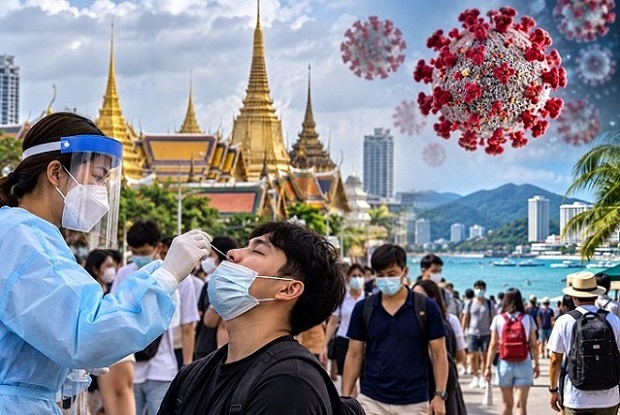 Thailand is recording about 15,000 new COVID-19 cases weekly as respiratory infections rise during the rainy season
According to Thailand’s Department of Disease Control (DDC), 64,937 COVID-19 cases were reported nationwide between August 9 and September 8. Weekly deaths during the recent increase have averaged between two and four.
Health officials have urged people to remain alert as Thailand’s rainy season and changing weather conditions create favorable circumstances for the spread of several respiratory and infectious diseases.
Chon Buri, Bangkok and Phuket report most cases
Chon Buri, Bangkok and Phuket have recorded the highest numbers of COVID-19 cases during the latest increase.
Age-specific surveillance also revealed important differences in infection patterns. The highest incidence rate was found among infants younger than one year, followed by children aged one to four.
Among working-age adults, people aged 20 to 29 accounted for the largest number of infections, followed by those aged 30 to 39.
From January 1 through September 15, Thailand recorded 135,667 cumulative COVID-19 cases, representing a morbidity rate of 206 cases per 100,000 people. Twenty-six COVID-19 deaths were recorded during this period.
Importantly, 21 of the 26 fatalities occurred among people belonging to Thailand’s high-risk “608” population. This includes adults aged 60 and older and individuals with underlying medical conditions including diabetes, stroke, cardiovascular disease, chronic kidney disease, chronic respiratory disease and cancer.
NB.1.8.1 remains dominant strain
The dominant SARS-CoV-2 strain circulating in Thailand is currently NB.1.8.1, followed by JN.1. Health officials said both are generally associated with mild symptoms.
However, surveillance has also identified PQ.16.1.1, which the World Health Organization has classified as a variant under monitoring. Six cases have been detected in Thailand. Although this represents a slight increase, authorities said there is currently no indication that the variant causes more severe disease.
The figures highlighted in this
Thailand Medical News report demonstrate why continued genomic and epidemiological surveillance remains important even when currently circulating variants are predominantly associated with mild illness.
Influenza and RSV are also increasing
COVID-19 is not the only infectious disease requiring attention. The five most commonly reported illnesses between August 9 and September 8 were influenza, diarrheal disease, COVID-19, pneumonia, and hand, foot and mouth disease.
Thailand recorded 359,672 influenza cases and 57 deaths between January 1 and September 8. Infections were trending upward, with children aged five to nine accounting for the largest proportion of cases. Most affected individuals had not received an influenza vaccination. A/H1N1 (pdm09) was the influenza strain detected most frequently during August.
Respiratory syncytial virus, or RSV, is also increasing. Authorities recorded 8,578 RSV infections between January 1 and September 8, including one death involving a two-month-old prematurely born infant. Children younger than one year represented the largest proportion of RSV patients.
Despite the recent increase, RSV numbers remain below those reported last year.
Surveillance remains critical as respiratory infections rise
The latest figures show that COVID-19 continues circulating extensively in Thailand alongside influenza and RSV. Although dominant COVID-19 strains are generally causing mild illness, infections among very young children and deaths concentrated among older and medically vulnerable individuals demonstrate that the disease still carries significant health risks. Continued surveillance, appropriate preventive measures and heightened awareness among high-risk groups remain important as respiratory infections increase during the rainy season.
Reference:
https://www.facebook.com/100068069971811/posts/1378759014403085/
Read Also:
https://www.thailandmedical.news/articles/thailand-medical
https://www.thailandmedical.news/articles/coronavirus




 Share
Share
 Tweet
Tweet
 Share
Share