Nikhil Prasad Fact checked by:Thailand Medical News Team Jul 13, 2026 1 month, 2 weeks, 6 days, 17 hours, 12 minutes ago
Medical News: Long COVID patients suffering from persistent pain may have a hidden clue inside their brain activity, according to new research from the University of Leeds Leeds Institute of Rheumatic and Musculoskeletal Medicine, United Kingdom, and King Salman bin Abdulaziz Medical City, Madinah, Saudi Arabia.
The findings suggest that slower brain wave activity is linked to more severe pain, opening new avenues for understanding why some people continue to struggle long after recovering from COVID-19.
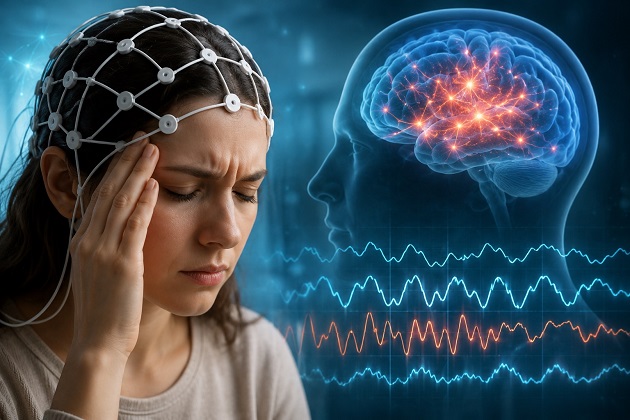 Researchers find that slower alpha brain waves are linked to greater chronic pain severity in people living with Long COVID
Brain Wave Changes May Reflect Pain Intensity
Researchers find that slower alpha brain waves are linked to greater chronic pain severity in people living with Long COVID
Brain Wave Changes May Reflect Pain Intensity
Long COVID has left millions worldwide battling lingering symptoms, with new-onset chronic pain being among the most disabling. In this
Medical News report, researchers explored whether electrical brain activity measured by electroencephalography (EEG) could help explain why pain varies so much between patients.
The study involved 31 Long COVID patients with newly developed chronic pain and 31 healthy volunteers matched for age and sex. Participants completed symptom and psychological assessments before undergoing resting-state EEG recordings while keeping their eyes open.
Key Findings Reveal an Important Connection
Researchers focused on peak alpha frequency (PAF), a measure of the brain's alpha waves that normally oscillate between 8 and 13 Hertz.
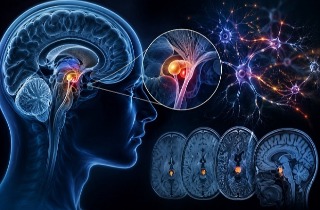
They discovered that individuals with lower PAF in the back region of the brain consistently reported more severe chronic pain.
This relationship remained significant even after accounting for age, depression, and the use of medications that affect the central nervous system.
Interestingly, although lower PAF was linked to greater pain among Long COVID patients, the average PAF was not significantly different between patients and healthy individuals. Likewise, overall alpha wave power showed no meaningful differences between the two groups and did not correlate with pain severity.
These findings indicate that PAF reflects individual pain intensity rather than acting as a unique biological marker of Long COVID itself. The researchers believe slower alpha brain activity may represent changes in how the brain processes pain signals, similar to patterns observed in fibromyalgia and other chronic pain disorders.
More Research Needed
The researchers stress that larger, long-term studies are needed to determine whether PAF could eventually help monitor pain progression or guide personalized treatments for Long COVID patients.
While the findings do not establish PAF as a diagnostic marker, they provide valuable evidence that brain activity may help explain why chronic pain affects some individuals more severely than others and could become an important target for future pain management strategies.
The study findings were published as an abstract in the peer reviewed journal:
Frontiers in Pain Research.
https://www.frontiersin.org/journals/pain-research/articles/10.3389/fpain.2026.1893610/abstract
For the latest on Long COVID, keep on logging to Thailand
Medical News.
Read Also:
https://www.thailandmedical.news/articles/long-covid




 Share
Share
 Tweet
Tweet
 Share
Share