Nikhil Prasad Fact checked by:Thailand Medical News Team Jan 27, 2026 8 months, 1 week, 1 day, 2 hours, 1 minute ago
Medical News: Researchers from the Department of Biochemistry, Inha University School of Medicine, Incheon, Republic of Korea, have published an extensive scientific review explaining how a little known but vital structure in the human body called the extracellular matrix is now being recognized as a major driver of chronic diseases and a promising target for future treatments. This
Medical News report covers the findings of the study review.
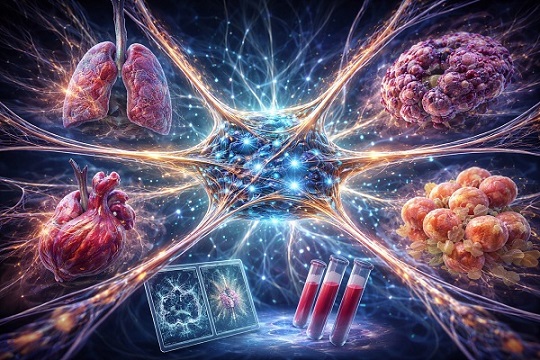 Scientists reveal how the body’s support structure shapes chronic disease and future treatments
What the Extracellular Matrix Really Is
Scientists reveal how the body’s support structure shapes chronic disease and future treatments
What the Extracellular Matrix Really Is
The extracellular matrix, often shortened to ECM, is the supportive framework that surrounds and holds together the body’s cells. Made up of proteins like collagen and elastin, along with sugars and gel like substances, it gives tissues their strength, flexibility, and shape. Far from being a passive scaffold, the ECM constantly communicates with cells, guiding how they grow, move, and repair damage.
When Support Turns Harmful
According to the review, problems begin when the ECM is remodeled in unhealthy ways. In many long-term diseases, the matrix becomes too stiff, too dense, or poorly organized. This abnormal remodeling does not simply reflect damage but actively drives disease progression. The researchers describe a vicious cycle where a hardened ECM sends mechanical signals that keep cells locked in an inflammatory and fibrotic state, preventing healing.
Role in Fibrosis and Heart Disease
In organs such as the lungs, liver, kidneys, and heart, excessive ECM buildup leads to fibrosis. This makes tissues rigid and less functional. In heart disease, abnormal ECM remodeling can disrupt electrical signals and reduce the heart’s ability to pump blood efficiently, contributing to heart failure and rhythm disorders.
Fueling Cancer Growth
The ECM also plays a critical role in cancer. Tumors often reshape their surrounding matrix to create dense, aligned fibers that help cancer cells invade nearby tissues and evade the immune system. A stiff ECM can block drugs from reaching tumor cells and make treatments less effective, explaining why some cancers resist therapy.
Impact on Metabolic Disorders
In obesity and metabolic disease, ECM changes in fat tissue restrict healthy expansion of fat cells. This leads to chronic inflammation and insulin resistance, linking ECM remodeling directly to diabetes and related complications.
New Treatment Strategies Emerging
Rather than destroying the ECM, scientists now aim to normalize it. The review explains how new therapies target enzymes that cause excessive stiffening or block harmful signaling between cells and the matrix. Some experimental treatments are already being tested in lung fibrosis and cancer, often in combination with existing drugs.
Diagnostics and Precision Medi
cine
The ECM is also becoming a powerful diagnostic tool. Fragments released into the blood during matrix remodeling can act as biomarkers, while advanced imaging methods can map tissue stiffness and ECM composition inside the body. These tools could help doctors detect disease earlier and tailor treatments to individual patients.
Conclusion
The review makes it clear that the extracellular matrix is no longer a background player in medicine. By actively shaping how diseases begin, progress, and respond to treatment, the ECM offers a unifying explanation for many chronic conditions. Understanding and targeting ECM remodeling may lead to more effective therapies, better diagnostics, and truly personalized medicine that treats the root causes rather than just the symptoms.
The study findings were published in the peer reviewed journal: Biomedicines
https://www.mdpi.com/2227-9059/14/1/247
For the latest studies on the extracellular matrix, keep on logging to Thailand
Medical News.




 Share
Share
 Tweet
Tweet
 Share
Share

































