Nikhil Prasad Fact checked by:Thailand Medical News Team Apr 03, 2026 4 months, 4 weeks, 1 day, 10 hours, 39 minutes ago
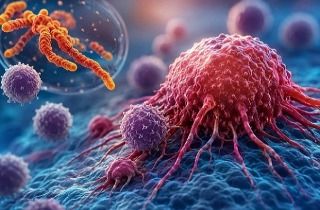
Medical News: A new scientific review is shedding light on how hidden “switches” in our DNA may control one of the most dangerous childhood cancers - neuroblastoma - and how targeting these switches could open the door to more effective treatments.
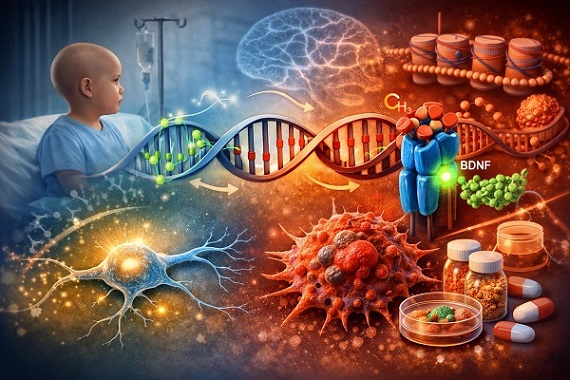 Hidden DNA switches may determine whether childhood tumors grow aggressively or fade away
Neuroblastoma is a cancer that develops from immature nerve cells, mostly affecting infants and young children. It is known for its unpredictable nature. Some tumors disappear on their own, while others become aggressive and resistant to treatment. Scientists have long struggled to understand why this happens, but new insights are now pointing toward epigenetics - changes that control how genes are turned on or off without altering the DNA itself.
Researchers from the University of Cagliari, Italy, including experts from the Department of Biomedical Sciences, Division of Neuroscience and Clinical Pharmacology, the Department of Medical Science and Public Health, and the Neuroscience Institute of the National Research Council of Italy (CNR), have explored how these epigenetic changes influence key cancer-driving pathways.
The Role of Growth Signals in Tumor Behavior
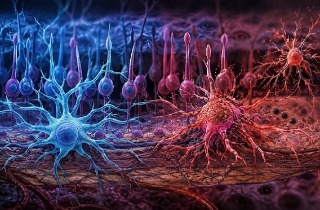
At the center of this discovery are special proteins called Trk receptors. These receptors act like communication hubs inside cells, responding to growth signals that guide how nerve cells develop.
There are three main types - TrkA, TrkB, and TrkC - and each plays a very different role in neuroblastoma. TrkA and TrkC are generally linked to less aggressive tumors and even spontaneous tumor regression. In contrast, TrkB is associated with fast-growing, treatment-resistant cancer.
What makes this especially interesting is that these receptors are not mainly controlled by genetic mutations. Instead, they are heavily influenced by epigenetic mechanisms such as DNA methylation and histone modification - chemical changes that determine whether certain genes are active or silent.
This
Medical News report highlights that these reversible changes allow cancer cells to “switch states,” helping them adapt, survive, and resist therapies.
How Cancer Cells Adapt and Survive
The study explains that aggressive neuroblastoma cells often rely on TrkB, which forms a self-sustaining loop with a molecule called BDNF. This loop helps tumors grow, resist chemotherapy, and survive under stress, such as low oxygen or limited nutrients.
On the other hand, tumors with higher levels of TrkA tend to behave more like normal nerve cells. These cells can mature properly or even self-destruct if they do not receive the right signals, which explains why some neuroblastomas shrink without treatment.
Epigenetic changes play a major role in deciding which of these pathways dominates. For example, harmful tumors often silence beneficial genes like TrkA through chemical “tags” on DNA, while boost
ing survival pathways linked to TrkB.
New Treatment Strategies Emerging
One of the most promising aspects of this research is the possibility of reversing these harmful epigenetic changes. Drugs known as epigenetic therapies - including HDAC inhibitors and EZH2 inhibitors - can reactivate suppressed genes and rebalance these signaling pathways.
In laboratory studies, these treatments have been shown to reduce tumor growth, restore normal cell behavior, and even trigger cancer cell death. Some therapies also lower TrkB levels while increasing proteins that promote cell death, making tumors more sensitive to treatment.
Importantly, the research suggests that combining these epigenetic drugs with other targeted therapies could be far more effective than using a single treatment approach. Scientists are also using advanced 3D tumor models and organoids to better simulate real tumor environments and test these new strategies.
Why This Matters for Patients
This growing understanding of epigenetic control offers a powerful new perspective on cancer treatment. Instead of only targeting genetic mutations, doctors may soon be able to “reprogram” cancer cells, pushing them toward less aggressive behavior or making them easier to destroy.
Conclusion
The findings highlight a major shift in how neuroblastoma is understood and potentially treated. By focusing on reversible epigenetic changes rather than fixed genetic mutations, researchers are uncovering new ways to control tumor behavior. This approach could lead to more precise, adaptable, and effective therapies, especially for high-risk patients who currently have limited treatment options. Continued research in this area may ultimately transform neuroblastoma from a deadly disease into a manageable condition.
The study findings were published in the peer reviewed International Journal of Molecular Sciences.
https://www.mdpi.com/1422-0067/27/7/3238
For the latest cancer research, keep on logging to Thailand
Medical News.
Read Also:
https://www.thailandmedical.news/articles/cancer




 Share
Share
 Tweet
Tweet
 Share
Share