Nikhil Prasad Fact checked by:Thailand Medical News Team Jun 02, 2026 3 months, 21 hours, 30 minutes ago
Medical News: Lyme disease, one of the most common tick-borne illnesses in the world, may be far more skilled at evading the human immune system than previously understood. A new scientific review has revealed that the bacteria responsible for Lyme disease use a complex arsenal of biological tricks to avoid detection, weaken immune defenses, and potentially contribute to persistent symptoms in some patients.
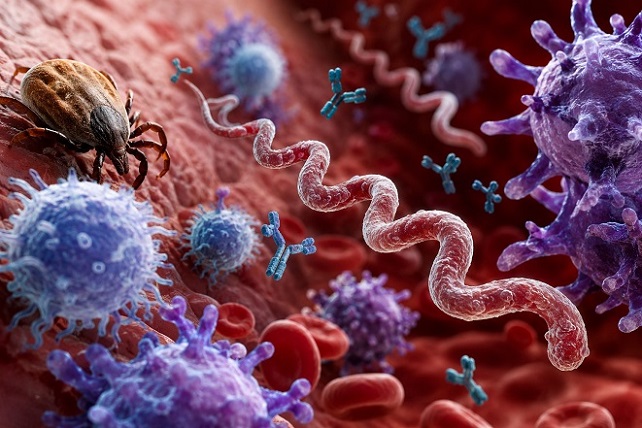 Researchers uncover how Lyme disease bacteria evade immune defenses, helping them survive and potentially contribute
to persistent symptoms
The review was conducted by researchers from the Department of Internal Medicine and the Radboud Community for Infectious Diseases at Radboud University Medical Center in Nijmegen, the Netherlands, and the Department of Translational Immunology at the MedFuture Institute for Biomedical Research, Iuliu Hatieganu University of Medicine and Pharmacy in Cluj-Napoca, Romania.
A Growing Health Concern
Lyme borreliosis, commonly known as Lyme disease, is caused by Borrelia burgdorferi sensu lato, a group of spiral-shaped bacteria transmitted through the bite of infected Ixodes ticks. The disease affects hundreds of thousands of people each year across North America and Europe. While many patients recover after treatment, others continue to experience symptoms such as fatigue, pain, and cognitive difficulties.
Scientists have long wondered why the bacteria can survive so effectively inside the human body despite a strong immune response. The new review provides important clues.
The Attack Begins with Tick Saliva
The battle between the bacteria and the human body starts immediately after a tick bite. Researchers found that tick saliva contains substances that actively suppress the body's first line of defense.
Normally, immune cells rush to the bite site to destroy invading microbes. However, proteins in tick saliva interfere with this process, reducing the ability of immune cells to recognize and attack the bacteria. This gives the invading microbes valuable time to establish themselves in the skin and begin spreading.
The bacteria also attach themselves to proteins and structures within human tissues, helping them move through the body and reach organs such as the joints, heart, and nervous system.
How the Bacteria Avoid Destruction
One of the most remarkable findings is the bacteria's ability to evade the complement system, a powerful immune defense mechanism that normally destroys invading pathogens.
Borrelia bacteria produce specialized surface proteins that capture and exploit the body's own protective molecules. By coating themselves with these human proteins, the microbes effectively disguise themselves and block immune attacks. This allows them to survive in the bloodstream when many other bacteria would be rapidly eliminated.
Researchers describe this strategy as one of the most important reasons why Lyme-causing bacteria can successfully establish infection.
Sabotaging the Immune System&#
39;s Communication Network
The review also highlights how Borrelia interferes with antigen presentation, a crucial process that allows immune cells to identify and remember dangerous invaders.
Normally, specialized immune cells process pieces of bacteria and display them to T cells, which coordinate a broader immune attack. However, Borrelia appears to disrupt this communication system at multiple levels.
The bacteria suppress molecules involved in presenting bacterial fragments to immune cells and weaken important signaling pathways needed for effective immune activation. As a result, immune responses may become poorly organized and less efficient.
This
Medical News report notes that the researchers believe the immune system does not completely fail. Instead, it launches a response that is strong but poorly coordinated, allowing some bacteria to persist.
Why Antibodies May Not Be Enough
Another surprising discovery involves antibodies. People infected with Lyme disease often produce substantial amounts of antibodies against the bacteria. Yet these antibodies frequently fail to eliminate the infection completely.
The researchers found that Borrelia continuously changes the proteins displayed on its surface. This process, known as antigenic variation, effectively changes the bacterium's appearance, making it harder for antibodies to recognize and target it.
In addition, the infection can disrupt structures known as germinal centers in lymph nodes. These structures are essential for producing high-quality, long-lasting antibody responses. Without properly functioning germinal centers, immune memory may be weakened and antibody effectiveness reduced.
The Protective Role of Autophagy
The review also identifies an important role for autophagy, the body's cellular recycling and cleanup system.
Autophagy helps control excessive inflammation by limiting the production of inflammatory molecules such as IL-1β and IL-6. When autophagy is impaired, inflammation increases dramatically and Lyme-related arthritis becomes more severe in experimental models.
Researchers also found evidence that genetic differences affecting autophagy may influence how individuals respond to infection, potentially helping explain why some people develop more severe symptoms than others.
Looking Toward Better Treatments
The findings suggest that future Lyme disease treatments may need to focus not only on killing the bacteria but also on restoring healthy immune function. Scientists are particularly interested in developing strategies that improve immune memory, enhance antigen presentation, regulate inflammation, and counter the bacteria's ability to change its surface proteins.
Conclusion
The new review paints a picture of Borrelia burgdorferi as a remarkably sophisticated pathogen that can manipulate nearly every stage of the human immune response. From exploiting tick saliva and disguising itself from immune attack to disrupting communication between immune cells and constantly altering its appearance, the bacteria possess numerous survival strategies that help explain why Lyme disease remains such a challenging illness. Researchers believe that understanding these immune-evasion mechanisms in greater detail could pave the way for more accurate diagnostics, more effective vaccines, and innovative treatments aimed at both eliminating infection and preventing long-term complications. As Lyme disease continues to spread into new regions, these discoveries may become increasingly important for protecting public health.
The study findings were published in the peer reviewed European Journal of Immunology.
https://onlinelibrary.wiley.com/doi/10.1002/eji.70195
For the latest on Lyme Disease, keep on logging to Thailand
Medical News.
Read Also:
https://www.thailandmedical.news/news/current-lyme-disease-tests-may-be-missing-infections
https://www.thailandmedical.news/news/secret-mineral-weakness-uncovered-in-lyme-disease-bacteria
https://www.thailandmedical.news/news/lyme-disease-hidden-link-to-strokes-and-brain-vessel-damage




 Share
Share
 Tweet
Tweet
 Share
Share