Phytochemicals from Mussaenda Plant Block Skin Darkening Enzyme and Brightens the Skin
Nikhil Prasad Fact checked by:Thailand Medical News Team Feb 25, 2026 6 months, 5 days, 16 hours, 48 minutes ago
Beauty and Aesthetics: Researchers from Vietnam have identified powerful phytochemicals in the aerial parts of Mussaenda pubescens Dryand, a traditional medicinal plant used across Southeast Asia, that can strongly slow down tyrosinase, the key enzyme that helps the body make melanin. The work was carried out by scientists from the Yersin University of Da Lat-Vietnam; Phutho College of Medicine and Pharmacy-Vietnam; and the Institute of Medicine and Pharmacy, Thanh Do University-Vietnam.
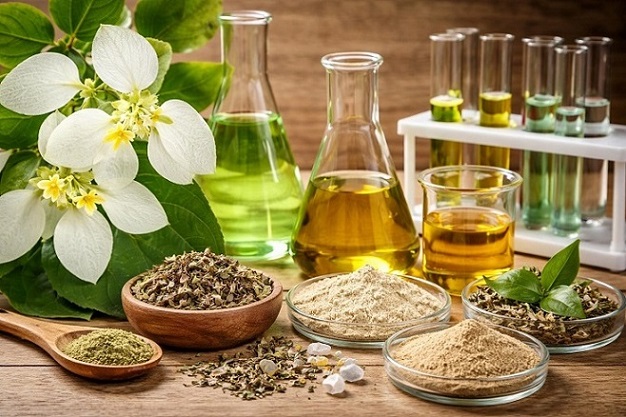 A traditional medicinal plant yields natural compounds that strongly slow the enzyme linked to unwanted skin darkening
Why Tyrosinase Matters to Everyday Skin Problems
A traditional medicinal plant yields natural compounds that strongly slow the enzyme linked to unwanted skin darkening
Why Tyrosinase Matters to Everyday Skin Problems
Tyrosinase is like a “starter switch” for melanin production. Melanin is the pigment that gives skin its color and helps protect it from sunlight. But when tyrosinase activity becomes too high, the body can produce excess pigment, which may show up as dark spots, uneven tone, freckles, or melasma. Because of this, tyrosinase inhibitors are widely used in skin-brightening products and treatments aimed at reducing hyperpigmentation. However, some commonly used synthetic inhibitors can cause irritation or safety concerns, driving a strong push toward safer plant-based option.
What The Scientists Extracted and Found
In this
Beauty and Aesthetics news report, the research team explained that they extracted the plant’s dried aerial parts with ethanol and then separated the extract into different fractions. The ethyl acetate fraction showed the strongest tyrosinase-blocking activity, so it became the main focus. Using multiple purification steps, they isolated seven compounds in total, including one newly identified natural compound. The compounds represented several natural chemical families often found in medicinal plants, including iridoid glycosides, flavonoids, and triterpenoids, which are known for a wide range of biological effects.
Three Compounds Stood Out as Strong Enzyme Blockers
All seven isolated compounds were tested in laboratory tyrosinase assays. Three performed especially well: the newly discovered compound (called a new iridoid glucoside), kaempferol 3-O-β-D-glucopyranoside (a flavonoid glycoside), and ursolic acid (a triterpenoid). The new compound and the kaempferol glycoside showed nearly identical strength, each needing only about 62 micromolar to cut tyrosinase activity by half (IC50 values around 62.4 and 62.6 µM). Ursolic acid was also effective, though weaker, with an IC50 of about 178 µM. For context, kojic acid, a well-known cosmetic ingredient, showed a lower IC50 in the study system, but the plant compounds were still considered notably strong for natural products tested under these conditions.
How the Most Active New Compound Works
The team went deeper on the newly identified compound to understand how it blocks tyrosinase. Enzyme kinetic testing showed it behaves as a competitive inhibitor, meaning it competes with tyrosine, the en
zyme’s normal starting material. In plain terms, the compound “crowds” the active site so tyrosinase has less access to the ingredient it needs to begin pigment formation. The inhibition constant (Ki) was measured at about 22.3 µM, suggesting a fairly tight interaction. Computer docking simulations supported this idea, predicting stable binding inside the active site and showing helpful hydrogen-bond interactions with key amino acids near the substrate-binding region.
Conclusion
Taken together, the findings suggest that Mussaenda pubescens contains multiple natural substances that can meaningfully reduce tyrosinase activity, with one newly discovered compound showing particularly strong and well-explained action. These results strengthen the case for developing safer plant-derived tyrosinase inhibitors for cosmetics and possibly dermatology, but further safety testing, formulation work, and real-world studies are still needed before any medical or commercial claims can be made.
The study findings were published in the peer reviewed International Journal of Molecular Sciences.
https://www.mdpi.com/1422-0067/27/5/2103
For the latest on
Beauty and Aesthetics, keep on logging to Thailand
Medical News.
Read Also:
https://www.thailandmedical.news/articles/aesthetics




 Share
Share
 Tweet
Tweet
 Share
Share

































