Nikhil Prasad Fact checked by:Thailand Medical News Team Jul 01, 2026 2 months, 1 day, 9 hours, 31 minutes ago
Medical News: A rare but important case has highlighted how COVID-19 may awaken a dormant herpes virus and trigger a severe eye disease that can rapidly threaten vision if left untreated. Researchers are urging doctors to remain alert when patients with a history of herpes eye infections develop new eye symptoms after recovering from COVID-19.
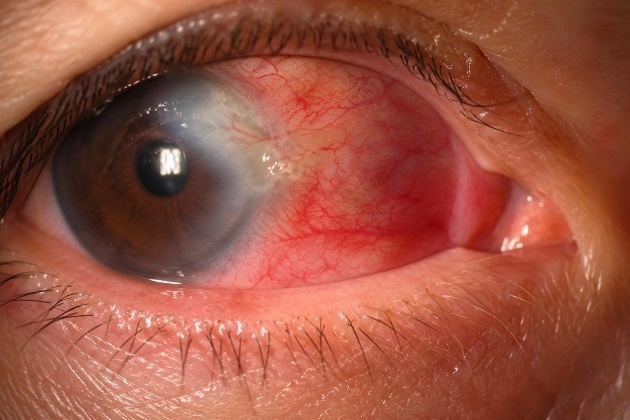 Doctors report a rare case suggesting COVID-19 may reactivate dormant herpes virus, causing a severe
vision-threatening corneal infection
Rare Eye Complication Emerges After COVID-19
Researchers from the University of Alberta, The Ottawa Hospital and University of Ottawa Eye Institute in Canada, University of Otago in New Zealand, University of Girona in Spain, and The Australian National University in Australia described the case of a 65-year-old woman who developed herpetic necrotizing keratitis just two weeks after recovering from COVID-19.
The woman had experienced a herpes infection in one eye more than 30 years earlier but had remained free of recurrences ever since. Shortly after her COVID-19 illness, she developed eye pain, irritation and blurred vision in her left eye. Examination revealed extensive corneal damage, including tissue death, a classic branching surface ulcer, new abnormal blood vessel growth and significant inflammation. These findings pointed to a dangerous reactivation of herpes simplex virus type 1.
Why COVID-19 May Reactivate Dormant Herpes Virus
Herpes simplex virus can remain inactive inside nerve cells for decades after the first infection. Under certain conditions, including illness, stress or weakened immunity, the virus can become active again.
The researchers believe COVID-19 may create exactly the conditions needed for this reactivation. During infection, the body releases large amounts of inflammatory molecules known as cytokines. While these chemicals help fight viruses, they can also worsen inflammation inside the eye.
At the same time, COVID-19 temporarily reduces important immune cells, particularly CD4+ and CD8+ T cells, which normally keep dormant herpes viruses under control. With these immune defenses weakened, the virus may escape from its dormant state and travel along the nerves back to the cornea, where it causes destructive inflammation.
Successful Treatment Prevented Permanent Vision Loss
Doctors immediately started the patient on both topical antiviral eye ointment and oral aciclovir tablets to stop viral replication. Two weeks later, although healing had only partially occurred, inflammation had already begun to decrease. Once the active viral infection was under better control, doctors carefully introduced steroid eye drops to suppress the damaging immune response without allowing the virus to spread further.
This
Medical News report highlights that the patient's vision steadily improved during follow-up. After one month, her visual acuity had improved significantly, inflammation had almost completely resolved, abnormal b
lood vessels had regressed, and only a small amount of residual corneal haze remained. Early diagnosis and prompt treatment were likely the key reasons she avoided permanent blindness.
Important Lessons for Patients and Doctors
Herpetic necrotizing keratitis remains one of the leading infectious causes of blindness in developed countries because it can rapidly scar, thin and even perforate the cornea. Although this case cannot prove that COVID-19 directly caused the disease, it adds growing evidence that coronavirus infection may trigger the reactivation of dormant viruses in susceptible individuals.
The patient also had well-controlled diabetes and older age, both recognized risk factors for herpes virus reactivation. Nevertheless, the close timing between COVID-19 infection and the sudden appearance of severe eye disease strongly suggests that the coronavirus may have acted as an important trigger.
Conclusion
This unusual case serves as a reminder that COVID-19 may have health effects extending well beyond the lungs. People with a previous history of herpes eye infections should seek immediate medical attention if they develop eye pain, redness or blurred vision after COVID-19. Rapid recognition, aggressive antiviral treatment and careful control of inflammation can dramatically improve outcomes and help preserve sight. Larger studies are now needed to determine how frequently this complication occurs and to better understand the biological mechanisms responsible for viral reactivation.
The study findings were published in the peer reviewed journal: Saudi Journal of Ophthalmology.
https://journals.lww.com/sjop/fulltext/2026/04000/a_report_of_herpetic_necrotizing_keratitis.17.aspx
For the latest COVID-19 news, keep on logging to Thailand
Medical News.
Read Also:
https://www.thailandmedical.news/articles/coronavirus
https://www.thailandmedical.news/articles/long-covid




 Share
Share
 Tweet
Tweet
 Share
Share