Nikhil Prasad Fact checked by:Thailand Medical News Team Apr 19, 2026 5 months, 2 weeks, 22 hours, 2 minutes ago
Medical News: A team of scientists has uncovered a group of powerful natural compounds from soil fungi that could one day help slow or even prevent brain diseases like Alzheimer’s. The discovery shines a spotlight on how nature continues to provide surprising solutions to some of medicine’s toughest challenges.
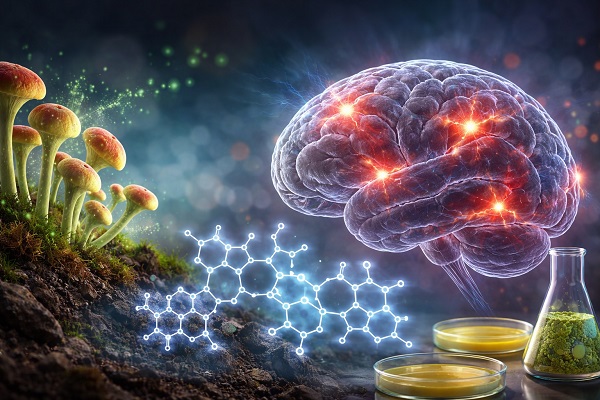 Newly discovered fungal compounds show strong potential to reduce brain inflammation linked to Alzheimer’s disease
Hidden Compounds Found in Soil Fungus
Newly discovered fungal compounds show strong potential to reduce brain inflammation linked to Alzheimer’s disease
Hidden Compounds Found in Soil Fungus
Researchers isolated a series of previously unknown molecules from a fungus called Talaromyces stipitatus, collected from soil samples in China. These compounds, named talarostipins A through E, belong to a rare class of complex natural chemicals known as oligophenalenone dimers.
The study identified a total of 21 compounds, including five new ones. These molecules were carefully analyzed using advanced techniques such as nuclear magnetic resonance and mass spectrometry to determine their structures and properties.
What makes these findings exciting is not just the novelty of the compounds, but their potential biological activity—particularly in reducing inflammation in the brain.
Why Brain Inflammation Matters
Neuroinflammation is increasingly recognized as a major driver of diseases like Alzheimer’s. When immune cells in the brain—called microglia—become overactive, they release harmful chemicals that damage neurons over time.
This chronic inflammation creates a vicious cycle that accelerates memory loss and cognitive decline. Scientists now believe that controlling this inflammation could be one of the most effective ways to slow disease progression.
Powerful Effects Seen in Lab Tests
The researchers tested all 21 compounds on mouse brain immune cells exposed to an inflammatory trigger. Several compounds showed strong anti-inflammatory effects, but one stood out clearly.
A phytochemical compound known as duclauxamide C demonstrated the most potent activity. It significantly reduced the production of nitric oxide, a key molecule involved in inflammation, with high efficiency and low toxicity.
Importantly, the compound performed almost as well as quercetin, a well-known natural anti-inflammatory agent, suggesting real therapeutic potential.
How the Compound Works
Further investigation revealed how this compound exerts its effects. It targets a critical cellular pathway known as NF-κB, which acts like a master switch for inflammation.
When activated, this pathway triggers the production of harmful proteins such as iNOS and COX-2, which amplify inflammation. The study showed that duclauxamide C effectively suppresses these proteins, thereby calming the inflammatory response.
This
Medical News report highlights that gene analysis confirmed these
effects at a deeper level, showing that multiple inflammation-related genes were turned down when the compound was introduced.
A Step Toward New Alzheimer’s Treatments
Beyond basic lab testing, the researchers also conducted molecular docking studies. These simulations showed that the compound binds strongly to key inflammation-related proteins, reinforcing its potential as a drug candidate.
The unique chemical structure of these fungal compounds is especially important. Unlike many existing drugs, they offer a new “template” that scientists can modify to improve effectiveness and ability to reach the brain.
Conclusion
The discovery of these fungal-derived compounds represents a promising new direction in the fight against neurodegenerative diseases. While the research is still at an early stage, the strong anti-inflammatory effects, low toxicity, and unique mechanism of action make duclauxamide C and related molecules highly attractive for further development. Future studies will need to confirm whether these benefits translate into real-world treatments in humans, but the findings clearly open the door to innovative therapies targeting brain inflammation. If successfully developed, such compounds could play a critical role in slowing or even preventing diseases like Alzheimer’s, offering hope to millions worldwide.
The study findings were published in the peer reviewed journal: Molecules.
https://www.mdpi.com/1420-3049/31/8/1308
For the latest research on treating brain inflammation, keep on logging to Thailand
Medical News.
Read Also:
https://www.thailandmedical.news/articles/alzheimer,-dementia-
https://www.thailandmedical.news/articles/herbs-and-phytochemicals




 Share
Share
 Tweet
Tweet
 Share
Share

































