Nikhil Prasad Fact checked by:Thailand Medical News Team Oct 14, 2026 58 minutes ago
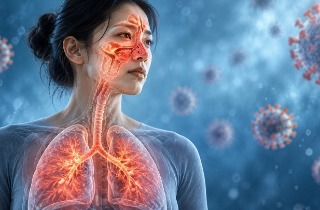
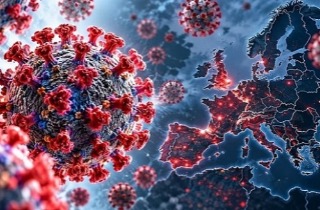
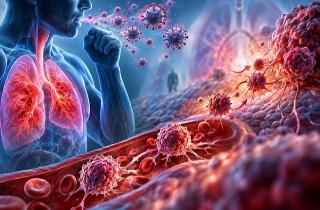
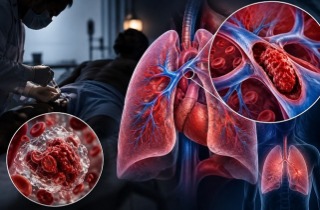
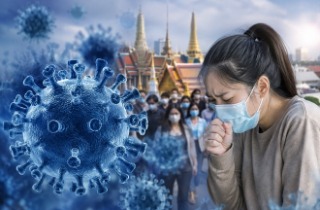
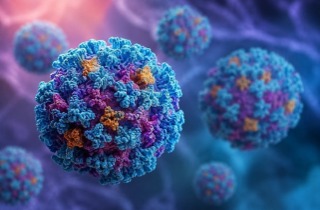
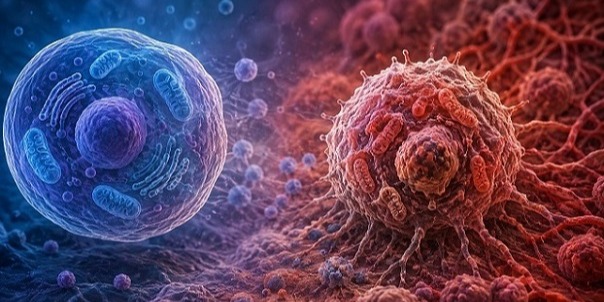
New research suggests that COVID-19 could create conditions that accelerate the growth of previously dormant lung tumors by triggering oxygen deprivation, inflammation, and abnormal blood vessel formation.
The findings raise important questions about how serious respiratory infections might influence cancer progression.
 New research reveals how COVID-19-induced oxygen deprivation and abnormal blood vessel growth may accelerate
dormant lung tumors
The international study involved researchers from Karolinska Institutet, Karolinska University Laboratory, Loma Linda University, Sun Yat-sen University, Zhengzhou University, Henan Provincial People's Hospital, Wenzhou Medical University, Oujiang Laboratory, Shandong First Medical University, Shandong Provincial Qianfoshan Hospital, and Shandong University.
How COVID-19 Could Reactivate Dormant Tumors
Dormant tumors can remain inactive for years because they lack the blood vessels necessary to support continued growth.
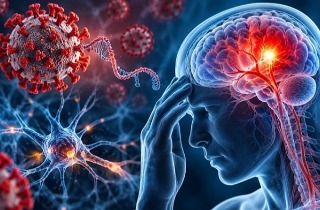
Researchers discovered that SARS-CoV-2 infection could disrupt this balance through severe lung inflammation and hypoxia, a condition characterized by insufficient oxygen.
This
Thailand Medical News report highlights how these changes activate vascular endothelial growth factor (VEGF), a protein responsible for stimulating new blood vessel formation, known as angiogenesis.
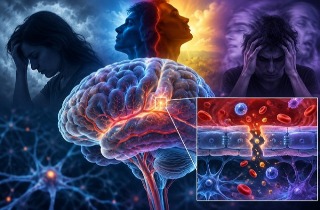
These additional vessels may provide dormant cancer cells with the oxygen and nutrients needed to expand.
Dramatic Increases in Blood Vessel Growth
Experiments involving SARS-CoV-2-infected mice revealed striking biological changes.
Compared with uninfected animals, infected mice demonstrated:
-More than ninefold greater lung microvascular density.
-Approximately 180-fold higher VEGF gene expression.
-Approximately 50-fold higher expression of VEGFR2, a receptor that mediates VEGF signaling.
-Increased inflammation, tissue fibrosis, and oxygen deprivation.
These findings suggest that COVID-19 can create a lung environment particularly favorable to tumor development.
Lung Tumor Formation Reached 100 Percent
One particularly concerning finding emerged when researchers introduced lung cancer cells into experimental mice.
Only 28% of uninfected animals developed visible lung tumors, compared with 100% of SARS-CoV-2-infected animals.
Infected mice also developed significantly more tumor nodules and larger tumors.
Additional experiments demonstrated that increasing VEGF production dramatically enhanced tumor formation.
When mice received 10,000 cancer cells, tumors developed in just 25% of animals receiving ordinary cells, compared with 100% receiving VEGF-overproducing cells.
Human Lung Samples Confirmed Biological Changes
Researchers also exam
ined lung tissue from 21 people who died from severe COVID-19 and 15 individuals without COVID-19.
COVID-19 samples showed approximately ninefold higher levels of the hypoxia marker CA9 and fourfold higher levels of HIF-1α.
CD31 gene expression, associated with blood vessel formation, increased approximately 100-fold.
The tissues also exhibited abnormal vascular networks, inflammatory cell accumulation, and reduced T-cell populations.
However, these human findings did not establish that COVID-19 caused cancer.
Experimental Treatment Suppressed Tumor Growth
Importantly, blocking VEGF using the antibody suvemcitug substantially reduced tumor formation and growth in infected mice.
Treatment decreased tumor numbers, reduced abnormal blood vessel formation, and left many cancerous lesions microscopically small.
Although promising, these findings do not establish anti-VEGF therapy as a proven treatment for preventing COVID-19-associated cancer progression in humans.
Conclusions
The research identifies a plausible biological pathway through which severe COVID-19 may accelerate dormant lung tumor growth. However, further human studies are essential to determine whether this experimental mechanism translates into increased cancer progression among survivors.
The study findings were published in the peer-reviewed journal: Signal Transduction and Targeted Therapy.
https://www.nature.com/articles/s41392-026-02952-6
Read Also:
https://www.thailandmedical.news/articles/coronavirus
https://www.thailandmedical.news/articles/long-covid




 Share
Share
 Tweet
Tweet
 Share
Share