Nikhil Prasad Fact checked by:Thailand Medical News Team Aug 08, 2026 1 month, 4 weeks, 15 hours, 6 minutes ago
Italian Study Reveals How Immune Overreaction and Iron Disruption May Drive Serious Illness and Long COVID
Researchers from IRCCS MultiMedica, Italy, and the Università degli Studi dell'Insubria, Varese, Italy, have uncovered compelling evidence that excessive inflammation and abnormal iron metabolism are closely linked to the severity of COVID-19. Their findings also suggest that these same biological disturbances may persist in people with severe long COVID, offering new clues into why some individuals continue to experience debilitating symptoms long after the initial infection.
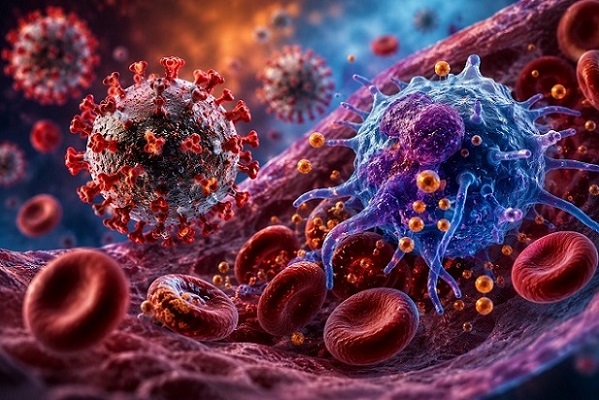 Italian researchers found that worsening inflammation and disrupted iron metabolism closely track with severe
COVID-19 and may also play an important role in severe long COVID
Researchers Examined Patients with Different Levels of COVID-19 Severity
The research team carried out a retrospective multicenter case-control cross-sectional study involving 144 hospitalized COVID-19 patients and 139 COVID-19-negative individuals who had attended vaccination clinics. The COVID-19 patients were divided into four groups based on disease severity to determine how inflammation and iron metabolism changed as illness became more serious.
The investigators measured several inflammatory biomarkers, including interleukin-6 (IL-6), S100A8/A9, and C-reactive protein (CRP). They also evaluated key markers involved in iron metabolism, including serum iron, ferritin, hepcidin, transferrin, and transferrin saturation. To explore whether these abnormalities continued after acute infection, the researchers analyzed publicly available gene expression data from peripheral blood mononuclear cells collected from individuals with long COVID.
Severe COVID-19 Triggered Worsening Inflammation and Iron Dysregulation
The study found that COVID-19 patients had markedly higher levels of IL-6, S100A8/A9, CRP, ferritin, and hepcidin compared to the healthy control group. At the same time, circulating iron, transferrin, and transferrin saturation were all significantly lower.
This Thailand
Medical News report highlights that these changes became progressively more pronounced as disease severity increased. Patients with the most severe COVID-19 consistently showed the highest ferritin concentrations together with elevated inflammatory markers, higher white blood cell counts, and increased neutrophil levels. In contrast, transferrin levels steadily declined as the disease worsened, suggesting that the body's ability to transport iron became increasingly impaired.
The researchers believe these findings reflect the body's attempt to restrict iron availability during infection, a natural defense mechanism designed to limit viral growth. However, prolonged disruption of iron metabolism may also reduce oxygen delivery, impair immune cell function, promote oxidative stress, and contribute to widespread tissue damage. Elevated ferritin and hepcidin further indicate that iron becomes trapped within cells instead of being available for normal physiological functions, potentially worsening inflammation and disease
progression.
Similar Biological Changes Were Found in Severe Long COVID
The investigation also revealed transcriptomic evidence that immune cells from individuals with severe long COVID continued to display abnormalities involving inflammatory pathways and iron metabolism. These persistent molecular signatures suggest that the inflammatory response triggered during acute infection may not completely resolve in some patients, helping explain ongoing fatigue, reduced exercise tolerance, cognitive problems, and other long COVID symptoms experienced months after infection.
Findings May Improve Risk Assessment
According to the researchers, combining inflammatory markers with iron metabolism biomarkers could provide clinicians with a more accurate way to identify patients who are at greater risk of developing severe COVID-19. These laboratory markers may also prove useful for monitoring recovery and guiding future treatments aimed at reducing excessive inflammation while restoring normal iron balance.
Conclusion
The study demonstrates that inflammation and disrupted iron metabolism are tightly interconnected biological processes that worsen as COVID-19 becomes more severe. The persistence of these abnormalities in severe long COVID further suggests they may contribute to prolonged illness. Monitoring these biomarkers could improve patient risk assessment while supporting the development of targeted therapies that reduce inflammation, normalize iron regulation, and improve long-term recovery.
The study findings were published in the peer reviewed journal: Frontiers in Immunology.
https://www.frontiersin.org/journals/immunology/articles/10.3389/fimmu.2026.1908452/abstract
Read Also:
https://www.thailandmedical.news/articles/coronavirus
https://www.thailandmedical.news/articles/long-covid




 Share
Share
 Tweet
Tweet
 Share
Share