Nikhil Prasad Fact checked by:Thailand Medical News Team Sep 14, 2026 36 minutes ago
A study of people living with severe long COVID for about three years has found no evidence that three circulating markers of NETosis—a process linked to immune activation and inflammation—remain elevated long after SARS-CoV-2 infection. The findings challenge the idea that persistent systemic NETosis is a universal driver of long-term long COVID.
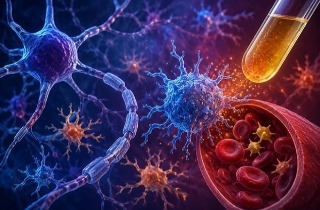
NETosis is a specialized form of programmed cell death in neutrophils where they release web-like traps composed of DNA and antimicrobial proteins. These neutrophil extracellular traps (NETs) capture and destroy invading pathogens like bacteria and fungi outside the cell. While vital for fighting infections, uncontrolled NETosis can trigger harmful inflammation and tissue damage.
 Three major NETosis markers were not elevated in patients experiencing severe long COVID for a median of three years.
Why NETosis matters
Three major NETosis markers were not elevated in patients experiencing severe long COVID for a median of three years.
Why NETosis matters
Neutrophils can release web-like structures called neutrophil extracellular traps, or NETs. Made from DNA, histones, and antimicrobial proteins, NETs help trap pathogens. Excessive NET formation, however, can promote inflammation, blood clotting, and tissue damage and has been documented during acute COVID-19. This
Thailand Medical News report covers the findings of the researchers who examined whether signs of this process remain detectable years later in people with persistent symptoms.
The team included researchers from the Departments of Immunology, Hematology, Respiratory Medicine, and Intensive Care at Erasmus Medical Center in Rotterdam, Netherlands, and the Department of Intensive Care at Elisabeth-TweeSteden Hospital in Tilburg, Netherlands.
Severely affected patients studied
Researchers analyzed 51 long COVID patients and 52 age- and sex-matched controls who had recovered from COVID-19 without developing long COVID. Patients had a median disease duration of 3.0 years and median age of 40; 53% were women.
Their illness was substantial. All reported at least five new or worsened symptoms, with a median of 15, while overall functioning had fallen to a median 20% of pre-COVID health. Sixty-two percent were physically inactive after COVID-19, and 52% were unemployed because of long COVID.
Three NETosis markers show no significant increase
Researchers measured plasma MPO-DNA complexes, histone-DNA complexes, and citrullinated histone H3. None differed significantly between long COVID patients and controls, with P values of 0.08, 0.63, and 0.57, respectively.
Hierarchical clustering also failed to identify a patient subgroup with distinctive NETosis-marker patterns. Marker concentrations were not significantly associated with illness duration, number of new symptoms, fatigue, post-exertional malaise, cognitive failures, POTS symptoms, or health-related quality of life. Multivariable analyses similarly found no significant association between long COVID status and the three markers.
Biology may change over time
Earlier studies detected increased NET-related activity during acute COVID-19 or within months of infection. The new r
esults suggest systemic neutrophil activation may diminish as long COVID becomes chronic. However, the cross-sectional design cannot establish how NETosis changes within individuals over time, while functional NETosis and indirect markers such as endothelial injury were not assessed.
Conclusion
The findings argue against persistent systemic NETosis as a general feature of severe, long-duration long COVID. Larger longitudinal studies using broader biomarker panels are needed to determine whether NETosis contributes earlier, fluctuates over time, or remains biologically important only in specific patient subgroups.
The study findings were published in the peer reviewed journal: Frontiers in Cellular and Infection Microbiology.
https://www.frontiersin.org/journals/cellular-and-infection-microbiology/articles/10.3389/fcimb.2026.1920533/full




 Share
Share
 Tweet
Tweet
 Share
Share