Nikhil Prasad Fact checked by:Thailand Medical News Team Jun 22, 2026 3 months, 1 week, 6 days, 5 hours, 3 minutes ago
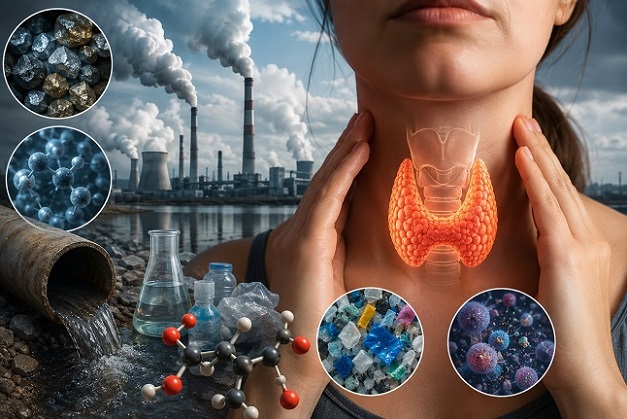
Medical News: The thyroid gland, a small butterfly-shaped organ in the neck, may be facing a much larger threat than previously understood. A new scientific review warns that everyday exposure to heavy metals and endocrine-disrupting chemicals could be contributing to thyroid disorders and even thyroid cancer, raising concerns about the long-term impact of environmental pollution on human health.
 New review links environmental pollutants and heavy metals to rising thyroid disorders and potential cancer risks
Researchers from Misericordia Hospital in Grosseto, Italy; the University of Catania, Italy; the Pavia Poison Control Centre–National Toxicology Information Centre and Istituti Clinici Scientifici Maugeri IRCCS in Pavia, Italy; Kore University in Enna, Italy; Ospedale Isola Tiberina-Gemelli Isola in Rome, Italy; and UniCamillus-Saint Camillus International University of Health Sciences in Rome, Italy, conducted an extensive review of current scientific evidence examining how environmental contaminants affect thyroid function.
Why the Thyroid Is Especially Vulnerable
The thyroid requires a constant supply of iodine to produce hormones that regulate metabolism, growth, and energy use. Because the gland is highly vascularized and naturally produces oxidative chemicals during hormone synthesis, it is particularly vulnerable to toxic substances circulating in the body.
According to the review, heavy metals such as cadmium, mercury, lead, arsenic, and chromium can accumulate in the environment and eventually enter the human body through food, drinking water, air pollution, and occupational exposure. Many of these substances remain in the body for years and can interfere with normal thyroid function.
Growing Evidence of Thyroid Damage
Scientists found increasing evidence linking heavy metal exposure to conditions such as hypothyroidism, autoimmune thyroid disease, thyroid enlargement, and hormonal imbalances. Cadmium, for example, may interfere with the thyroid's ability to absorb iodine and produce hormones. Mercury has been associated with autoimmune thyroid conditions, while lead appears capable of disrupting the brain-thyroid communication system that regulates hormone production.
The review also highlighted the dangers posed by endocrine-disrupting chemicals, commonly known as EDCs. These compounds are found in plastics, food packaging, flame retardants, industrial products, pesticides, and non-stick cookware. Some of the most concerning groups include PFAS, often called “forever chemicals,” bisphenol A (BPA), phthalates, polychlorinated biphenyls (PCBs), and dioxins.
Many of these chemicals can mimic natural hormones or interfere with hormone signaling pathways, potentially altering thyroid hormone levels even at relatively low exposure levels.
Possible Link to Thyroid Cancer
Thyroid cancer is now the most common cancer of the endocrine system and one of the fastest-rising cancers worldwide. While improved diagnostic techniques explain part of the increase, researchers believe environmental pollutants may also be contributing.
/>
This
Medical News report highlights that laboratory and animal studies provide strong biological evidence showing how pollutants can trigger oxidative stress, DNA damage, chronic inflammation, and genetic instability inside thyroid cells. These changes are known factors involved in cancer development.
Researchers noted that certain regions with documented heavy metal contamination, including volcanic areas, have reported higher rates of thyroid cancer, suggesting that environmental exposure may play a role in disease risk.
Conclusions
The review concludes that environmental pollutants represent a growing concern for thyroid health. Although human studies sometimes produce mixed results, the overall evidence increasingly supports a connection between chronic exposure to heavy metals and endocrine-disrupting chemicals and the development of thyroid dysfunction and possibly thyroid cancer. The authors stress that more long-term human studies are urgently needed, but they also emphasize the importance of reducing environmental contamination and limiting exposure whenever possible to help protect public health.
The study findings were published in the peer reviewed International Journal of Molecular Sciences.
https://www.mdpi.com/1422-0067/27/12/5583
For the latest on Thyroid health, keep on logging to Thailand
Medical News.
Read Also:
https://www.thailandmedical.news/news/covid-19-linked-to-surge-in-thyroid-disorders
https://www.thailandmedical.news/news/covid-19-thyroid-damage-may-linger-for-months
https://www.thailandmedical.news/news/post-covid-19-thyroid-problems-more-common-than-thought




 Share
Share
 Tweet
Tweet
 Share
Share