Nikhil Prasad Fact checked by:Thailand Medical News Team Feb 22, 2026 6 months, 1 week, 1 day, 15 hours, 50 minutes ago
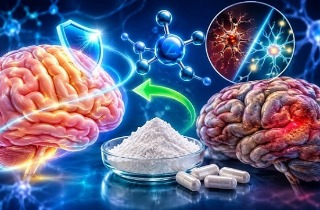
Medical News: Scientists are increasingly exploring stem cell therapies as a possible breakthrough for people suffering from devastating neurological diseases such as Alzheimer’s disease, Parkinson’s disease, Huntington’s disease, and amyotrophic lateral sclerosis (ALS). A major new scientific review has now gathered years of research and suggests that mesenchymal stem cell therapies could potentially slow damage in the brain, protect nerve cells, and reduce harmful inflammation, offering hope beyond the limited treatments currently available.
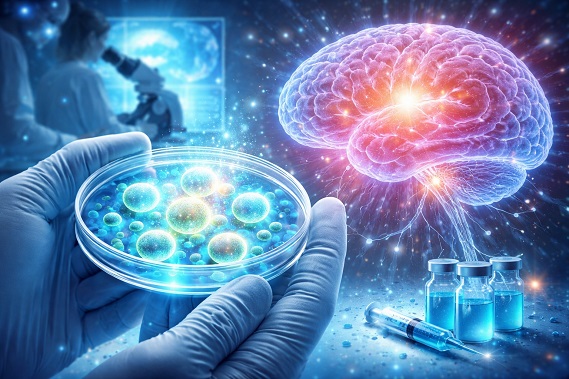 New research shows stem-cell therapies may help protect brain cells and slow neurological decline
Researchers Analyze Years of Global Data
New research shows stem-cell therapies may help protect brain cells and slow neurological decline
Researchers Analyze Years of Global Data
The study was carried out by researchers from several Portuguese institutions, including the Instituto de Ciências Biomédicas de Abel Salazar at the University of Porto, the Rede de Química e Tecnologia (REQUIMTE), the Associate Laboratory for Animal and Veterinary Science (AL4AnimalS), and other affiliated research centers. The team reviewed a large number of scientific studies conducted over more than a decade, focusing on how mesenchymal stem cells and their biological byproducts could help treat neurological disorders.
These diseases are among the most feared conditions worldwide because they slowly destroy brain cells, leading to memory loss, movement problems, and progressive disability. Existing medications mostly help control symptoms but do not stop the disease itself. This has pushed researchers to look for more regenerative approaches.
Why Mesenchymal Stem Cells Are Different
Unlike many other treatments, mesenchymal stem cells do not mainly work by replacing dead brain cells. Instead, scientists believe their biggest advantage comes from the substances they release. These include anti-inflammatory molecules, growth factors, and microscopic particles that help repair and protect surrounding cells.
This
Medical News report explains that these secreted substances may calm damaging immune responses inside the brain, improve communication between neurons, and support the survival of vulnerable nerve cells. Because neurodegenerative diseases involve many biological problems at once, therapies that can act in multiple ways are considered especially promising.
Strong Improvements Seen in Laboratory Models
The review found that in animal studies, stem cell therapies produced encouraging results across several diseases. In Alzheimer’s models, researchers observed improvements in memory and reductions in harmful protein buildup linked to brain damage. In Parkinson’s models, treatments helped preserve dopamine-producing neurons and improved movement.
For Huntington’s disease, studies showed slower progression and better motor control, while in ALS models, some experiments reported delayed symptom onset and longer survival. Scientists believe these benefits were mainly due to reduced inflammation and stronger cellular support
systems rather than direct replacement of lost neurons.
Interestingly, even therapies using only the tiny particles released by stem cells, without transplanting the cells themselves, showed promising effects. This approach may one day lead to safer and more practical treatments.
Early Human Trials Show Safety First
When it comes to human studies, the research is still in early stages. Clinical trials so far have focused mainly on safety, and results suggest that these treatments are generally well tolerated, with mostly mild and temporary side effects. Some studies reported hints of slower brain shrinkage or temporary functional improvements, but researchers caution that these findings are still preliminary.
The main challenge is that most trials involved small numbers of participants and short follow-up periods, making it difficult to confirm long-term benefits. Scientists stress that much larger studies are needed before these therapies can become routine medical treatments.
Challenges Researchers Still Face
Despite the excitement, several obstacles remain. Stem cells often struggle to survive for long periods once introduced into the body, and many do not reach the brain efficiently. Researchers also need to standardize how treatments are prepared, how much is given, and which patients are most likely to benefit.
Future efforts are expected to focus on improving delivery methods, refining cell preparation techniques, and developing therapies based on cell-derived particles that may be easier to control and manufacture.
Conclusion
The overall picture emerging from this large review is one of cautious optimism. Mesenchymal stem cell therapies appear biologically powerful and safe in early testing, but clear proof of long-term effectiveness in humans is still missing.
Scientists believe that with better-designed clinical trials, improved treatment methods, and deeper understanding of how these cells work, stem-cell-based therapies could eventually become a major tool in slowing or modifying neurodegenerative diseases. For now, they remain a promising frontier rather than a proven cure, but the growing body of evidence suggests that real progress is being made toward therapies that may one day change the lives of millions affected by brain disorders.
The study findings were published in the peer reviewed journal: Biomedicines.
https://www.mdpi.com/2227-9059/14/2/475
For the latest on the use of stem cells for neurodegenerative diseases and other brain issues, keep on logging to Thailand
Medical News.
Read Also:
https://www.thailandmedical.news/articles/stem-cell-therapies
https://www.thailandmedical.news/articles/alzheimer,-dementia-




 Share
Share
 Tweet
Tweet
 Share
Share