Nikhil Prasad Fact checked by:Thailand Medical News Team May 14, 2026 4 months, 3 weeks, 1 hour, 26 minutes ago
Medical News: A naturally occurring plant compound found in fruits and vegetables could one day help protect women from age-related fertility decline, according to a new study by researchers from Zhejiang A&F University and Zhejiang University in China.
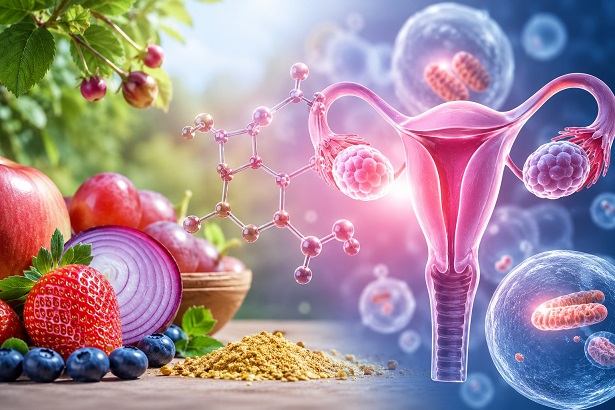 Natural plant compound fisetin helped restore fertility and reduce ovarian aging damage in laboratory mice
The compound, called fisetin, was shown to reduce ovarian damage, improve hormone balance, and even restore fertility in aging mice. Scientists say the findings open up exciting possibilities for future therapies aimed at slowing ovarian aging and preserving reproductive health.
Researchers from the Key Laboratory of Applied Technology on Green-Eco-Healthy Animal Husbandry of Zhejiang Province, the Provincial Engineering Research Center for Animal Health Diagnostics & Advanced Technology, the Zhejiang International Science and Technology Cooperation Base for Veterinary Medicine and Health Management, the China Australia Joint Laboratory for Animal Health Big Data Analytics, the College of Animal Science and Technology and College of Veterinary Medicine at Zhejiang A&F University, along with the College of Animal Sciences at Zhejiang University, conducted the study.
Why Ovarian Aging Matters
The ovaries are among the first organs in the female body to show signs of aging. As women grow older, the number and quality of ovarian follicles decline. This can lead to infertility, miscarriage risks, hormonal imbalance, and other reproductive complications.
Scientists have long known that oxidative stress plays a major role in this process. Oxidative stress happens when harmful molecules called reactive oxygen species overwhelm the body’s natural antioxidant defenses. This damages ovarian cells, especially granulosa cells, which are critical for supporting healthy egg development.
In the new study, researchers focused on whether fisetin could protect these cells from damage.
What Is Fisetin?
Fisetin is a flavonoid naturally present in strawberries, apples, onions, grapes, and persimmons. It has already attracted scientific attention for its antioxidant, anti-inflammatory, and anti-aging effects.
To investigate its impact on ovarian aging, scientists used mice treated with D-galactose, a substance commonly used in laboratories to mimic accelerated aging. The aging mice were then given varying doses of fisetin over several weeks.
Major Improvements Seen in Fertility
The results were striking. Mice receiving fisetin showed more regular reproductive cycles and higher estrogen levels compared to untreated aging mice. The treated animals also produced significantly more embryos, suggesting a direct improvement in fertility.
Researchers also observed healthier ovarian tissue. Aging mice normally develop large numbers of damaged follicles and fibrotic tissue in their ovaries. However, fisetin sharply reduced these harmful changes.
Importantly, fisetin helped restore the balance between cell growth
and cell death inside ovarian follicles. Healthy cell growth is essential for maintaining viable eggs and proper reproductive function.
How The Compound Works
The team discovered that fisetin activates an important cellular pathway known as AMPK/mTOR, which helps regulate energy use and cell survival.
This pathway also controls mitophagy, a natural cleanup process where damaged mitochondria are removed from cells. Mitochondria are the energy-producing structures inside cells, and when they become damaged, they generate excessive oxidative stress that accelerates aging.
The study found that fisetin boosted mitophagy activity, allowing ovarian cells to clear out dysfunctional mitochondria before they could trigger severe damage.
This
Medical News report highlights that fisetin not only reduced oxidative stress markers but also restored antioxidant enzyme activity in ovarian tissues.
Researchers observed higher levels of protective enzymes such as catalase and superoxide dismutase, while harmful oxidative compounds declined significantly.
Protection At the Cellular Level
Further laboratory experiments on granulosa cells confirmed the findings. Fisetin-treated cells showed healthier mitochondria, lower levels of reactive oxygen species, and improved cell survival.
Scientists also discovered that blocking the AMPK pathway weakened fisetin’s protective effects. This confirmed that the compound depends heavily on AMPK-driven mitophagy to protect ovarian tissue from aging damage.
Microscopic analysis even showed damaged mitochondria being actively enclosed and removed inside specialized cellular structures after fisetin treatment.
Promising But Still Early with Further Research Needed
Although the findings are encouraging, researchers cautioned that the study was conducted in mice and laboratory cells rather than humans. Natural human ovarian aging is much more complex and develops over decades.
Still, the researchers believe fisetin may eventually become part of future strategies to preserve female fertility and reduce reproductive aging. Its strong antioxidant effects, combined with its ability to protect mitochondrial health, make it an especially attractive candidate for further research.
The conclusions of the study are particularly important because they suggest ovarian aging may not be entirely irreversible. By targeting mitochondrial damage and oxidative stress early, compounds like fisetin could potentially slow the biological decline of reproductive tissues. However, extensive human studies will still be needed before fisetin can be recommended clinically for fertility preservation or anti-aging therapies.
The study findings were published in the peer reviewed journal: Antioxidants.
https://www.mdpi.com/2076-3921/15/5/602
For the latest on ovarian health, keep on logging to Thailand
Medical News.
Read Also:
https://www.thailandmedical.news/articles/herbs-and-phytochemicals
https://www.thailandmedical.news/articles/reproductive-medicine




 Share
Share
 Tweet
Tweet
 Share
Share

































