Nikhil Prasad Fact checked by:Thailand Medical News Team Jul 26, 2026 2 months, 1 week, 1 day, 15 hours, 55 minutes ago
Medical News: Dietary habits that trigger repeated spikes in blood sugar may be doing more than increasing the risk of diabetes—they could also be accelerating skin aging, worsening acne, slowing wound healing, and weakening the skin's natural protective barrier. A new scientific review by researchers from the Faculty of Health Sciences, University of Opole, Poland, highlights how unstable blood sugar levels may affect skin health through multiple biological pathways.
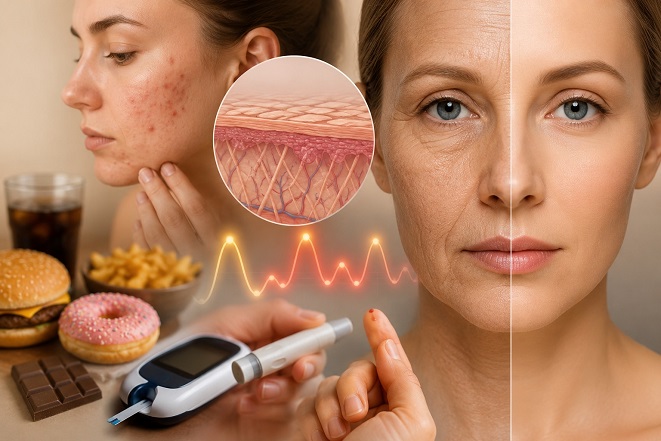 New research suggests that repeated blood sugar spikes may contribute to acne, faster skin aging, delayed wound healing,
and weakened skin health
Why Blood Sugar Swings Matter
For years, scientists have mainly focused on the effects of long-term high blood sugar in people with diabetes. However, this review shifts attention to something many healthy individuals also experience—frequent blood sugar spikes after eating meals rich in refined carbohydrates and highly processed foods.
The researchers explain that these repeated glucose surges may trigger oxidative stress, chronic inflammation, hormone changes, and the formation of harmful compounds known as advanced glycation end products (AGEs). Together, these processes may gradually damage skin cells and tissues, even before diabetes develops.
How Skin Is Affected
According to the review, skin depends on a steady supply of energy to repair itself, maintain moisture, and defend against environmental damage. When glucose levels fluctuate dramatically, skin cells called keratinocytes and fibroblasts may struggle to function properly.
Repeated glucose spikes can increase the production of reactive oxygen species, unstable molecules that damage cells and activate inflammatory pathways. The review explains that this can reduce collagen production, impair skin repair, weaken the skin barrier, and slow tissue regeneration. Oxidative stress also activates inflammatory chemicals that may worsen several skin disorders. This
Medical News report highlights that these biological changes could explain why poor dietary habits often coincide with declining skin quality.
Acne, Wrinkles and Poor Healing
One of the strongest findings involves acne. High-glycemic diets stimulate insulin and insulin-like growth factor-1 (IGF-1), hormones that increase oil production, encourage clogged pores, and activate cellular pathways linked to acne development. Several dietary studies suggest that lowering the glycemic load of meals can reduce acne severity.
The review also explains that AGEs accumulate in collagen and elastin, making the skin stiffer, less elastic, and more prone to wrinkles. At the same time, glycation reduces the skin's ability to retain moisture and repair itself efficiently.
Delayed wound healing is another major concern. High glucose levels interfere with fibroblasts, keratinocytes, collagen remodeling, and blood vessel function, all of which are essential for proper healing. The resear
chers also discuss links between metabolic dysfunction and dry skin, psoriasis, hidradenitis suppurativa, and atopic dermatitis, although evidence for these conditions is currently less conclusive.
Diet and Lifestyle Can Make a Difference
The review emphasizes that food choices influence blood sugar responses. Diets rich in vegetables, legumes, whole grains, and fiber produce slower rises in glucose compared to ultra-processed foods and refined carbohydrates. Eating protein and healthy fats before carbohydrate-rich foods may also reduce glucose spikes.
Regular physical activity further improves insulin sensitivity, helping muscles absorb glucose more efficiently and reducing post-meal blood sugar fluctuations, which may indirectly support healthier skin.
More Research Still Needed
The researchers stress that most current evidence comes from laboratory studies, observational research, and diabetes investigations rather than direct studies measuring glucose fluctuations in relation to skin disease. They call for future research using continuous glucose monitoring alongside detailed skin assessments to determine whether controlling blood sugar swings can directly improve skin health.
Conclusion
Although scientists have not yet proven that blood sugar fluctuations directly cause skin disease, the growing evidence strongly suggests they may play an important role in acne, premature aging, impaired wound healing, and weakened skin barriers. Maintaining stable blood sugar through healthier eating patterns and regular exercise could become an important strategy for protecting skin health while future clinical studies continue to clarify these promising connections.
The study findings were published in the peer reviewed Journal of Clinical Medicine.
https://www.mdpi.com/2077-0383/15/15/5830
For the latest on how sugar spikes can affect the skin, keep on logging to Thailand
Medical News.
Read Also:
https://www.thailandmedical.news/articles/diabetes
https://www.thailandmedical.news/articles/aesthetics




 Share
Share
 Tweet
Tweet
 Share
Share

































