WHO and the African CDC Has So Far Raised Approximately 316 Million Dollars of the 518 Million to Fight Ebola in the DRC
James Josh Fact checked by:TMN Jun 10, 2026 1 month, 2 weeks, 2 days, 12 hours, 18 minutes ago
Medical News: A major international effort is now underway to halt one of Africa’s most serious Ebola outbreaks in recent years, as the World Health Organization (WHO) and the Africa Centres for Disease Control and Prevention (Africa CDC) intensify their response across the Democratic Republic of Congo (DRC) and neighboring Uganda. The two organizations have launched a six-month preparedness and response plan requiring US$518 million, with approximately US$316 million already pledged by international donors, governments, and humanitarian partners.
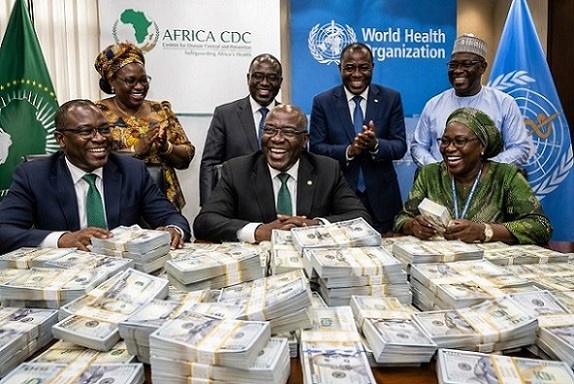 International donors race to close a US$200 million funding gap as Ebola cases continue to rise across
eastern Congo and neighboring Uganda.
The initiative, officially unveiled on June 5, 2026, aims to strengthen disease surveillance, laboratory testing, clinical care, infection prevention, community engagement, and cross-border coordination in countries facing the highest risk of Ebola transmission.
Rare Bundibugyo Ebola Strain Creates Unique Challenges
Unlike previous major Ebola outbreaks caused by the Zaire ebolavirus strain, the current epidemic involves the much rarer Bundibugyo virus. This presents significant challenges for health authorities because there are currently no approved vaccines or targeted antiviral treatments specifically designed for this strain.
As a result, containment efforts depend heavily on traditional public health interventions such as rapid case identification, contact tracing, isolation of infected individuals, safe burials, community awareness campaigns, and strict infection-control measures within healthcare facilities.
Health experts warn that the absence of specialized medical countermeasures increases the urgency of strengthening local health systems and ensuring adequate resources reach affected communities without delay.
Growing Outbreak Across Eastern Congo and Uganda
As of today, more than 600 confirmed Ebola cases and over 115 deaths have been reported in the DRC.
https://www.reuters.com/business/healthcare-pharmaceuticals/congo-says-number-confirmed-ebola-cases-rises-nearly-600-2026-06-09/
The outbreak is concentrated primarily in Ituri Province but has also spread into North and South Kivu, regions already burdened by insecurity, armed conflict, and population displacement.
Uganda has also recorded confirmed cases linked to cross-border movement, raising concerns about further regional spread.
The outbreak has rapidly become one of the largest Ebola events recorded in the region. Response efforts have been complicated by ongoing violence, difficult terrain, population mobility associated with mining activities, and persistent mistrust of health authorities among some local communities. These factors have delayed testing, contact tracing, and treatment interventions in several affected areas.
Healthcare wo
rkers have also been infected, exposing weaknesses in infection prevention and control measures within overstretched medical facilities.
Funding Progress Falls Short of Target
Africa CDC Director-General Dr. Jean Kaseya confirmed that approximately US$315.8 million has been pledged toward the US$518 million target. While this represents substantial international support, a funding gap of more than US$200 million remains.
Interestingly, funding estimates have fluctuated over recent weeks. Earlier reports suggested donor commitments were approaching US$500 million, but subsequent revisions and corrections reduced the confirmed pledge amount significantly.
Humanitarian financing experts note that pledges do not always translate into immediate cash disbursements. Administrative procedures, political considerations, and changing donor priorities often delay the release of funds, creating challenges for emergency operations that require rapid deployment.
The WHO and Africa CDC have emphasized that timely disbursement of pledged resources is just as important as the pledges themselves.
Major Donors Supporting the Response
Several international organizations and governments have already committed substantial resources to the Ebola response effort.
The Bill & Melinda Gates Foundation has provided significant support estimated at around US$15 million through Africa CDC and WHO regional programs. The European Union has contributed millions of euros for surveillance, laboratory strengthening, diagnostics, and testing activities.
United Nations agencies have collectively released approximately US$60 million in emergency funding to support operational activities involving UNICEF, the World Food Programme, UNHCR, and other humanitarian partners.
The United States continues to provide assistance through CDC, supporting surveillance, diagnostics, laboratory operations, and technical expertise. America has also pledged US38 million to help.
As of June 10, 2026, the European Union has committed approximately €42–48 million in new, direct funding for the Bundibugyo Ebola outbreak response in the DRC and Uganda. This includes €15 million announced in May 2026 for emergency humanitarian aid (with €5 million channeled to WHO for surveillance, infection prevention, and regional preparedness, plus support for the EU Humanitarian Air Bridge delivering supplies), an additional €1.5 million for the WHO Regional Emergency Hub, and a €16.5 million package in early June that encompasses €6.5 million for the Africa Pathogen Genomics Initiative, €5 million more to WHO, and €5 million in-kind contributions such as testing equipment and lab kits. These funds are primarily routed through Africa CDC, WHO, and partners, focusing on response in affected areas and preparedness in neighboring countries. Individual European nations have contributed mainly via the EU’s pooled ECHO budget rather than large standalone bilateral pledges, with limited public details available for countries like Germany, France, Belgium, or the UK on this specific outbreak. Overall European support remains significant when including in-kind aid and broader health security investments, though most figures represent pledges rather than fully disbursed cash.
Additional contributions are being mobilized by African Union member states, the International Federation of Red Cross and Red Crescent Societies, FIND Diagnostics for All, and numerous non-governmental organizations.
However, comprehensive donor-by-donor breakdowns for the entire US$315.8 million pledged amount have not yet been publicly disclosed.
Why the Outbreak Matters Beyond Africa
The current Ebola emergency highlights the continuing importance of global health security and international cooperation. While the risk of direct Ebola importation into Thailand and most Southeast Asian nations remains low, experts stress that infectious disease threats can quickly become international concerns.
Disruptions to regional economies, supply chains, and international travel networks can have far-reaching consequences. Additionally, the outbreak underscores the importance of investing in surveillance systems, laboratory infrastructure, and preparedness planning worldwide.
In this
Medical News report, public health specialists emphasized that strengthening Africa’s ability to detect and contain infectious diseases ultimately protects populations across the globe.
International Community Urged to Close Funding Gap
WHO Director-General Dr. Tedros Adhanom Ghebreyesus and Africa CDC leadership continue to urge governments, private-sector organizations, philanthropies, and international partners to provide additional support. Building trust within affected communities, expanding diagnostic capacity, protecting healthcare workers, and ensuring equitable access to care remain central pillars of the response strategy.
The coming months will be critical. Success will depend not only on securing the remaining funding but also on ensuring that pledged resources are rapidly translated into effective action on the ground. With hundreds of infections already recorded and conditions favoring further transmission, sustained international commitment will be essential to preventing the outbreak from escalating into an even larger humanitarian and public health crisis. The speed, coordination, and effectiveness of the response may ultimately determine whether this dangerous outbreak is contained or allowed to spread further across the region.
For the latest Ebola news, keep on logging to Thailand
Medical News.
Read Also:
https://www.thailandmedical.news/articles/ebola




 Share
Share
 Tweet
Tweet
 Share
Share