Nikhil Prasad Fact checked by:Thailand Medical News Team Jun 14, 2026 3 months, 2 weeks, 5 days, 14 hours, 21 minutes ago
Medical News: Glaucoma has traditionally been viewed as a disease caused primarily by elevated pressure inside the eye. While reducing intraocular pressure remains the cornerstone of treatment, a growing body of evidence suggests that another destructive process may be silently driving vision loss in millions of patients worldwide. A new review by Japanese researchers has revealed that oxidative stress plays a central role in glaucoma, contributing not only to increased eye pressure but also to direct damage of the optic nerve and retinal nerve cells that are essential for sight.
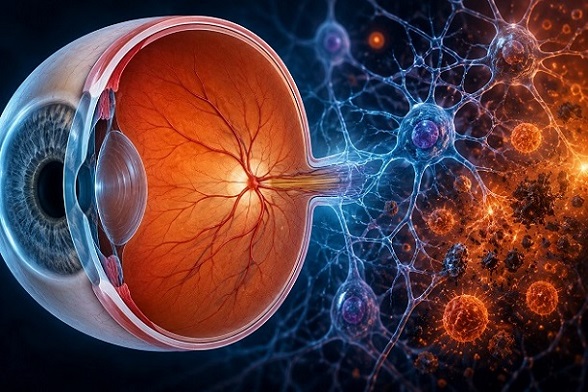 New research reveals that oxidative stress may drive glaucoma progression by damaging both the eye's
drainage system and the retinal nerve cells responsible for vision.
The study was conducted by researchers from the Department of Ophthalmology at Keio University School of Medicine; the Department of Ophthalmology at Tohoku University Graduate School of Medicine; the Division of Ophthalmic Precision Medicine Development, United Centers for Advanced Research and Translational Medicine (ART), Tohoku University Graduate School of Medicine; the Department of Aging Vision Healthcare, Tohoku University Graduate School of Biomedical Engineering; the Department of Retinal Disease Control, Tohoku University Graduate School of Medicine; and the Department of Advanced Ophthalmic Medicine, Tohoku University Graduate School of Medicine, Japan.
A Hidden Driver of Disease Progression
Glaucoma is the leading cause of irreversible blindness globally and is characterized by the progressive loss of retinal ganglion cells and degeneration of the optic nerve. Although elevated intraocular pressure is the most important modifiable risk factor, many patients continue to experience worsening vision despite achieving what doctors consider adequate pressure control.
Researchers believe oxidative stress may help explain this phenomenon. Oxidative stress occurs when the production of reactive oxygen species, commonly known as free radicals, overwhelms the body's natural antioxidant defenses. Over time, these highly reactive molecules damage proteins, lipids, DNA, and cellular structures, gradually impairing tissue function.
The eye is particularly vulnerable to oxidative injury because it is constantly exposed to light, high oxygen levels, and intense metabolic activity. According to the review, oxidative stress affects virtually every major structure involved in glaucoma development.
How Oxidative Damage Raises Eye Pressure
One of the earliest targets of oxidative stress is the trabecular meshwork, a specialized drainage tissue responsible for removing fluid from the eye. Under normal conditions, this structure allows aqueous humor to flow out efficiently, helping maintain healthy eye pressure.
However, chronic exposure to reactive oxygen species damages trabecular meshwork cells and alters the surrounding extracellular matrix. Scientists found evidence of DNA damage, lipid peroxidation, protein oxidation, and cellular aging within these tissues. Oxidative injury also causes abnormal cross-linking and stiffening of structural proteins, reducing the efficiency of fluid drainage.
As the drainage system becomes progressively compromised, resistance to fluid outflow increases, causing intraocular pressure to rise. Researchers believe this oxidative damage may represent one of the earliest biological events that initiate glaucoma in susceptible individuals.
Direct Assault on the Optic Nerve
The review highlights that oxidative stress does far more than increase eye pressure. It also directly attacks retinal ganglion cells, the neurons that transmit visual signals from the eye to the brain.
These cells are highly dependent on mitochondria, the microscopic structures responsible for producing cellular energy. Because retinal ganglion cells have exceptionally high energy requirements, they contain large numbers of mitochondria and are especially vulnerable to mitochondrial dysfunction.
Oxidative stress damages mitochondrial DNA and disrupts normal energy production. As mitochondrial function declines, even more reactive oxygen species are generated, creating a self-perpetuating cycle of injury. Eventually, this triggers programmed cell death and irreversible loss of retinal ganglion cells.
The researchers also found that oxidative stress contributes to vascular endothelial injury, impaired blood flow, inflammation, excitotoxicity, and neurodegeneration within the optic nerve. Together, these processes accelerate vision loss even when intraocular pressure remains within normal limits.
Clues Found in Blood and Eye Fluids
The review examined numerous biomarkers that reveal the extent of oxidative stress in glaucoma patients.
Studies consistently found elevated levels of oxidative damage markers such as malondialdehyde and 8-hydroxy-2'-deoxyguanosine in aqueous humor, blood, and other biological samples. At the same time, protective antioxidant reserves were often diminished.
Particularly noteworthy was the discovery that nicotinamide, a precursor of the essential cellular molecule NAD+, is significantly reduced in many glaucoma patients. NAD+ plays a critical role in energy production and mitochondrial health. Its depletion may leave retinal ganglion cells increasingly vulnerable to age-related degeneration and oxidative injury.
Researchers also reported reduced glutathione levels, lower antioxidant capacity, impaired mitochondrial respiration, and evidence of systemic oxidative stress, suggesting that glaucoma may involve broader metabolic abnormalities extending beyond the eye itself.
This
Medical News report highlights that these findings are reshaping scientific understanding of glaucoma from a disease driven solely by eye pressure to one involving complex interactions between oxidative stress, metabolism, vascular health, and neurodegeneration.
Emerging Antioxidant Therapies
The growing recognition of oxidative stress as a key disease mechanism has stimulated interest in antioxidant-based neuroprotective therapies.
Among the most promising candidates is nicotinamide, a form of vitamin B3 that replenishes NAD+ levels. Animal studies demonstrated remarkable protection against glaucomatous damage, while early human studies showed improvements in retinal function without affecting intraocular pressure.
Other compounds under investigation include coenzyme Q10, alpha-lipoic acid, sulforaphane, MitoQ, resveratrol, curcumin, and Ginkgo biloba extract. Many of these agents target mitochondrial dysfunction, reduce oxidative injury, suppress inflammation, or activate the Nrf2 pathway, a major cellular defense system that regulates antioxidant gene expression.
Although clinical evidence remains limited for many of these therapies, researchers believe they could eventually complement conventional pressure-lowering treatments by addressing disease mechanisms that current therapies fail to target.
Conclusions
The review presents compelling evidence that oxidative stress is deeply involved in nearly every stage of glaucoma development and progression. From damaging the eye's fluid drainage system and increasing intraocular pressure to directly triggering retinal ganglion cell death and optic nerve degeneration, oxidative injury appears to be a unifying mechanism linking many aspects of the disease. Importantly, these destructive processes can continue even when intraocular pressure is successfully controlled, helping explain why some patients continue to lose vision despite treatment. The findings also highlight the growing importance of mitochondrial dysfunction, NAD+ depletion, vascular injury, and chronic inflammation in glaucoma pathogenesis. While antioxidant therapies are still undergoing evaluation, they represent a promising new frontier that could eventually transform glaucoma management by combining traditional pressure control with targeted neuroprotection and metabolic support aimed at preserving vision and preventing blindness.
The study findings were published in the peer reviewed journal: Antioxidants.
https://www.mdpi.com/2076-3921/15/6/751
For the latest on Glaucoma, keep on logging to Thailand
Medical News.
Read Also:
https://www.thailandmedical.news/articles/glaucoma-news




 Share
Share
 Tweet
Tweet
 Share
Share

































