Nikhil Prasad Fact checked by:Thailand Medical News Team Jan 23, 2026 8 months, 1 week, 5 days, 6 hours, 7 minutes ago
Medical News: A team of scientists from Mexico has uncovered encouraging new evidence that a phytochemical derived from garlic may significantly improve recovery after ischemic stroke, at least in preclinical studies involving female animals. The research focused on S-allylcysteine, a well-known bioactive substance found in aged garlic, and explored its ability to support brain healing after blood flow to the brain is temporarily cut off and then restored.
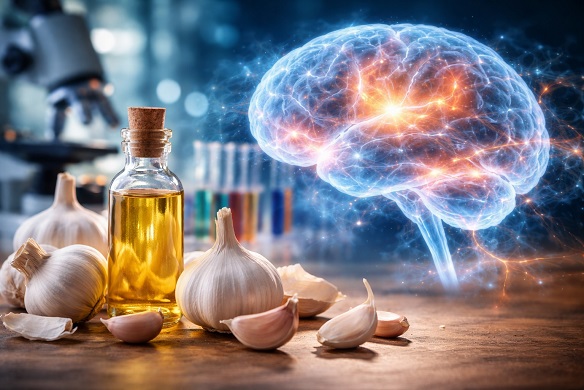 A garlic-derived natural compound significantly improved brain repair and memory recovery after stroke in
new laboratory research
Why Stroke Recovery Needs New Solutions
Ischemic stroke occurs when a blood vessel supplying the brain becomes blocked, depriving brain cells of oxygen and glucose. This often leads to long-term problems such as weakness, difficulty walking, and memory loss. Current medical treatments mainly focus on restoring blood flow quickly, but very few therapies help the brain repair itself afterward. This
Medical News report highlights a study that aimed to fill that gap by looking at recovery rather than just survival.
Who Conducted The Study
The research was carried out by scientists from multiple institutions in Mexico, including the Universidad Nacional Autónoma de México, the Instituto Nacional de Neurología y Neurocirugía Manuel Velasco Suárez, the Instituto Nacional de Ciencias Médicas y Nutrición Salvador Zubirán, and the Instituto Nacional de Cardiología Ignacio Chávez. Their collaboration allowed detailed behavioral, brain imaging, and molecular analyses.
How The Research Was Done
Adult female rats were subjected to a controlled form of stroke lasting one hour, followed by a 15-day recovery period. One group received daily doses of S-allylcysteine starting immediately after blood flow was restored, while another group did not. The researchers then assessed movement, behavior, memory, and the size of damaged brain tissue. They also examined important brain chemicals involved in repair and growth.
Key Findings Explained Simply
The results were striking. Rats treated with the garlic-derived compound showed a reduction of more than 50 percent in the area of brain damage compared to untreated animals. These rats also regained movement more quickly, showed fewer abnormal spinning movements linked to brain injury, and performed far better in long-term memory tests. Importantly, the treatment did not simply mask symptoms. It appeared to activate natural repair processes inside the brain.
The researchers found higher levels of growth-supporting proteins such as nerve growth factor and brain-derived neurotrophic factor in key brain regions. These substances help brain cells survive, form new connections, and even multiply. Signals linked to cell survival and repair were also reactivated, suggesting the compound helped the brain rebuild itself after injury.
Why Female Focus Matters
Women often experience worse long-term outcomes after stroke, yet most preclinical studies use male animals. By focusing on females, this study adds valuable insight into how recovery treatments might work across sexes, an important step toward more inclusive future therapies.
Conclusion
Overall, the findings suggest that the phytochemical S-allylcysteine supports brain recovery after stroke by reducing tissue damage, improving movement and memory, and activating natural repair pathways. While this research was done in animals and not humans, it provides strong evidence that garlic-derived compounds could one day become part of supportive treatment strategies aimed at improving quality of life after stroke. Further studies in humans will be needed to confirm safety, dosing, and effectiveness.
The study findings were published in the peer reviewed journal: Nutrients.
https://www.mdpi.com/2072-6643/18/2/362
For the latest research on ischemic stroke, keep on logging to Thailand
Medical News.
Read Also:
https://www.thailandmedical.news/articles/herbs-and-phytochemicals




 Share
Share
 Tweet
Tweet
 Share
Share

































