Nikhil Prasad Fact checked by:Thailand Medical News Team Dec 10, 2025 9 months, 3 weeks, 3 days, 12 hours, 6 minutes ago
Medical News: Transcranial Brain Stimulation Emerges as a Powerful Tool Against Depression
Major depressive disorder affects hundreds of millions of people worldwide, and many patients struggle to recover even after taking medications or undergoing psychotherapy. As scientists search for new ways to help these individuals, a wide range of non-invasive brain stimulation techniques has emerged as a promising new direction. These methods—including transcranial magnetic stimulation, electrical stimulation, ultrasound, photobiomodulation and even electroconvulsive therapy—are now being studied closely for their ability to reshape brain chemistry, improve mood, and support long-term recovery.
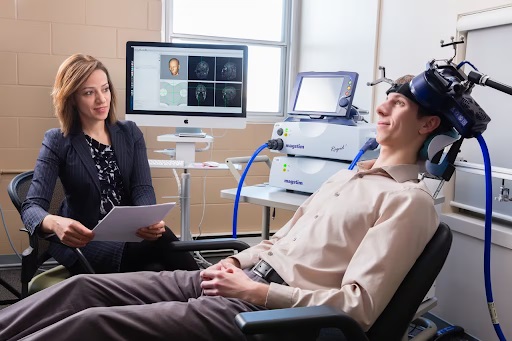 New research shows that brain stimulation methods may help restore key neurotrophins
that protect mood and brain health
According to this
Medical News report, researchers are now focusing on how these stimulation methods interact with the brain’s neurotrophin system, a group of natural proteins essential for brain health and emotional balance.
The Role of Neurotrophins in Depression
The study explains that neurotrophins—especially a brain protein called BDNF (brain-derived neurotrophic factor)—play a central role in depression. BDNF supports the growth, survival and flexibility of brain cells. It is especially important in brain regions linked to mood regulation such as the hippocampus, amygdala and prefrontal cortex. Many studies now show that people with depression often have lower levels of BDNF, which may contribute to emotional instability, memory problems and reduced stress resilience.
Researchers from the University of Kragujevac, the University Clinical Center Kragujevac in Serbia, and associated medical departments report that restoring healthy BDNF activity may help the brain rebuild and recover from depression. This important discovery has sparked global interest in treatments that can naturally boost neurotrophin activity.
How Transcranial Stimulation Helps Repair the Brain
The review highlights several stimulation methods and explains how they appear to improve depression symptoms by influencing BDNF and other neurotrophins. Transcranial magnetic stimulation (TMS), for example, uses magnetic pulses to activate underperforming brain regions. Multiple clinical trials already show that TMS can raise BDNF levels, enhance the brain’s ability to form new connections, and improve emotional control.
Electrical stimulation methods such as tDCS (transcranial direct current stimulation) also show potential benefits. Although the results are mixed, some studies report improved mood and signs of healthier brain function after treatment, especially when combined with antidepressants. In addition, photobiomodulation and focused ultrasound are being explored for their ability to reduce inflammation and boost mitochondrial health, both of which indirectly support neurotrophin balance.
Electroconvulsive therapy (ECT), one of the oldest yet most effective treatm
ents for severe depression, also appears to influence neurotrophin pathways. More recent studies indicate that ECT may raise BDNF levels in certain patients, though results vary depending on treatment settings and patient characteristics.
Why Neurotrophin Research Matters
Understanding how brain stimulation affects the neurotrophin system may help scientists create more precise and personalized treatments for depression. If doctors can measure changes in BDNF or related molecules, they might one day use these measurements as biomarkers to predict who will benefit most from a certain therapy. This could significantly reduce trial-and-error prescribing and lead to faster recovery for millions of patients.
Conclusions
The researchers emphasize that transcranial stimulation represents an exciting and fast-developing area in mental health treatment. While antidepressants and psychotherapy remain important, stimulation-based therapies may offer a powerful additional option—especially for patients who do not respond well to traditional care. The neurotrophin system, particularly BDNF, appears to sit at the center of this healing process by helping the brain rebuild itself, strengthen communication between neurons and recover from the damaging effects of chronic stress. More research is still needed, but evidence so far suggests these techniques may eventually transform how depression is treated on a global scale.
The study findings were published in the peer reviewed International Journal of Molecular Sciences.
https://www.mdpi.com/1422-0067/26/24/11878
For the latest treating Depression, keep on logging to Thailand
Medical News.
Read Also:
https://www.thailandmedical.news/articles/mental-health




 Share
Share
 Tweet
Tweet
 Share
Share

































