Cambodia Reports Second Human H5N1 Bird Flu Infection of 2026 Near Thailand Border
Nikhil Prasad Fact checked by:Thailand Medical News Team Mar 17, 2026 6 months, 2 weeks, 4 days, 3 hours, 45 minutes ago
Thailand Medical:
New Human H5N1 Infection Detected in Northwest Cambodia
Health authorities in Cambodia have confirmed a new human infection with the H5N1 avian influenza virus, marking the country’s second documented case in 2026. The case involves a 45-year-old woman from Ropai Village in Preah Netr Preah District, located in Banteay Meanchey Province close to the Thailand border. Officials from Cambodia’s National Institute of Public Health verified the infection after laboratory testing conducted on Saturday.
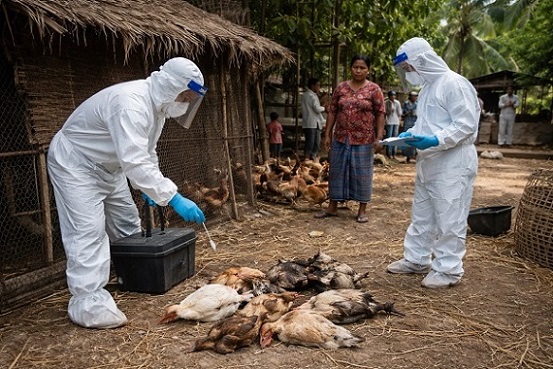 Second human H5N1 infection detected in Cambodia raises concerns over poultry linked transmission
near the Thailand border
The patient was admitted to hospital shortly after the infection was confirmed and is currently under close medical supervision. According to investigators, the woman had been raising chickens and ducks at her residence, a common practice in rural areas of Cambodia. Health officials reported that several of the birds in her flock had recently become ill and died. The patient acknowledged that she had direct contact with some of the dead poultry approximately three days before testing positive for the virus.
Evidence Points to Poultry Exposure
Preliminary epidemiological investigations strongly suggest that the infection was acquired through exposure to infected poultry. Authorities noted that multiple chickens and ducks in the village had died unexpectedly in recent days, raising concerns about an active avian influenza outbreak among backyard flocks.
Following confirmation of the case, public health teams rapidly deployed to the village to collect samples from the surrounding environment and from individuals who had direct or indirect contact with the patient. Close contacts are currently being monitored and are receiving the antiviral medication Tamiflu as a preventive measure, a standard containment strategy used by Cambodian health authorities when H5N1 infections are detected.
Pattern of H5N1 Cases in Cambodia
This
Thailand Medical News report notes that Cambodia has seen repeated sporadic human infections linked to poultry exposure over the past several years. In 2025, the country recorded 19 confirmed human cases of H5N1, eight of which resulted in death, highlighting the virus’s significant mortality risk when infections occur.
The earlier case reported in 2026 occurred in mid-February in Kampot Province near the Vietnam border. That infection involved a 30-year-old man who had cooked and handled a dead chicken before falling ill. Unlike many severe H5N1 infections, he eventually recovered and was discharged from hospital.
Viral Strain Still Under Investigation
Health authorities have not yet determined the exact viral strain responsible for the new infection. However, scientists believe the virus is likely to belong to clade 2.3.2.1c, a lineage that has been endemic in Cambodia for years and has caused several of the country’s past human cases.
&l
t;br />
Another variant, clade 2.3.4.4b, has drawn global attention since 2022 due to its extensive spread across continents and its ability to infect a wide range of mammals, including humans. Although this strain has caused international concern, no confirmation has yet linked it to the newly reported Cambodian case.
Ongoing Monitoring and Public Health Measures
Cambodian health officials are continuing to investigate the source of the infection while monitoring local residents for any additional suspected cases. Surveillance efforts include testing poultry populations, conducting community health checks, and tracing all potential exposure chains.
The emergence of another human case reinforces the ongoing risk posed by avian influenza in regions where close interaction between humans and backyard poultry remains common. Continued vigilance, rapid diagnostic testing, and early treatment remain critical in preventing wider outbreaks and reducing the risk of severe disease.
The findings underscore that even isolated human infections can signal active viral circulation in poultry populations and highlight the importance of coordinated surveillance between veterinary and public health sectors to prevent potential cross-species transmission events in the future.
Reference:
https://www.facebook.com/Nokorwatnews/posts/1518490953176604
For the latest COVID-19 News, keep on logging to
Thailand Medical News.
Read Also:
https://www.thailandmedical.news/articles/h5n1-avian-flu




 Share
Share
 Tweet
Tweet
 Share
Share

































