Ebola Cases in DRC Rises to 1,155 with 304 Deaths as New Findings Reveal Bleeding is no Longer a Defining Symptom
Nikhil Prasad Fact checked by:Thailand Medical News Team Jun 26, 2026 3 months, 1 week, 1 day, 5 hours, 11 minutes ago
Medical News: Community Transmission Accelerates as Scientists Uncover Surprising Clinical Pattern
The Democratic Republic of Congo is facing a worsening Ebola outbreak, with government health authorities confirming that total laboratory verified cases have climbed to 1,155, including 304 deaths. The latest situation report documented 37 new confirmed infections and five additional deaths within just 24 hours, highlighting the continued expansion of the outbreak despite intensified surveillance efforts. There are thousands more of suspected cases that have yet to be confirmed by laboratory testing.
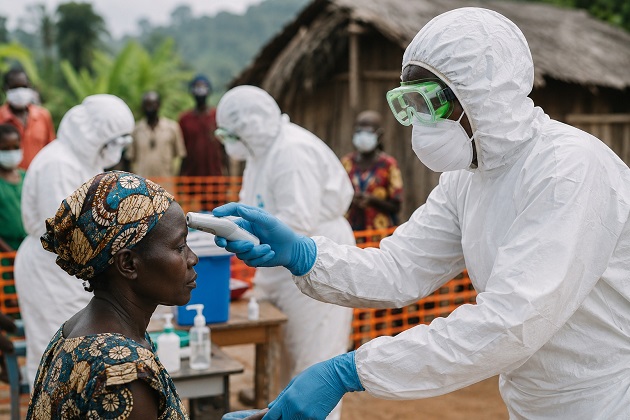 New research reveals that most current Ebola patients in Congo do not present with the classic hemorrhagic symptoms
despite rising infections
Health officials said enhanced epidemiological investigations and improved laboratory testing have enabled earlier detection of infections. However, they also warned that community transmission continues to increase week after week, underscoring the challenges of containing the virus before it spreads further.
This
Medical News report also highlights newly published research that is reshaping how clinicians recognize Bundibugyo virus disease, one of the Ebola virus species responsible for the current outbreak.
Study Challenges Traditional Understanding of Ebola Symptoms
A preliminary study led by Dr. Placide Mbala-Kingebeni of the National Institute of Biomedical Research in Kinshasa and published in the New England Journal of Medicine has revealed an unexpected clinical pattern.
Researchers found that approximately 90 percent of patients with laboratory confirmed Bundibugyo virus disease showed no hemorrhagic signs or bleeding when they first sought medical care. Bleeding occurred in only 10.4 percent of confirmed patients, virtually identical to the 10.3 percent observed among patients who were suspected of having the disease but ultimately tested negative.
This finding contrasts sharply with previous Ebola outbreaks. Earlier studies reported hemorrhagic symptoms in roughly 40 percent of Ebola patients overall, while a 2007 Bundibugyo outbreak documented bleeding in 54 percent of confirmed cases. Scientists caution that differences in reporting practices may partly explain the discrepancy, but the findings strongly suggest that bleeding is no longer a reliable hallmark of the current outbreak.
Gastrointestinal Symptoms Offer Better Diagnostic Clues
Because early Bundibugyo virus disease symptoms resemble many other tropical illnesses, diagnosis based solely on clinical presentation remains difficult.
The study found several symptoms were significantly more common among confirmed cases than among patients who tested negative. Fever was present in 74.3 percent of confirmed patients compared with 64.9 percent of negative cases. Vomiting affected 66.7 percent versus 50.8 percent, while diarrhea occurred in 67.4 percent compared with 49.6 percent.
Loss of a
ppetite was reported by 39.5 percent of infected patients compared with only 17.2 percent of those testing negative. Abdominal pain affected 37.3 percent versus 16.3 percent. Respiratory and swallowing difficulties also stood out, with breathing problems occurring in 34.1 percent of confirmed patients compared with 10.9 percent of negatives, while difficulty swallowing affected 32.8 percent versus 10.7 percent. Researchers found that age and sex had little influence on symptom presentation.
These symptom patterns may help healthcare workers prioritize scarce laboratory testing resources while improving isolation measures and infection control in overwhelmed treatment facilities.
Delayed Diagnosis Continues to Fuel Transmission
The researchers analyzed 2,351 recorded cases between May 3 and June 8. After applying strict inclusion criteria, they examined 505 laboratory confirmed cases alongside 635 patients who tested negative.
One concerning finding was the approximately one-week delay between the onset of symptoms and collection of diagnostic samples. Such delays may reflect patients waiting too long before seeking medical care, allowing ongoing viral shedding and increasing opportunities for household and community transmission.
Among confirmed patients included in outcome analyses, 18.8 percent had died by the study cutoff, compared with 10.2 percent of those who tested negative. Researchers stressed these figures should not be interpreted as the outbreak's actual fatality rate because many patient outcomes remain unknown.
The study also demonstrated that patients who died carried substantially higher viral loads. Their median cycle threshold value measured 24.4, compared with 28.7 among survivors, indicating that heavier viral burden was closely associated with poorer outcomes.
Meanwhile, the World Health Organization estimated the case fatality ratio of 26 percent. Previous Bundibugyo outbreaks recorded fatality rates of 30 percent in Uganda during 2007 and 50 percent in Congo during 2012.
A Changing Disease Demands New Public Health Strategies
The latest findings suggest that the current Bundibugyo virus outbreak is presenting differently from previous Ebola epidemics, making traditional symptom-based screening less reliable. The relative absence of bleeding, combined with milder initial illness and lower apparent mortality, may inadvertently allow infected individuals to remain undetected for longer periods, extending community transmission. Public health authorities must therefore place greater emphasis on rapid laboratory confirmation, earlier healthcare seeking, recognition of gastrointestinal and respiratory symptoms, and continued surveillance to interrupt transmission chains before the outbreak expands further.
References:
https://www.reuters.com/business/healthcare-pharmaceuticals/congo-says-number-confirmed-ebola-cases-rises-1155-2026-06-25/
https://www.nejm.org/doi/full/10.1056/NEJMc2608070
https://www.cdc.gov/ebola/hcp/clinical-signs/index.html
https://wwwnc.cdc.gov/eid/article/16/12/10-0627_article
https://www.who.int/emergencies/disease-outbreak-news/item/2026-DON608
For the latest Ebola news, keep on logging to Thailand
Medical News.
Read Also:
https://www.thailandmedical.news/articles/ebola




 Share
Share
 Tweet
Tweet
 Share
Share

































