Inflammaging and Muscle Loss Identified as Twin Drivers of Aging That May Be Reversible
Nikhil Prasad Fact checked by:Thailand Medical News Team Jun 14, 2026 3 months, 2 weeks, 6 days, 2 hours, 23 minutes ago
Medical News: A growing body of scientific evidence is pointing to two closely connected biological processes as major drivers of aging, frailty, and loss of independence in older adults. Known as inflammaging and sarcopenia, these conditions appear to reinforce each other in a destructive cycle that accelerates physical decline. However, a new review by researchers from Hungary suggests that these processes may not be inevitable consequences of aging and could potentially be slowed, modified, or even partially reversed through targeted lifestyle and nutritional interventions.
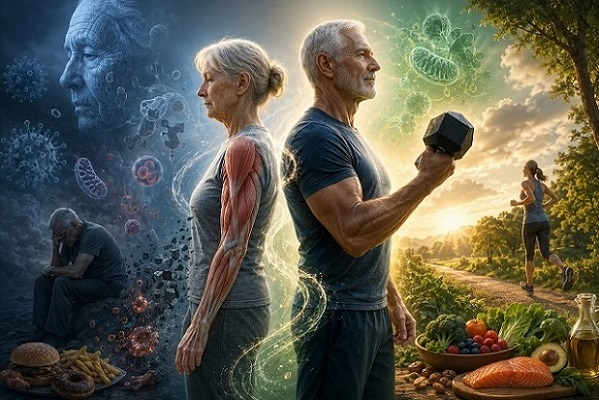 Scientists report that chronic inflammation and age-related muscle loss form a self-reinforcing cycle that may be
slowed or partially reversed through targeted nutrition, exercise, and lifestyle interventions
The study was conducted by researchers from the Institute of Preventive Medicine and Public Health, Faculty of Medicine, Semmelweis University; the Health Sciences Division, Doctoral College, Semmelweis University; the Fodor Center for Prevention and Healthy Aging, Semmelweis University; the S-CAPE Cognitive and Health Prevention Research Group, Faculty of Health Sciences, Semmelweis University; the Department of Social Sciences, Faculty of Health Sciences, Semmelweis University; and the Department of Pulmonology, Semmelweis University, Budapest, Hungary.
The Aging Process May Be More Controllable Than Previously Believed
For decades, aging was largely viewed as an unavoidable decline in bodily function. Modern research is increasingly challenging this view. Scientists now believe that many age-related changes arise from specific biological mechanisms that can potentially be influenced through diet, exercise, and other lifestyle interventions.
Among the most important of these mechanisms are inflammaging and sarcopenia.
Inflammaging refers to chronic, low-grade inflammation that persists throughout the body as people age. Unlike the inflammation associated with infection or injury, inflammaging often develops silently and can continue for years without obvious symptoms. Yet this persistent inflammatory state has been linked to cardiovascular disease, diabetes, neurodegenerative disorders, frailty, and premature mortality.
Sarcopenia, on the other hand, is the progressive loss of muscle mass, strength, and physical performance. While many people associate aging with wrinkles and gray hair, loss of muscle function may actually be one of the most dangerous aspects of aging because it increases the risk of falls, fractures, disability, hospitalization, and loss of independence.
A Vicious Biological Cycle
The review highlights how these two processes feed into one another. Chronic inflammation promotes muscle breakdown, suppresses muscle repair mechanisms, and reduces the body's ability to build new muscle tissue. At the same time, declining muscle mass worsens metabolic health, reduces glucose control, increases fat accumulation, and contributes to further inflammation. This creates a self-perpetuating cycle in which inflammation accelerates muscle loss and muscle loss amplifies inflammation.
Researchers describe
this inflammatory-musculoskeletal axis as one of the central biological pathways driving physical decline during aging.
What Is Happening Inside Aging Cells?
The review identifies several underlying biological mechanisms responsible for both inflammaging and sarcopenia.
One major factor is mitochondrial dysfunction. Mitochondria are the energy-producing structures inside cells. As people age, these cellular power plants become less efficient, generating excessive amounts of damaging reactive oxygen species while producing less energy.
The study also highlights the role of cellular senescence. Senescent cells, sometimes referred to as "zombie cells," stop functioning normally but refuse to die. Instead, they continuously release inflammatory molecules that damage surrounding tissues and promote further aging.
Other key mechanisms include oxidative stress, immune system dysregulation, impaired anabolic signaling, insulin resistance, neuromuscular degeneration, and chronic activation of inflammatory pathways such as NF-kB.
Together, these biological disruptions gradually erode muscle strength, physical performance, metabolic health, and overall resilience.
Emerging Therapeutic Strategies to Reverse the Process
Perhaps the most encouraging finding from the review is that many of these pathways appear to be modifiable.
The researchers found growing evidence that certain natural bioactive compounds can target several of the molecular mechanisms involved in inflammaging and sarcopenia.
Polyphenols and flavonoids found in berries, grapes, green tea, cocoa, olives, turmeric, and many fruits and vegetables have demonstrated anti-inflammatory and antioxidant effects. These compounds can influence cellular pathways involved in inflammation control, mitochondrial repair, and stress resistance.
Omega-3 fatty acids, particularly EPA and DHA found in fatty fish and marine oils, appear especially promising. Clinical studies suggest they may improve muscle strength, reduce inflammatory signaling, enhance insulin sensitivity, and improve physical performance in older adults.
Carotenoids such as lycopene, lutein, and beta-carotene may help reduce oxidative damage while supporting healthier immune function and cellular resilience.
The review also discusses emerging interest in bioactive peptides, fermented foods, and gut microbiome-targeted therapies. Scientists increasingly believe that the gut-muscle axis plays a significant role in aging, with gut microbes influencing inflammation, energy metabolism, and muscle maintenance.
Exercise Remains the Most Powerful Anti-Aging Medicine
Among all interventions reviewed, regular exercise remains the most effective strategy.
Resistance training was identified as the gold standard for combating sarcopenia because it directly activates muscle-building pathways and stimulates muscle protein synthesis. Even in advanced age, resistance training has been shown to increase muscle strength and improve physical performance.
Aerobic exercise offers complementary benefits by enhancing mitochondrial function, reducing inflammation, improving cardiovascular health, and increasing metabolic flexibility.
Importantly, exercise and nutritional interventions appear to influence many of the same biological pathways, including AMPK, mTOR, Nrf2, and NF-kB signaling systems. This suggests that combining exercise with targeted nutrition may provide greater benefits than either intervention alone.
This
Medical News report notes that the review strongly supports a multi-target approach rather than relying on any single supplement, medication, or lifestyle modification.
Sleep and Stress Also Matter
The researchers emphasize that aging is influenced by far more than diet and exercise.
Poor sleep quality, disrupted circadian rhythms, and chronic psychological stress can all increase inflammation and accelerate muscle decline. Elevated stress hormones such as cortisol can promote muscle breakdown while worsening insulin resistance and inflammatory activity.
Optimizing sleep patterns and reducing chronic stress therefore represent additional therapeutic opportunities for preserving healthy aging.
Conclusions
The findings of this comprehensive review suggest that inflammaging and sarcopenia are not merely parallel consequences of growing older but are deeply interconnected biological hallmarks that actively drive the aging process. Importantly, the evidence indicates that many of the mechanisms responsible for chronic inflammation, muscle loss, metabolic decline, and reduced physical resilience are potentially modifiable. While no single intervention can completely halt aging, a combination of resistance exercise, regular physical activity, anti-inflammatory dietary patterns, omega-3 fatty acids, polyphenol-rich foods, adequate protein intake, proper sleep, stress management, and emerging microbiome-based approaches may significantly slow or partially reverse these damaging processes. The future of healthy aging is increasingly shifting toward personalized lifestyle medicine that targets the root biological mechanisms of aging rather than simply treating age-related diseases after they appear.
The study findings were published in the peer reviewed journal: Nutrients.
https://www.mdpi.com/2072-6643/18/12/1920
For the latest on Anti-Aging, keep on logging to Thailand
Medical News.
Read Also:
https://thailandwellness.news/
https://www.thailandmedical.news/articles/anti-aging
https://www.thailandmedical.news/articles/herbs-and-phytochemicals




 Share
Share
 Tweet
Tweet
 Share
Share

































