Nikhil Prasad Fact checked by:Thailand Medical News Team Feb 07, 2026 6 months, 3 weeks, 2 days, 20 hours, 14 minutes ago
Medical News: A Hidden Sugar Based Pathway That Helps the Virus Attach and Infect
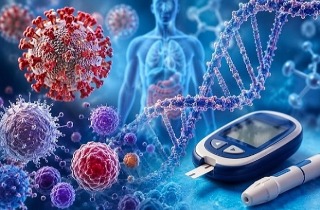
Scientists are continuing to uncover surprising details about how the SARS-CoV-2 virus infects human cells. While most people are familiar with the virus binding to the ACE2 receptor, new research shows that complex sugars on human cells also play a crucial role in helping the virus attach, linger, and spread more efficiently. This
Medical News report highlights findings from a comprehensive review that explains these mechanisms in a clear and accessible way.
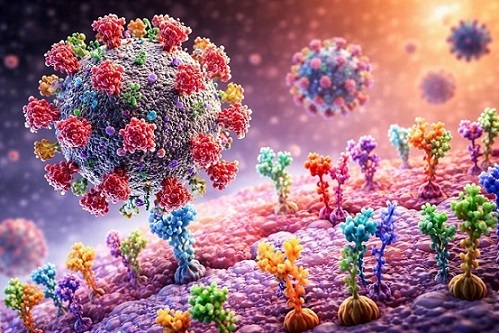 Sugars on human cells quietly help the COVID-19 virus attach and spread more efficiently
Understanding Glycans and Lectins in Simple Terms
Sugars on human cells quietly help the COVID-19 virus attach and spread more efficiently
Understanding Glycans and Lectins in Simple Terms
Glycans are sugar chains found on the surface of nearly all human cells. Lectins are proteins that can recognize and bind to these sugars. Together, they form a communication system that cells use for many normal functions. However, viruses have learned to exploit this system. The review explains that SARS-CoV-2 uses these sugar structures as temporary docking points before firmly attaching to ACE2 receptors, increasing the chances of successful infection.
How The Virus Uses Sugar Coatings to Its Advantage
The SARS-CoV-2 spike protein is covered with dozens of sugar molecules. These sugars do more than hide the virus from the immune system. The study explains that certain sugars help stabilize the spike protein in a shape that makes it easier to bind to human cells. Some of these sugar structures also interact with lectins on immune cells, allowing the virus to hitch a ride and spread within the body without immediately infecting those immune cells.
Blood Groups and Infection Risk
One of the most striking findings discussed in the review involves blood groups. The researchers explain that the virus shows a preference for binding to sugar structures associated with blood group A, which are commonly found on the lining of the respiratory tract. This may help explain why people with blood group A have been observed to have a slightly higher risk of infection, while blood group O appears to offer some protection due to the absence of these sugar markers.
Similar Tricks Used by Other Viruses
The review compares SARS-CoV-2 to viruses like influenza, HIV, and norovirus. Many of these pathogens also rely on sugar-based attachment strategies. Influenza binds to sialic acid sugars, while norovirus depends heavily on blood group sugars. This comparison shows that exploiting glycans is a common and evolutionarily successful viral strategy.
Why These Findings Matter
Understanding these sugar-based interactions opens new doors for treatments. The study suggests that drugs or therapies designed to block these glycan or lectin interactions could reduce viral attachment and slow infection. Such approaches may work alongside vaccines and antiviral drugs to offer broader protection.
Conclusion
This revie
w makes it clear that SARS-CoV-2 infection is not driven by a single receptor alone. Instead, the virus uses a complex network of sugar molecules and binding proteins to improve its chances of survival and spread. By uncovering these hidden interactions, scientists are gaining valuable insights that could shape future antiviral strategies and better prepare the world for emerging viral threats.
Institutions of the Researchers:
Department of Biochemistry and Convergence Medical Science, Institute of Medical Science, College of Medicine, Gyeongsang National University, Jinju, Republic of Korea.
The study findings were published in the peer reviewed International Journal of Molecular Sciences
https://www.mdpi.com/1422-0067/27/3/1608
For the latest COVID-19 news, keep on logging to Thailand
Medical News.
Read Also:
https://www.thailandmedical.news/articles/coronavirus




 Share
Share
 Tweet
Tweet
 Share
Share