Nikhil Prasad Fact checked by:Thailand Medical News Team Jul 25, 2026 2 months, 1 week, 2 days, 12 hours, 59 minutes ago
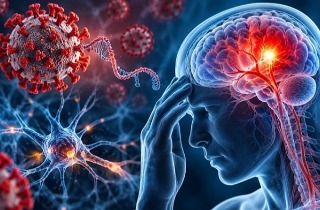
Medical News: For years, doctors have struggled to explain why many people continue to experience brain fog, memory problems, fatigue, and difficulty concentrating long after recovering from COVID-19. Now, a new comprehensive review suggests that damage to the brain's protective blood vessels and the blood-brain barrier could be one of the major reasons these lingering symptoms persist.
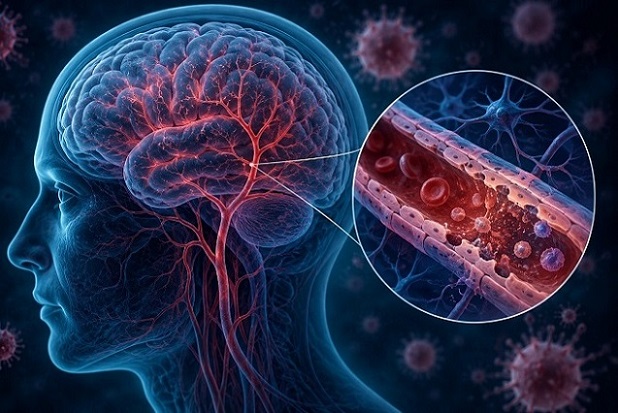 New research suggests damage to the brain's protective blood-brain barrier may play a key role in persistent
Long-COVID neurological symptoms
Researchers from the Nova Friburgo Health Institute at Fluminense Federal University (Brazil), the University of California Irvine (USA), the Oswaldo Cruz Institute (Brazil), and the Faculty of Medicine at the University of São Paulo (Brazil) analyzed existing scientific evidence to better understand how COVID-19 affects the brain long after the initial infection has ended.
The Brain's Protective Shield Under Attack
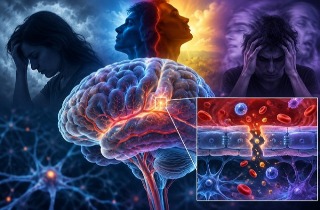
The blood-brain barrier is a specialized network of tightly packed blood vessels that acts as a protective filter between the bloodstream and the brain. It allows nutrients and oxygen to enter while keeping harmful substances, toxins, and inflammatory molecules out.
The review found growing evidence that SARS-CoV-2 damages the cells lining these blood vessels, causing the barrier to become "leaky." Once this happens, inflammatory proteins, immune cells, and clotting factors can enter brain tissue, potentially triggering long-lasting neurological problems.
Researchers found that this process begins with injury to the cells lining blood vessels, followed by loss of structural proteins that normally keep the barrier sealed. Damage to supporting cells known as pericytes further weakens the barrier, allowing harmful substances to penetrate the brain.
Evidence Comes from Multiple Types of Studies
Rather than relying on a single experiment, the review examined 15 carefully selected studies involving laboratory cell models, animal experiments, brain imaging, spinal fluid analysis, and clinical investigations involving Long-COVID patients.
Animal studies consistently showed blood vessel injury, loss of tight junctions, inflammation, and damage to the blood-brain barrier after SARS-CoV-2 infection. Human studies detected elevated biomarkers indicating blood-brain barrier disruption, neuronal injury, and persistent inflammation, particularly in patients suffering neurological symptoms after COVID-19.
Interestingly, laboratory studies also demonstrated that exposure to the virus—or even its Spike protein alone—could activate inflammatory pathways inside brain blood vessel cells, causing mitochondrial damage, cell death, and weakening of the protective barrier even without active viral replication inside the brain.
Why Brain Fog May Continue
This
Medical News report highlights that resear
chers believe the initial injury may trigger a chain reaction that continues even after the virus has disappeared.
Once the blood-brain barrier is damaged, inflammation activates brain immune cells, encourages formation of tiny blood clots, disrupts blood flow, and interferes with the brain's waste-removal system. Together, these changes may explain persistent symptoms such as memory loss, slowed thinking, chronic fatigue, poor concentration, headaches, and other cognitive difficulties commonly reported in Long-COVID.
The review also found evidence that autoimmune responses may develop, with antibodies mistakenly targeting brain-related proteins. Some studies linked these immune abnormalities to chronic fatigue syndrome-like symptoms and mood disorders, suggesting that several overlapping mechanisms may contribute to Long-COVID.
Recovery May Be More Complex Than Expected
One particularly intriguing finding was that some patients eventually showed normalization of blood-brain barrier biomarkers while their neurological symptoms remained. This suggests that although the barrier may heal, the initial injury may have already triggered lasting changes involving nerve cells, immune signaling, and brain metabolism.
The researchers believe future work should investigate biomarkers such as aquaporin-4, APOE ε4, and markers of vascular fragility to identify patients at greatest risk and determine whether therapies aimed at protecting blood vessels can prevent long-term neurological damage.
Conclusion
The review presents compelling evidence that blood-brain barrier disruption is likely a central contributor to many neurological complications seen in Long-COVID, although it is probably not the only mechanism involved. By bringing together findings from laboratory research, animal models, brain imaging, and patient studies, the researchers show how early vascular injury may trigger a cascade of inflammation, immune dysfunction, impaired brain repair, and neuronal damage that continues long after infection. Larger clinical studies are now needed to determine whether treatments that stabilize the brain's blood vessels can reduce brain fog, fatigue, and cognitive decline in Long-COVID patients.
The study findings were published in the peer reviewed journal: Life.
https://www.mdpi.com/2075-1729/16/8/1227
For the latest on Long COVID, keep on logging to Thailand
Medical News.
Read Also:
https://www.thailandmedical.news/articles/long-covid




 Share
Share
 Tweet
Tweet
 Share
Share