Nikhi Prasad Fact checked by:Thailand Medical News Team May 04, 2026 5 months, 1 day, 13 hours, 46 minutes ago
Medical News: A common medication long used to treat high blood pressure may soon offer new hope for millions of women suffering from endometriosis, a painful and often misunderstood condition. A new experimental study suggests that terazosin, a widely available drug, could become a powerful non-hormonal treatment option—potentially changing how the disease is managed in the future.
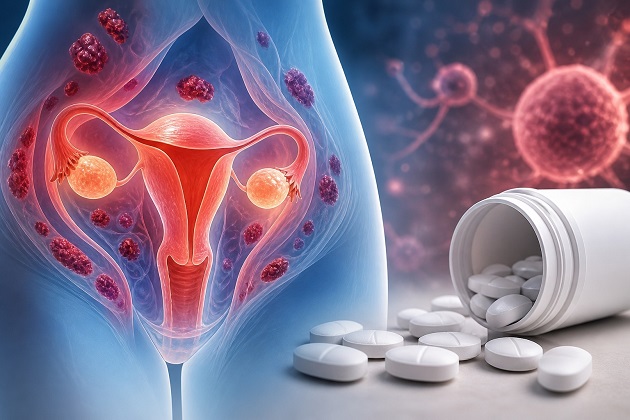 A common hypertension drug may soon offer a safer, non-hormonal breakthrough for endometriosis treatment
Understanding Endometriosis in Simple Terms
A common hypertension drug may soon offer a safer, non-hormonal breakthrough for endometriosis treatment
Understanding Endometriosis in Simple Terms
Endometriosis affects about 1 in 10 women of reproductive age worldwide. It occurs when tissue similar to the lining of the uterus grows outside the womb, causing chronic pain, inflammation, and sometimes infertility. The condition is driven largely by estrogen, a hormone that fuels the growth of these abnormal tissues.
Current treatments mainly focus on suppressing estrogen levels using hormonal drugs. While effective, these treatments often come with serious side effects such as bone loss, hot flashes, and the inability to conceive while on therapy. This has created an urgent need for safer, non-hormonal alternatives.
The Surprising Role of Terazosin
Researchers from the Department of Obstetrics and Gynecology, Department of Physiology, and Department of Pathology at Hatay Mustafa Kemal University in Türkiye explored whether terazosin could help treat endometriosis without affecting hormone levels.
Terazosin is typically used to relax blood vessels and improve urine flow in patients with high blood pressure or prostate enlargement. However, scientists discovered that it may also interfere with key biological processes involved in endometriosis.
How the Study Was Conducted
The research was carried out using a carefully designed animal model involving female rats. The animals were divided into groups, including untreated endometriosis, standard hormonal treatment (leuprolide), and terazosin treatment. Scientists then measured multiple biological markers linked to inflammation, pain, tissue growth, and oxidative stress.
Key Findings That Could Change Treatment
The results were striking. Terazosin significantly reduced several harmful processes that drive endometriosis:
-Lower inflammation: Key inflammatory molecules like IL-6, IL-8, and TNF-alpha dropped sharply.
-Reduced pain signals: Levels of PGE2, a major pain-causing compound, were significantly decreased.
-Less abnormal tissue growth: Markers linked to blood vessel formation and lesion survival, such as VEGF and HIF-1α, were suppressed.
-Improved oxidative balance: Harmful oxidative stress markers dropped, while protective antioxidants increased.
-Hormone pathway control: The drug reduced SF-1, a critical regulator of estrogen production within lesions.
&a
mp;nbsp;
Remarkably, these improvements were nearly identical to those seen with leuprolide, one of the most powerful hormonal treatments currently used.
This
Medical News report highlights that terazosin achieved these benefits without shutting down the body’s natural hormone system, making it especially appealing for women who want to preserve fertility.
Why This Matters for Patients
One of the biggest challenges in treating endometriosis is balancing effectiveness with quality of life. Hormonal therapies can be difficult to tolerate and are not suitable for long-term use in many women.
Terazosin, on the other hand, has been used safely for decades and does not cause the severe hormone-related side effects seen with current treatments. Its ability to target multiple disease pathways at once—pain, inflammation, and tissue growth—makes it particularly promising.
Limitations and What Comes Next
While the findings are highly encouraging, researchers caution that this was an early-stage study conducted in animals. Human biology is more complex, and clinical trials are needed to confirm whether the same benefits will occur in patients.
The study also lasted only a short period, meaning long-term effects and safety in endometriosis treatment still need to be explored.
Conclusion
The discovery that terazosin may effectively treat endometriosis without altering hormones represents a potentially groundbreaking shift in care. By targeting the root causes of the disease—such as inflammation, oxidative stress, and abnormal tissue growth—this drug could offer a safer, more flexible option for millions of women. If future human studies confirm these results, terazosin may become one of the first truly effective non-hormonal treatments, improving both symptom control and quality of life while preserving fertility options for patients.
The study findings were published in the peer reviewed International Journal of Molecular Sciences.
https://www.mdpi.com/1422-0067/27/9/4093
For the latest on Endometriosis, keep on logging to Thailand
Medical News.
Read Also:
https://www.thailandmedical.news/news/supplements-for-endometriosis-relief-under-scrutiny
https://www.thailandmedical.news/news/hidden-hormone-signals-could-revolutionize-endometriosis-detection
https://www.thailandmedical.news/news/hidden-hormone-signals-could-revolutionize-endometriosis-detection
Medical Disclaimer: All content published by Thailand Medical News is based on scientific research and is intended for informational and educational purposes only. It is not medical advice, diagnosis, or treatment. Readers must not attempt to use, apply, or experiment with any protocols, compounds, or therapies mentioned without first consulting a qualified and licensed medical doctor. Many findings discussed are experimental or preliminary, and only a licensed healthcare professional can determine what is safe and appropriate for an individual’s specific medical condition.




 Share
Share
 Tweet
Tweet
 Share
Share