Nikhil Prasad Fact checked by:Thailand Medical News Team Jan 02, 2026 8 months, 14 hours, 36 minutes ago
Medical News: Researchers in Romania have uncovered new evidence showing that COVID-19 can quietly affect the thyroid gland for months after infection. This
Medical News report is based on a detailed 12-month follow-up study of adults who were hospitalized with COVID-19 and later monitored for thyroid changes. The findings suggest that thyroid problems after COVID-19 may be far more common than previously believed, even in people who had mild illness.
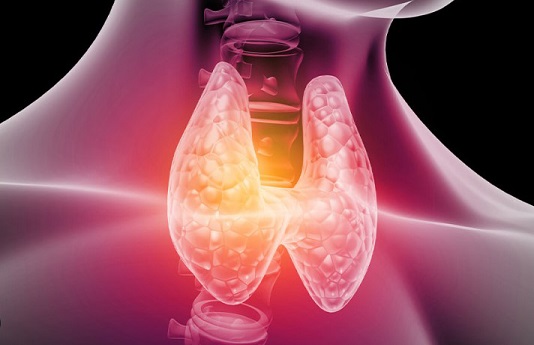 A year-long study shows COVID-19 can quietly disrupt thyroid health long after recovery
Who Conducted the Study
A year-long study shows COVID-19 can quietly disrupt thyroid health long after recovery
Who Conducted the Study
The research was carried out by scientists and clinicians from multiple Romanian institutions. These include the Department of Infectious Diseases, Faculty of Medicine, Lucian Blaga University of Sibiu, Romania; the Clinical Hospital of Pneumology and Infectious Diseases of Brașov, Romania; the Faculty of Mathematics and Computer Science, Transilvania University of Brașov, Romania; the Department of Infectious Diseases, Faculty of Medicine, Transilvania University of Brașov, Romania; and the County Emergency Clinical Hospital, Lucian Blaga University of Sibiu, Romania.
How the Study Was Done
The study followed 67 adult patients for one full year after they were hospitalized for COVID-19. Blood tests, ultrasound scans, and immune markers were checked during hospitalization and again at several points over the 12 months. Most participants had no previous thyroid disease before getting COVID-19.
Key Findings That Matter
The researchers found that nearly one in five patients developed inflammatory or autoimmune thyroid problems within a year of infection. About 6 percent developed subacute thyroiditis, a painful condition caused by inflammation of the thyroid that usually appears weeks after viral infections. Symptoms included neck pain, fever, and temporary overproduction of thyroid hormones. The good news is that all of these cases resolved with treatment and time.
Even more concerning was the discovery that nearly 12 percent developed autoimmune thyroiditis, in which the immune system slowly attacks the thyroid. In many cases, this was detected only through ultrasound and blood tests, without obvious symptoms. Some patients developed thyroid antibodies that remained present even after 12 months, raising concerns about long-term effects.
More than 34 percent of participants had at least one abnormal thyroid hormone reading during follow-up. Although most hormone levels eventually returned to normal, the fluctuations suggest ongoing instability in thyroid regulation after COVID-19.
Disease Severity Not a Factor
Importantly, the study found that thyroid issues were also seen even after mild COVID-19, showing that severe illness is not required for these effects to occur.
Why This Study Is Important
This research shows that COVID-19 is not just a short-term respiratory illness but can trigger delayed immune and hormo
nal changes. Many thyroid problems were mild and temporary, but some may persist and require monitoring.
Conclusion
The findings strongly indicate that COVID-19 can silently trigger thyroid inflammation and autoimmunity months after recovery, even in mild cases, making post-infection thyroid monitoring especially important for long-term health.
The study findings were published on a preprint server and are currently being peer reviewed
https://www.preprints.org/manuscript/202512.2619
For the latest COVID-19 news, keep logging on to Thailand
Medical News.
Read Also:
https://www.thailandmedical.news/articles/coronavirus
https://www.thailandmedical.news/articles/long-covid




 Share
Share
 Tweet
Tweet
 Share
Share