Nikhil Prasad Fact checked by:Thailand Medical News Team Feb 17, 2026 6 months, 1 week, 6 days, 19 hours, 26 minutes ago
Medical News: Scientists Uncover Hidden Immune Trigger Behind Persistent Symptoms
A major new scientific review has revealed that long COVID may be driven by a lingering malfunction in a critical part of the immune system known as the complement system. This system normally protects the body by identifying and destroying viruses, but researchers now believe that its prolonged overactivation could be responsible for symptoms such as fatigue, brain fog, breathing difficulties, and chronic inflammation in long COVID sufferers. The systematic evidence synthesis analyzed multiple clinical studies involving more than 1,400 individuals with long COVID and over 1,100 control participants, making it one of the most comprehensive investigations into the condition to date.
 Scientists identify persistent immune system malfunction as a key driver of long COVID symptoms and chronic inflammation
Complement system overactivation linked to fatigue brain fog and breathing issues
Scientists identify persistent immune system malfunction as a key driver of long COVID symptoms and chronic inflammation
Complement system overactivation linked to fatigue brain fog and breathing issues
The complement system operates like an internal defense network, activating inflammation and immune attacks against pathogens. However, the review found that in long COVID patients, this system remains abnormally activated months or even years after the initial infection has resolved. Elevated levels of complement markers such as C2, C4a, C4b, C5a, and C9 were detected in several studies, indicating ongoing immune activity. This
Medical News report highlights that specific symptom clusters were linked to distinct complement abnormalities. For example, patients experiencing brain fog often showed changes in mannose-binding lectin levels, while those with fatigue and breathing problems had alterations in key inflammatory proteins. These findings suggest that long COVID is not simply psychological or vague but has measurable biological causes rooted in immune dysfunction.
Study confirms long lasting immune imbalance across multiple countries
The review was conducted by researchers from leading institutions including the Johns Hopkins University School of Medicine, Montefiore Medical Center and the Albert Einstein College of Medicine, Cardinal Santos Medical Center, Alliance for Improving Health Outcomes, University of Maryland School of Pharmacy, University of Verona, and Universidad Rey Juan Carlos. Their analysis included patients monitored between three months and two years after infection. Many participants continued to experience symptoms such as exhaustion, chest discomfort, neurological issues, and gastrointestinal problems long after recovering from the virus itself. Importantly, the immune abnormalities were found even in patients who initially had mild COVID-19, suggesting that long COVID risk is not limited to severe cases.
Persistent inflammation and microvascular damage may explain symptoms
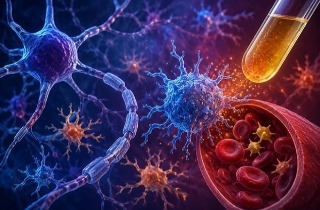
Researchers also discovered that complement system dysregulation could damage blood vessels and trigger micro-clotting, reducing oxygen delivery to tissues. This may explain why long COVID patients often report fatigue, muscle weakness, dizziness, and breathing problems. The complement system also interacts closely with the body’s clotti
ng system, meaning prolonged activation can promote inflammation and vascular injury. Some studies showed increased complement activation products nearly a year after infection, confirming that immune disruption can persist far longer than previously believed. These findings also help explain why long COVID symptoms fluctuate unpredictably, as immune activity may rise and fall over time.
Conclusions point toward future treatments targeting immune pathways
The findings strongly suggest that long COVID is driven in part by chronic immune system imbalance rather than solely by viral persistence or organ damage. This opens the door for new treatments that specifically target complement system activity to reduce inflammation and restore immune balance. Scientists emphasize that while not every patient shows identical immune patterns, the overall evidence confirms that complement dysregulation is a major contributor to long COVID symptoms. Understanding this mechanism brings hope for targeted therapies, better diagnosis, and improved care for millions still struggling with lingering post-COVID illness.
The study findings were published in the peer reviewed journal: Biomedicines.
https://www.mdpi.com/2227-9059/14/2/439
For the latest on Long COVID, keep on logging to Thailand
Medical News.
Read Also:
https://www.thailandmedical.news/articles/long-covid




 Share
Share
 Tweet
Tweet
 Share
Share