Nikhil Prasad Fact checked by:Thailand Medical News Team Jan 30, 2026 8 months, 6 days, 16 hours, 29 minutes ago
Medical News: A growing body of research is changing how scientists understand cholesterol, a substance long linked mainly to heart disease. New findings now show that cholesterol also plays a powerful role in helping cancer grow, spread, and resist treatment. This shift in thinking could open the door to a new generation of cancer therapies aimed at cutting off tumors’ cholesterol supply.
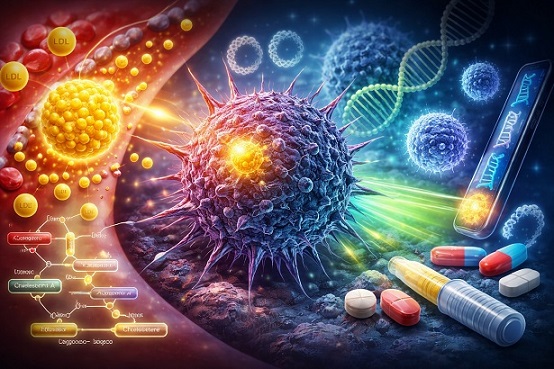 New research reveals how targeting cholesterol pathways may transform future cancer treatments
Why Cholesterol Matters in Cancer
New research reveals how targeting cholesterol pathways may transform future cancer treatments
Why Cholesterol Matters in Cancer
Cholesterol is an essential building block for healthy cells. It helps maintain cell membranes and supports hormone production. However, cancer cells appear to hijack this normal process. The new research explains that cancer cells often increase their cholesterol intake or production to fuel rapid growth. High cholesterol inside tumor cells helps them build new membranes, activate growth signals, and survive in hostile environments.
Key Biological Pathways Under the Spotlight
The study focuses on several cholesterol-related pathways that appear especially important in cancer. One major player is SREBP2, a protein that acts like a master switch for cholesterol production. When activated, it pushes cancer cells to make more cholesterol, supporting tumor growth. Another important protein, SOAT1, helps store excess cholesterol inside cancer cells, preventing toxic buildup while still keeping a steady supply available.
Researchers also highlighted the role of NPC1, a protein that moves cholesterol within cells, and PCSK9, which controls how much cholesterol cancer cells pull in from the bloodstream. Together, these pathways create a cholesterol-rich environment that allows tumors to thrive.
What The Researchers Found
By reviewing years of laboratory and clinical data, the scientists showed that disrupting cholesterol metabolism can slow cancer growth in multiple cancer types, including breast, prostate, liver, and colon cancers. Blocking these cholesterol pathways reduced cancer cell survival, interfered with tumor signaling, and, in some cases, made cancer cells more sensitive to existing treatments. This
Medical News report highlights that some drugs already used for cholesterol control, such as statins or PCSK9 inhibitors, may have untapped potential in cancer therapy.
Boosting The Immune System Against Cancer
An important and hopeful finding involves the immune system. Excess cholesterol inside immune cells can make them tired and less effective. By carefully adjusting cholesterol metabolism, immune cells such as T-cells may regain strength, improving the effectiveness of immunotherapies like CAR-T treatments. This suggests cholesterol-targeting strategies could work alongside modern cancer immunotherapy.
Where The Research Was Conducted
The research involved scientists from West China Hospital of Sichuan University and the Sichuan Academy of Chinese Medicine Sciences in China; Amity Univ
ersity and Lovely Professional University in India; Marwadi University and JAIN University in India; NIMS University Rajasthan in India; Chandigarh Group of Colleges in India; Prince Sattam Bin Abdulaziz University in Saudi Arabia; and Lake Erie College of Osteopathic Medicine in the United States.
Conclusions And Future Outlook
The findings strongly suggest that cholesterol is far more than a background player in cancer. It actively shapes how tumors grow, spread, and evade treatment. By targeting cholesterol pathways such as SREBP2, SOAT1, NPC1, and PCSK9, future therapies could weaken cancer cells while strengthening immune responses. Although more clinical trials are needed, this approach offers a promising and practical direction for developing safer, more effective cancer treatments.
The study findings were published in the peer reviewed journal: Cancers.
https://www.mdpi.com/2072-6694/18/3/428
For the latest cancer research, keep on logging to Thailand
Medical News.
Read Also:
https://www.thailandmedical.news/articles/cancer




 Share
Share
 Tweet
Tweet
 Share
Share