Nikhil Prasad Fact checked by:Thailand Medical News Team Aug 26, 2026 1 hour, 3 minutes ago
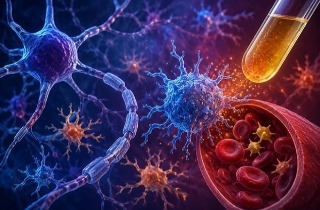
COVID-19 may leave lasting molecular changes in blood-forming progenitor cells months after the acute infection has passed, according to a new study examining how SARS-CoV-2 affects some of the body's earliest blood-cell precursors. The original research focused on long-term suppression of interferon programs and stress-related remodeling in CD34+Lin−CD45+ hematopoietic progenitor cells.
 COVID-19 may alter antiviral and stress-response programs in blood-forming progenitor cells for months after infection
Looking Deep Inside Blood-Forming Cells
COVID-19 may alter antiviral and stress-response programs in blood-forming progenitor cells for months after infection
Looking Deep Inside Blood-Forming Cells
The scientists studied highly purified progenitor cells circulating in peripheral blood. These cells are important because they can develop into different types of blood and immune cells.
Blood samples came from 12 adults with confirmed SARS-CoV-2 infection and six SARS-CoV-2-negative controls. Samples represented active infection and periods three and nine months afterward. Researchers used RNA sequencing to determine which genes inside the cells were more or less active.
The research institutions involved were the Medical University of Warsaw, the University of Zielona Gora and Multi-Specialist Hospital Gorzow Wlkp. in Poland, and the Stem Cell Institute at Graham Brown Cancer Center, University of Louisville in the United States.
Antiviral Defenses Were Turned Down
One of the most striking findings appeared three months after infection. Several genes controlled by type I interferons—including IFIT1, RSAD2, OAS1, IFI44L, SIGLEC1, XAF1, UBA7 and CMPK2—were significantly less active.
Interferons are chemical alarm signals that help cells recognize and respond to viruses. Suppression of these genes therefore suggests that the progenitor cells had reduced antiviral readiness compared with their state during active infection.
Other immune-related genes, including CFH, BATF2, TNFAIP6, SERPING1 and APOBEC3B, were also reduced. Pathway analysis strengthened the finding by showing significant suppression involving interferon alpha/beta and cytokine signaling.
Cells Shifted into a Stress-Adaptive State
At the same time, the cells were not simply becoming inactive. Genes associated with inflammation control, stress responses, repair and cellular adaptation became more active.
TNFAIP3, PER1, NR3C1, CXCL8, NFKBIZ and HBEGF were among the increased genes. HBEGF is associated with cell growth and tissue repair, while TNFAIP3 helps prevent inflammatory signaling from becoming excessive.
Stress-response genes including GADD45B, PPP1R15B, MAFF and HERPUD1 were also increased. Importantly, stress-associated programs remained detectable at nine months, suggesting that normal steady-state regulation may not have been completely restored.
As explained in this
Thailand Medical News report, the findings suggest recovery may involve cellular rebalancing rather than blood progenitor cells simply returning immediately to their pre-infection condition.
What the Findings Could Mean
The altered state could potentially influence how blood-forming cells respond to later infections or inflammation. However, the study did not test actual cell function, so it cannot establish that these molecular changes cause Long COVID or weakened immunity.
The researchers also cautioned that the study was small, participants had differing hematologic or oncologic conditions, and the cells came from peripheral blood rather than bone marrow.
Conclusions
The findings suggest SARS-CoV-2 can leave a prolonged molecular imprint on circulating blood progenitor cells, combining reduced antiviral gene activity with persistent stress-adaptation programs that may influence future immune and regenerative responses.
The study findings were published in the peer reviewed journal: Scientific Reports.
https://link.springer.com/article/10.1038/s41598-026-67749-7
Read Also:
https://www.thailandmedical.news/articles/coronavirus
https://www.thailandmedical.news/articles/long-covid




 Share
Share
 Tweet
Tweet
 Share
Share