Nikhil Prasad Fact checked by:Thailand Medical News Team Mar 03, 2026 7 months, 1 day, 7 hours, 21 minutes ago
What can help me with my fatigue issues and supercharge my energy? Fish Peptides
Medical News: A team of Chinese scientists has discovered that tiny protein fragments extracted from fish milt may dramatically boost stamina, protect muscles, and improve the body’s energy production system. The findings open the door to a new generation of natural anti-fatigue supplements made from marine resources that were previously underused.
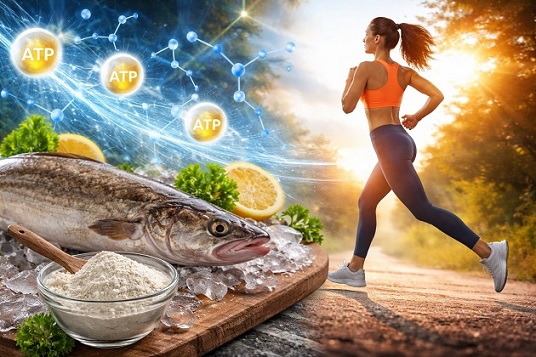 Fish-derived peptides boost stamina, protect muscles, and activate the body’s energy-producing machinery
The research focused on peptides derived from the milt of Theragra chalcogramma, commonly known as Alaska pollock. The study was conducted by researchers from the State Key Laboratory of Marine Food Processing & Safety Control, College of Food Science and Engineering, Ocean University of China; the Laboratory for Marine Drugs and Bioproducts at the Qingdao Marine Science and Technology Center; Qingdao Kehai Jiantang Biology Co., Ltd.; the Sanya Oceanographic Institution, Ocean University of China; and the Qingdao Institute of Marine Bioresources for Nutrition & Health Innovation.
Turning Fish Byproducts into Powerful Peptides
Fish processing generates large amounts of byproducts, including milt. Instead of discarding it, the researchers used special enzymes to break down the proteins into smaller peptides, creating what they called Theragra chalcogramma milt peptides, or TMP.
Laboratory analysis revealed that over 91 percent of these peptides had very small molecular sizes, making them easier for the body to absorb. Notably, 18.2 percent of the amino acids were branched-chain amino acids, known for supporting muscle recovery and reducing fatigue during strenuous activity. Many of the peptides also contained glutamic acid, arginine, and aspartic acid, which are linked to energy production and ammonia detoxification in the body.
Mice Swam Longer and Showed Less Fatigue
To test the anti-fatigue potential, the team used a swimming endurance model in mice. Animals given TMP for 30 days were able to swim significantly longer than untreated mice. The high-dose group extended their swimming time by nearly 60 percent.
Blood tests showed that TMP lowered levels of lactic acid and blood urea nitrogen, both of which rise when the body is exhausted. Lower levels of these markers suggest improved metabolic efficiency and reduced muscle breakdown.
At the same time, muscle glycogen — the stored form of energy in muscles — increased significantly in TMP-treated mice. This is important because glycogen depletion is a major cause of physical fatigue.
Stronger Antioxidant Defense and Muscle Protection
Intense exercise produces harmful molecules known as free radicals. The study found that TMP boosted key antioxidant enzymes, including superoxide dismutase and glutathione peroxidase. These enzymes help neutralize oxidative stress and prevent cell damage.
Markers of muscle injury, such as creatine kinase and lactate dehydrogenase, were significantly lower in the blood of treated mice. Microscop
ic examination of muscle tissue confirmed less structural damage in animals receiving TMP.
Activating the Body’s Energy Master Switch
Perhaps the most exciting finding involved a pathway known as AMPK/PGC-1α, often described as the body’s energy master switch. This pathway controls how cells produce energy and build new mitochondria — the “power plants” inside cells.
The study showed that TMP increased both gene and protein expression of AMPK and PGC-1α. It also stimulated related molecules such as SIRT1, NRF1, TFAM, and cytochrome C, all of which support mitochondrial growth and function. By enhancing mitochondrial biogenesis, TMP helped maintain steady ATP production, the molecule that fuels muscle contraction and movement.
This
Medical News report highlights how a natural marine-derived product may regulate energy metabolism at the cellular level, rather than simply masking fatigue symptoms.
Conclusion
The findings strongly suggest that Theragra chalcogramma milt peptides can improve endurance, reduce metabolic waste buildup, protect muscles from damage, and enhance the body’s natural energy production system. By activating the AMPK/PGC-1α signaling pathway and promoting healthier mitochondria, TMP addresses fatigue at its biological roots. Although human studies are still needed, the results indicate significant promise for developing TMP as a safe, natural dietary supplement to combat physical exhaustion and support athletic performance.
The study findings were published in the peer reviewed journal: Nutrients.
https://www.mdpi.com/2072-6643/18/5/805
For the latest on treating fatigues issues, keep on logging to Thailand
Medical News.
Read Also:
https://www.thailandmedical.news/articles/long-covid
Medical Disclaimer: All content published by Thailand Medical News is based on scientific research and is intended for informational and educational purposes only. It is not medical advice, diagnosis, or treatment. Readers must not attempt to use, apply, or experiment with any protocols, compounds, or therapies mentioned without first consulting a qualified and licensed medical doctor. Many findings discussed are experimental or preliminary, and only a licensed healthcare professional can determine what is safe and appropriate for an individual’s specific medical condition.




 Share
Share
 Tweet
Tweet
 Share
Share

































