Nikhil Prasad Fact checked by:Thailand Medical New Team May 04, 2026 4 months, 4 weeks, 2 days, 23 hours, 50 minutes ago
Medical News: A new scientific study has revealed that a specially processed tomato extract may offer significant protection to brain cells by reducing both oxidative stress and inflammation—two major factors linked to neurodegenerative diseases such as Alzheimer’s.
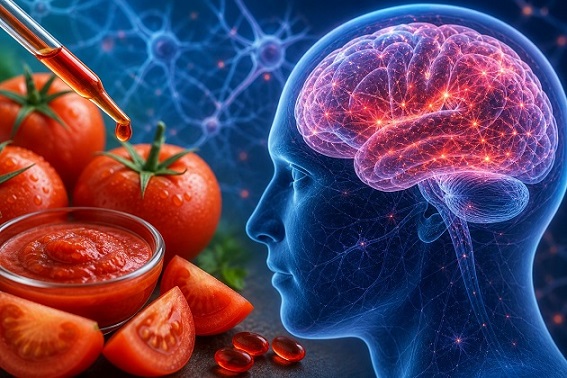 Advanced tomato extract reduces brain cell damage by targeting oxidative stress and inflammation
Researchers and Institutions Behind the Study
Advanced tomato extract reduces brain cell damage by targeting oxidative stress and inflammation
Researchers and Institutions Behind the Study
The research was conducted by scientists from the Department of Experimental Medicine at Sapienza University of Rome, the Department of Life, Health and Health Professions Sciences at Link Campus University in Rome, the Department of Medico-Surgical Sciences and Biotechnologies at Sapienza University of Rome, the Department of Agricultural and Environmental Sciences at the University of Milan, and the Department of Oncology and Molecular Medicine at the Istituto Superiore di Sanità (ISS), Rome.
What Makes This Tomato Extract Different?
Unlike standard extracts, this one was produced using supercritical carbon dioxide extraction, a clean and solvent-free technique that preserves sensitive bioactive compounds such as lycopene, tocopherols, and beneficial fatty acids. This process also enhances the availability of certain forms of lycopene that are more easily absorbed and biologically active.
How the Study Was Conducted
Researchers tested the extract on human astrocyte brain cells, which play a critical role in protecting neurons, maintaining chemical balance, and supporting overall brain function. These cells were exposed to toxic compounds that trigger oxidative stress and inflammation, mimicking conditions seen in neurodegenerative diseases.
Stronger Protection Against Oxidative Damage
One of the most important findings was the extract’s ability to significantly reduce reactive oxygen species (ROS), which are harmful molecules that damage cells and accelerate brain aging.
Cells exposed to oxidative stress showed a sharp increase in ROS levels. However, when pre-treated with the tomato extract, ROS production dropped substantially. This indicates that the extract can directly neutralize harmful oxidative molecules before they cause damage.
In addition, the extract reduced lipid peroxidation—a destructive process that damages cell membranes. Since brain cells rely heavily on stable membranes for communication and survival, this protective effect is especially important for maintaining neuronal integrity.
Activation of Key Neuroprotective Pathways
A major breakthrough in the study was the activation of the NRF2 pathway, which acts as a master switch for the body’s antioxidant defenses.
The extract significantly increased NRF2 activity, which in turn boosted the production of protective enzymes such as superoxide dismutase (SOD1) and glutathione peroxidase (GPX1). These enzymes play a critical role in detoxifying harmful molecules and maintaining cellular balance.
This &
lt;a href="https://www.thailandmedical.news/">
Medical News report highlights that the extract not only reduces existing damage but also strengthens the brain’s natural defense systems, making cells more resilient to future stress.
Clear Anti-Inflammatory Effects in Brain Cells
The study also demonstrated strong anti-inflammatory effects. The extract suppressed key signaling pathways involved in inflammation, particularly ERK1/2 and NF-κB, which are commonly overactivated in neurodegenerative conditions.
By reducing the activation of these pathways, the extract helped prevent the cascade of inflammatory responses that can lead to long-term brain damage. This dual action—targeting both oxidative stress and inflammation—makes the extract especially promising for neuroprotection.
Safe and Non-Toxic at Tested Levels
Importantly, the extract did not show any toxic effects on brain cells. Even at higher concentrations, cell viability remained stable, indicating that the compound is safe for further development as a nutraceutical or therapeutic support.
Conclusion
The study provides strong evidence that tomato-derived compounds, when extracted using advanced supercritical CO2 technology, can deliver meaningful neuroprotective benefits. By lowering oxidative stress, preventing membrane damage, enhancing antioxidant enzyme production, and suppressing inflammatory signaling, the extract addresses multiple pathways involved in brain degeneration. These combined effects suggest real potential for slowing or preventing the progression of neurological disorders. While human clinical trials are still needed, the findings mark an important step toward developing natural, safe, and effective strategies to support brain health and reduce the burden of neurodegenerative diseases in aging populations.
The study findings were published in the peer reviewed journal: Nutrients.
https://www.mdpi.com/2072-6643/18/9/1464
For the latest neuroprotective agents, keep on logging to Thailand
Medical News.
Read Also:
https://www.thailandmedical.news/articles/herbs-and-phytochemicals
https://www.thailandmedical.news/articles/alzheimer,-dementia-
Medical Disclaimer: All content published by Thailand Medical News is based on scientific research and is intended for informational and educational purposes only. It is not medical advice, diagnosis, or treatment. Readers must not attempt to use, apply, or experiment with any protocols, compounds, or therapies mentioned without first consulting a qualified and licensed medical doctor. Many findings discussed are experimental or preliminary, and only a licensed healthcare professional can determine what is safe and appropriate for an individual’s specific medical condition.




 Share
Share
 Tweet
Tweet
 Share
Share

































