Nikhil Prasad Fact checked by:Thailand Medical News Team Feb 12, 2026 6 months, 2 weeks, 4 days, 18 hours ago
Medical News: Researchers Use AI and Simulations to Find Natural Inhibitors
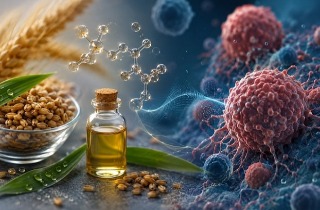
In a promising breakthrough in cancer research, scientists from the Computational Biosciences and Chemistry Research Organization in Rajshahi, the Department of Genetic Engineering and Biotechnology at the University of Rajshahi in Bangladesh, and the Department of Biotechnology at Yeungnam University in Gyeongsan, Republic of Korea, have identified three plant-derived phytochemical compounds that may help block a key cancer-driving protein known as FGFR2.
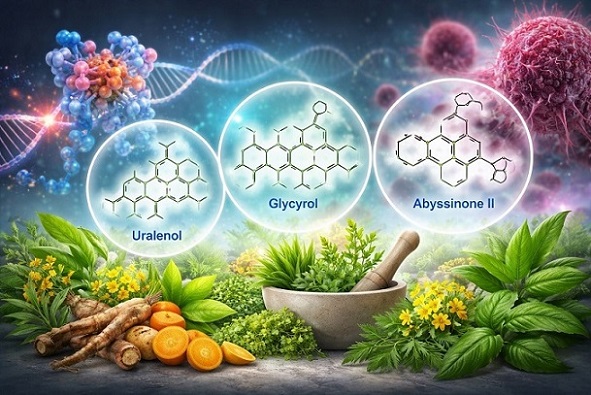 Natural plant molecules identified as promising inhibitors of a major cancer-driving protein
FGFR2, or Fibroblast Growth Factor Receptor 2, is a protein that plays an essential role in normal cell growth and development. However, when it becomes overactive or abnormal, it can drive the uncontrolled cell division seen in many cancers. Because of this, scientists around the world have been searching for safe and effective ways to block this protein.
Why Targeting FGFR2 Matters
FGFR2 belongs to a family of receptors that act like switches on the surface of cells. When activated, they trigger internal signals that tell cells to grow, divide, or survive. In certain cancers, this switch gets stuck in the “on” position. Although some FGFR2 inhibitors already exist, many suffer from side effects, drug resistance, or poor selectivity. This has pushed researchers to explore natural compounds from medicinal plants as safer alternatives.
How The Study Was Conducted
The team screened 1,350 plant-based phytochemicals derived from 51 medicinal plants traditionally used for anticancer purposes. Using advanced computer-based drug discovery methods, they first applied molecular docking to test how strongly each compound could attach to the FGFR2 protein.
Sixteen compounds showed particularly strong binding, with binding affinity scores as low as −10.7 kcal/mol. The researchers then applied a deep learning model trained on 891 known FGFR2 inhibitors to predict how effective these compounds might be in real biological systems. The model demonstrated strong predictive power, with an R² value of 0.68, indicating reliable correlation between predicted and experimental activity.
Three phytochemical compounds stood out: uralenol, glycyrol, and abyssinone II. Their predicted pIC50 values were 5.21, 5.06, and 4.66 respectively, suggesting meaningful inhibitory potential.
Stability And Safety Confirmed
To further validate the findings, the researchers conducted 100-nanosecond molecular dynamics simulations to see how stable these compounds remained when bound to FGFR2. Glycyrol showed the most stable profile, with an average RMSD of just 1.21 Å, indicating minimal structural fluctuation. All three compounds maintained stable binding without major distortions in the protein structure.
Pharmacokinetic analysis revealed favorable absorption and drug-like properties. All compounds satisfied Lipinski’s rule of five, indicating good oral drug potential. Toxicity predictions showed low acute toxicity, with LD50 values ranging from 500 to 20
00 mg/kg, placing them in toxicity class 4, considered relatively safe.
The Bigger Picture
This
Medical News report highlights how artificial intelligence and computational simulations are transforming cancer drug discovery. By combining traditional medicinal knowledge with modern bioinformatics tools, the researchers have uncovered natural molecules that may serve as future targeted cancer therapies.
Conclusion
The study demonstrates that uralenol, glycyrol, and abyssinone II exhibit strong binding affinity, favorable predicted bioactivity, structural stability during long simulations, and acceptable safety profiles. While these findings are based on computational models and still require laboratory and clinical validation, they provide a compelling foundation for future experimental research. If confirmed in biological studies, these plant-derived compounds could contribute to safer and more effective FGFR2-targeted cancer treatments.
The study findings were published in the peer reviewed journal: PLOS One.
https://journals.plos.org/plosone/article?id=10.1371/journal.pone.0341498
For the latest On Herbs and Phytochemicals, and Cancer, keep on logging to Thailand
Medical News.
Read Also:
https://www.thailandmedical.news/articles/herbs-and-phytochemicals




 Share
Share
 Tweet
Tweet
 Share
Share