Nikhil Prasad Fact checked by:Thailand Medical News Team Oct 22, 2026 32 minutes ago
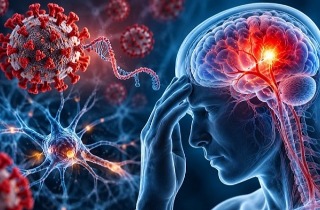
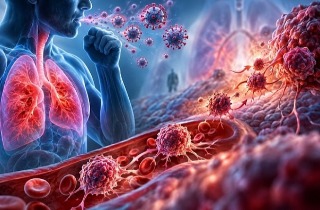
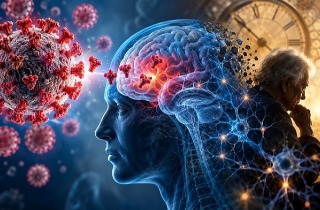
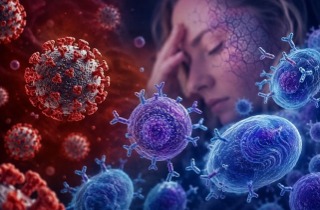
Scientists from the University of California, Riverside, United States, have discovered that human neural stem cells responsible for developing the brain and spinal cord are particularly vulnerable to SARS-CoV-2, including the Omicron BA.1 and BA.2 variants.
 New research reveals how SARS-CoV-2 variants enter developing human neural stem cells, raising concerns
about potential neurological risks during pregnancy
The findings raise concerns about possible neurological consequences when developing babies encounter the coronavirus during pregnancy, particularly during the earliest stages of nervous system formation.
Developing Brain Cells Show Greater Vulnerability
Neural stem cells originate from embryonic ectoderm, the tissue that eventually develops into the central nervous system.
Researchers compared human embryonic stem cells, ectodermal cells, and neural stem cells using specially engineered SARS-CoV-2 spike pseudoparticles.
These nonreplicating particles mimic viral entry without producing a complete infectious coronavirus.
Results showed significantly greater viral entry into neural stem cells and ectodermal cells than into undifferentiated embryonic stem cells.
Importantly, this heightened susceptibility occurred with the original SARS-CoV-2 spike protein and both Omicron variants examined.
Omicron Variants Exploit Cellular Entry Pathways
The researchers investigated how viral particles penetrate neural stem cells. They discovered that Omicron BA.1 and BA.2 primarily exploit endocytosis, a cellular process that brings external material inside cells.
Blocking this mechanism with filipin reduced viral entry by approximately 75% to 85%.
Another compound, OcTMAB, significantly reduced entry across all tested variants.
Meanwhile, inhibiting the TMPRSS2 pathway produced limited protection against Omicron, suggesting that these variants favor alternative cellular entry mechanisms.
These findings identify potential targets for future antiviral research, although the compounds have not been established as treatments.
Protective Sugar Layer Influences Infection
Another important discovery involved the glycocalyx, a protective coating of sugars and proteins covering cell surfaces.
Neural stem cells possess a relatively sparse glycocalyx, potentially leaving viral attachment sites more accessible.
When researchers enzymatically removed surface sugars, pseudoparticle entry increased approximately twofold to fourfold.
The effect was particularly pronounced with Omicron BA.1, while BA.2 showed a smaller but significant response.
This
Thailand Medical News report highlights how cellular surface characteristics may influence the vulnerability of developing nervous tissue to coronavirus exposure.
ng>Potential Implications for Children Exposed During Pregnancy
Previous research has documented maternal-to-fetal SARS-CoV-2 transmission. The investigators also referenced a large health-record study associating maternal infection with increased neurodevelopmental diagnoses by age three.
That study reported an adjusted odds ratio of 1.29, indicating approximately 29% higher odds.
However, the present laboratory experiments did not establish that SARS-CoV-2 causes neurological damage in developing babies.
Conclusions
The findings demonstrate that developing human neural stem cells are unusually susceptible to SARS-CoV-2 spike-mediated entry, particularly through pathways exploited by Omicron variants. Although actual fetal neurological injury remains unproven, the research supports further investigations and long-term developmental monitoring of children exposed to maternal COVID-19 infection.
The study findings were published in the peer-reviewed journal: PLOS ONE.
https://journals.plos.org/plosone/article?id=10.1371/journal.pone.0360734
Read Also:
https://www.thailandmedical.news/articles/coronavirus
https://www.thailandmedical.news/articles/long-covid




 Share
 Tweet
 Share