Nikhil Prasad Fact checked by:Thailand Medical News Team Feb 15, 2026 6 months, 2 weeks, 1 day, 12 hours, 23 minutes ago
Thailand Medical: Ancient herbal remedy gains powerful modern scientific validation
Licorice, a plant long used in traditional medicine, is now gaining renewed attention from modern science after researchers discovered that special compounds extracted from it can significantly repair intestinal damage caused by ulcerative colitis. Ulcerative colitis is a painful chronic disease that causes inflammation, ulcers, bleeding, and damage to the inner lining of the colon. Current treatments often rely on steroids and immune-suppressing drugs, which can have serious side effects and do not always work effectively.
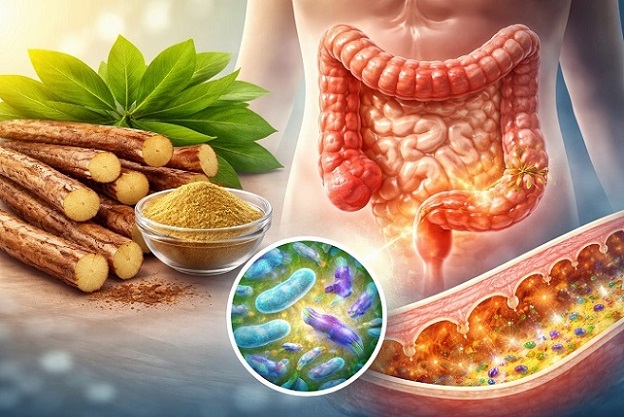 Natural licorice compounds demonstrate powerful healing effects on inflamed intestinal tissue and gut bacteria balance
In a groundbreaking study conducted by scientists from the School of Food Science and Pharmaceutical Engineering at Nanjing Normal University, the Institute of Food Safety and Nutrition at Jiangsu Academy of Agricultural Sciences, and the School of Environmental Science and Engineering at Tianjin University in China, researchers investigated whether licorice flavonoid extract could provide a safer and more natural treatment option. This
Thailand Medical News report highlights how the natural extract demonstrated remarkable healing effects by reducing inflammation, restoring gut balance, and repairing damaged intestinal tissue.
Dramatic reduction in intestinal damage and disease symptoms
The study used a well-established mouse model of ulcerative colitis, where inflammation and intestinal injury were induced using a chemical irritant. The mice treated with licorice flavonoid extract showed major improvements compared to untreated animals. One of the most visible signs of improvement was the restoration of colon length. Shortened colon length is a clear indicator of severe inflammation, but mice receiving the licorice extract had significantly less shortening, suggesting reduced damage.
Microscopic examination revealed that the extract protected intestinal tissue from structural damage. Normally, ulcerative colitis causes destruction of the intestinal lining, loss of protective cells, and invasion by inflammatory immune cells. However, licorice extract helped preserve tissue structure and reduce harmful immune cell infiltration.
The treated mice also showed lower levels of inflammatory molecules such as TNF-alpha and interleukin-6. These molecules are known to worsen inflammation and tissue injury in ulcerative colitis patients. By lowering these inflammatory signals, the extract helped calm the immune system and prevent further damage.
Powerful anti-inflammatory action at the molecular level
The researchers found that licorice flavonoid extract worked by blocking key biological pathways that drive inflammation. Specifically, the extract suppressed the MAPK and NF-kappaB signaling pathways, which are known to trigger excessive immune reactions. These pathways normally activate genes that promote inflammation, tissue destruction, and immune system overactivity.
At the same time, the extract increased activity of a protective protein called PPAR-gamma, whi
ch helps regulate immune balance and reduce inflammation. This dual action—blocking harmful signals while activating protective ones—explains why licorice extract was so effective at reducing disease severity.
Chemical analysis revealed at least 29 flavonoid compounds in the extract, including glycyrrhizin, liquiritigenin, glycycoumarin, and licorisoflavan. These natural compounds are believed to work together to produce the strong healing effect.
Gut bacteria restoration plays a crucial role
Another major discovery was that licorice flavonoid extract helped restore healthy gut bacteria. Ulcerative colitis often disrupts the natural balance of bacteria in the digestive system, worsening inflammation and slowing healing.
The study found that licorice extract increased beneficial bacterial groups such as Bacteroidetes and Firmicutes, which are essential for maintaining gut health and supporting immune balance. Restoring these bacteria helped improve intestinal healing and reduce inflammation.
This finding is especially important because gut bacteria are now known to play a central role in digestive health, immunity, and disease progression.
Conclusions
This study provides compelling scientific evidence that licorice flavonoid extract can effectively reduce inflammation, repair intestinal damage, and restore gut microbial balance in ulcerative colitis. By targeting multiple disease mechanisms simultaneously—including immune overactivation, tissue injury, and microbiome disruption—the extract offers a comprehensive and natural approach to disease management. These findings suggest licorice-based compounds could eventually become safer alternatives or complementary treatments for patients suffering from chronic inflammatory bowel diseases. However, further clinical trials in humans will be necessary before widespread medical use can be recommended.
The study findings were published in the peer reviewed journal: Foods.
https://www.mdpi.com/2304-8158/15/4/716
For the latest on Herbs and Phytochemicals, keep on logging to
Thailand Medical News.
Read Also:
https://www.thailandmedical.news/articles/herbs-and-phytochemicals
https://www.thailandmedical.news/articles/gastroenterology




 Share
Share
 Tweet
Tweet
 Share
Share

































