SARS-CoV-2 New Variants Found to Boost Endocytic Entry While Keeping Fusion Intact
Nikhil Prasad Fact checked by:Thailand Medical News Team Jan 14, 2026 8 months, 3 weeks, 6 minutes ago
Medical News: Omicron’s New Trick Revealed
In a discovery that adds a surprising twist to the ongoing evolution of SARS-CoV-2, German scientists from the University Hospital Regensburg, the University of Regensburg, and the Leibniz Institute for Immunotherapy have shown that newer Omicron subvariants are getting better at using an alternative doorway to enter human cells. The research team analyzed nine real patient isolates collected from 2020 to 2022, tracing how the virus has gradually shifted toward more efficient endocytic entry while still holding on to its original TMPRSS2-driven fusion pathway. Their findings provide fresh insights into why Omicron spreads so easily yet often causes milder symptoms in healthy individuals.
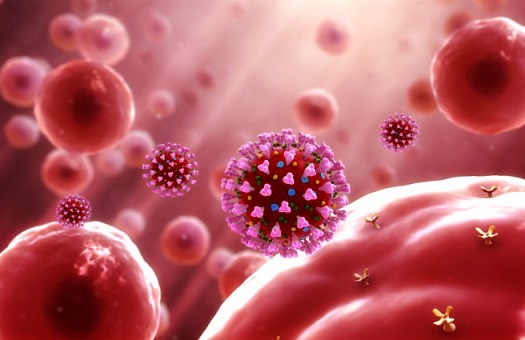 New research shows Omicron subvariants are improving their ability to enter cells through
endocytosis while maintaining older fusion pathways
This
Medical News report highlights how this dual-entry ability may offer the virus a powerful evolutionary advantage—especially in the upper airways where Omicron thrives.
How the Virus Gets Inside Cells
SARS-CoV-2 can enter human cells in two major ways.
-Direct membrane fusion relies on the enzyme TMPRSS2. This pathway was heavily used by early variants like Alpha and Delta.
-Endocytosis, however, is a slower but more flexible route that depends on cathepsin enzymes inside the cell.
Using four human cell lines including Calu-3, Caco-2, A549hACE2+/TMPRSS2+ and HEK293T, the researchers tested how each variant responded to two inhibitors:
• Camostat, which blocks TMPRSS2-mediated fusion
• Aloxistatin, which blocks cathepsin-driven endocytosis
Detailed findings charts show that earlier variants were mostly stopped by camostat, proving strong reliance on TMPRSS2. Omicron strains, however—especially BE.1.1 and BA.5.1—were much more sensitive to aloxistatin, revealing a clear shift toward endocytic uptake.
Mutations That Shift the Balance
The study identified key spike-protein mutations common to the endocytosis-favoring strains:
• D69/D70 deletion
• L452R substitution
• F486V substitution
According to the study findings, these precise changes co-occur in BE.1.1 and BA.5.1—the two strains that replicated well in endocytosis-dominant HEK293T cells.
The researchers also found evidence that a mutation in the M protein, D3N, which is typical of BA.4/BA.5 lineages, may further enhance endocytic entry.
What This Means for Public Health
The study suggests SARS-CoV-2 has not abandoned its original entry route. Instead, it has expanded its toolkit. Omicron still uses TMPRSS2-dependent fusion, meaning it can still infect lower-lung
cells—an ongoing risk for the elderly and immunocompromised. But its enhanced endocytic entry likely boosts replication in the upper airways, driving higher transmissibility.
Conclusion
The findings reveal that SARS-CoV-2 continues to evolve in ways that optimize both spread and survival. By preserving its fusion-based entry while strengthening endocytic uptake, Omicron has broadened its cell tropism and enhanced its ability to infect a wider range of tissues. This dual strategy helps explain why the virus remains highly transmissible, adaptable and persistent. Continued monitoring is essential, especially as new variants build upon this expanding entry toolkit and potentially reshape future infection patterns.
The study findings were published in the peer reviewed journal: Frontiers in Immunology.
https://www.frontiersin.org/journals/immunology/articles/10.3389/fimmu.2025.1736891/full
For the latest COVID-19 News, keep on logging to Thailand
Medical News.
Read Also:
https://www.thailandmedical.news/articles/coronavirus




 Share
Share
 Tweet
Tweet
 Share
Share

































