Many Exposed to COVID-19 Continue to Exhibit Elevated Levels of Inflammatory Molecules and Matrix Metalloproteinases
Nikhil Prasad Fact checked by:Thailand Medical News Team Jun 13, 2026 3 months, 3 weeks, 2 hours, 34 minutes ago
Medical News: Although the acute phase of the COVID-19 pandemic has largely faded from public attention, scientists are continuing to uncover evidence that the virus leaves behind lasting biological effects in many individuals. A new study has revealed that people who experienced severe COVID-19 can continue to show elevated levels of inflammatory molecules and tissue-remodeling enzymes for as long as one year after their initial infection, raising concerns about the long-term impact of the disease on overall health.
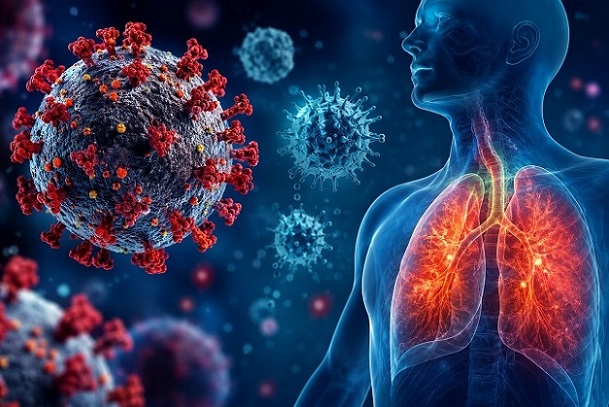 Severe COVID-19 survivors were found to harbor persistent inflammation and elevated tissue-remodeling enzymes
for up to one year after infection
Researchers from the Laboratory of Molecular Analysis at the University of Brasília, the Laboratory of Muscle and Tendon Plasticity at the University of Brasília, the Faculty of Health Sciences and Technologies at the University of Brasília, the Molecular Oncology Research Center at Barretos Cancer Hospital in Brazil, the Laboratory of Immunology and Inflammation at the University of Brasília, the Universidad de Santander in Colombia, and the Department of Physical Education at the University of Brasília conducted an extensive year-long investigation to better understand how the body responds after recovering from moderate and severe COVID-19.
A One-Year Follow-Up of COVID-19 Survivors
The study followed adults between 18 and 80 years of age who had previously been diagnosed with either moderate or severe COVID-19. Researchers also included a control group consisting of individuals who had not been infected or remained asymptomatic during the pandemic.
Blood samples were collected at four separate time points spanning up to 360 days after symptom onset or hospital discharge. The scientists analyzed numerous biological markers associated with inflammation, immune function, blood cell activity, tissue repair, and organ health.
Particular attention was given to inflammatory cytokines and matrix metalloproteinases (MMPs), enzymes known to regulate tissue remodeling and repair. Excessive activity of these enzymes has been linked to chronic inflammation, organ damage, cardiovascular disease, and lung disorders.
Persistent Inflammation Detected Long After Recovery
One of the study's most important findings was the persistence of elevated inflammatory markers among individuals who had experienced severe COVID-19.
The researchers found significantly increased levels of inflammatory cytokines including interleukin-6 (IL-6), interleukin-8 (IL-8), and interleukin-1 beta (IL-1β).
These molecules are part of the body's immune response and are normally produced during infection to help fight invading pathogens. However, prolonged elevation may indicate ongoing immune activation and chronic inflammation.
High-sensitivity C-reactive protein (hs-CRP), another important marker associated with systemic inflammation and cardiovascular risk, also remained elevated in severe COVID-19 survivors throughout much of the one
-year observation period.
The findings suggest that even after the virus has been cleared, the immune system in some individuals remains in a heightened state of activity.
Immune System Imbalances Continue for Months
The study also revealed persistent abnormalities in white blood cells and immune-related blood markers.
Patients who had severe COVID-19 continued to show higher numbers of neutrophils and monocytes compared to individuals who experienced moderate illness or had never been infected. These immune cells play essential roles in inflammation and defense against infections.
Several blood-derived inflammation indices remained elevated as well. These included the Aggregate Index of Systemic Inflammation (AISI), the Systemic Inflammatory Response Index (SIRI), the Systemic Immune-Inflammation Index (SII), the C-reactive protein-to-lymphocyte ratio, and the neutrophil-to-platelet ratio.
Such indices are increasingly being used by physicians and researchers as indicators of chronic inflammation and immune dysfunction. Their continued elevation nearly one year after infection suggests that severe COVID-19 may produce long-lasting disturbances throughout the body's immune system.
Matrix Metalloproteinases Remain Elevated
Perhaps the most striking discovery involved matrix metalloproteinases, particularly MMP-2 and MMP-9.
These enzymes are responsible for breaking down and rebuilding components of tissues throughout the body. Under normal conditions they help maintain healthy tissue repair. However, when excessively activated, they can contribute to tissue destruction, fibrosis, blood vessel damage, and chronic inflammation.
Researchers observed sustained elevations in both MMP-2 and MMP-9 among individuals who had experienced severe COVID-19. The persistence of these enzymes suggests that tissue remodeling processes continue long after recovery from the acute infection.
Scientists believe these abnormalities may help explain why some COVID-19 survivors continue to experience lingering health issues involving the lungs, cardiovascular system, and other organs months after infection.
Changes in Red Blood Cells Were Also Observed
The investigation uncovered several alterations in red blood cell measurements as well.
Individuals recovering from severe COVID-19 initially displayed lower hemoglobin and hematocrit levels, indicating reduced oxygen-carrying capacity. Although these values gradually improved over time, another important marker known as red cell distribution width (RDW) remained significantly elevated throughout the follow-up period.
Elevated RDW has previously been associated with chronic inflammation, cardiovascular disease, and poorer clinical outcomes in a variety of medical conditions. The continued presence of this abnormality further supports the theory that severe COVID-19 may trigger long-term biological changes.
Meanwhile, kidney function markers, liver enzymes, and indicators of muscle damage remained relatively stable across the study groups, suggesting that the most pronounced long-term effects were concentrated within inflammatory and immune pathways.
Implications for Long-Term Health
This
Medical News report highlights the growing body of evidence suggesting that COVID-19 is far more than a short-term respiratory infection for many individuals.
The persistence of inflammatory cytokines, immune abnormalities, and elevated matrix metalloproteinases nearly one year after infection indicates that biological recovery may take much longer than previously believed.
The researchers emphasized that their study focused on biological markers rather than symptom-based diagnoses of long COVID. Nevertheless, the findings provide valuable clues regarding the mechanisms that may contribute to ongoing health issues reported by many COVID-19 survivors. Future studies may determine whether these biomarkers can be used to identify individuals at increased risk for long-term complications and guide the development of targeted therapies.
Conclusion
The study demonstrates that severe COVID-19 can leave behind a lasting inflammatory and tissue-remodeling signature that remains detectable for at least one year after infection. Elevated inflammatory cytokines, persistent immune system abnormalities, increased blood-based inflammatory indices, and sustained activity of MMP-2 and MMP-9 collectively point toward ongoing biological disturbances long after apparent recovery. These findings reinforce concerns that severe COVID-19 may initiate chronic processes affecting multiple organ systems. Continued monitoring of survivors and further investigation into the mechanisms driving these abnormalities will be essential for developing strategies to reduce long-term health consequences and improve outcomes for those affected by severe COVID-19.
The study findings were published in the peer reviewed journal: Frontiers in Medicine.
https://www.frontiersin.org/journals/medicine/articles/10.3389/fmed.2026.1824883/full
For the latest COVID-19 news, keep on logging to Thailand
Medical News.
Read Also:
https://www.thailandmedical.news/articles/coronavirus
https://www.thailandmedical.news/articles/long-covid




 Share
Share
 Tweet
Tweet
 Share
Share

































