Nikhil Prasad Fact checked by:Thailand Medical News Team Apr 17, 2026 5 months, 2 weeks, 4 days, 9 hours, 44 minutes ago
Medical News:
Scientists Identify a Critical Weakness in Coronaviruses
In a major scientific advance, researchers have uncovered a hidden vulnerability shared by multiple coronaviruses, including SARS-CoV-2. The breakthrough centers on a human cell protein called GRAMD1C, which appears to play a crucial role in helping viruses replicate inside the body.
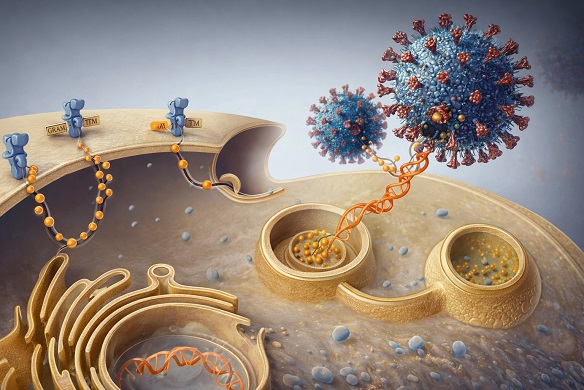 Scientists uncover how a human cholesterol transport protein enables coronaviruses to replicate, opening
the door to new treatments
The research was conducted by scientists from the State Key Laboratory of Agricultural Microbiology, College of Veterinary Medicine at Huazhong Agricultural University in Wuhan, the Key Laboratory of Preventive Veterinary Medicine in Hubei Province, the Cooperative Innovation Center for Sustainable Pig Production, the University of Science and Technology of China in Hefei, and several affiliated national research laboratories in China.
What Is GRAMD1C and Why It Matters
GRAMD1C is a protein found inside human cells that helps move cholesterol from one part of the cell to another. Cholesterol is often thought of as something harmful in the bloodstream, but inside cells it plays an essential role in maintaining the structure and flexibility of membranes.
This protein acts like a transporter, ensuring that cholesterol reaches the right locations within the cell, particularly the endoplasmic reticulum, which is a key structure involved in protein production and cellular organization.
The study reveals that viruses exploit this natural transport system. By using GRAMD1C, coronaviruses redirect cholesterol to specific areas where they build their replication machinery. Without this protein, the virus loses access to an essential resource it needs to multiply.
How Coronaviruses Build Their Replication Centers
Once inside a cell, coronaviruses create specialized compartments known as double membrane vesicles. These structures function as protected environments where the virus can copy its genetic material while staying hidden from the immune system.
The research shows that GRAMD1C is directly involved in forming these compartments. It supplies cholesterol that helps shape and stabilize the membranes required for these viral replication centers.
When GRAMD1C is functioning normally, the virus is able to build fully formed vesicles and replicate efficiently. When it is disrupted, the entire process breaks down.
Blocking GRAMD1C Stops Viral Growth
To test the importance of GRAMD1C, researchers removed or inhibited the protein in infected cells. The results were clear. Viral replication dropped significantly across several coronavirus strains, including both human and animal viruses.
Microscopic analysis showed that viruses could no longer form proper replication structures. Instead of complete vesicles, only incomplete or damaged membrane shapes were observed, which prevented efficient viral multiplication.
This
s/">Medical News report highlights that disrupting this single protein can severely weaken the virus.
A Potential Broad-Spectrum Treatment
The scientists also tested a compound called 20 alpha hydroxycholesterol, which blocks the activity of GRAMD1C. When applied to infected cells, the compound reduced viral replication in a dose dependent manner.
What makes this finding particularly important is its broad effectiveness. The compound was able to suppress multiple types of coronaviruses, suggesting that targeting GRAMD1C could lead to treatments that work against a wide range of current and future viral threats.
Evidence from Animal Studies Strengthens the Findings
To further validate the results, the researchers conducted experiments in mice. Animals with reduced levels of GRAMD1C showed milder disease symptoms, lower viral loads, and improved survival after infection.
Mice treated with the inhibitor also experienced less tissue damage and slower disease progression. These findings indicate that targeting GRAMD1C could be a viable strategy not just in laboratory settings but also in living organisms.
Cholesterol Transport Emerges as a Key Factor
The study also highlights the surprising importance of cholesterol in viral replication. Viruses actively redirect cholesterol within cells to build their replication compartments.
Even when extra cholesterol was added, the virus could not effectively use it without GRAMD1C. This shows that proper transport and delivery of cholesterol, rather than just its presence, is essential for viral survival.
Conclusion
This discovery reveals a new way to combat coronaviruses by targeting the host cell processes they depend on instead of the virus itself. By focusing on GRAMD1C, scientists may develop treatments that remain effective even as viruses mutate and evolve. The findings point toward a powerful and flexible antiviral strategy that could help reduce the severity of future outbreaks. While further research is needed before clinical applications become available, the evidence strongly supports GRAMD1C as a promising target for next generation antiviral therapies.
The study findings were published in the peer reviewed journal: PLOS Biology.
https://journals.plos.org/plosbiology/article?id=10.1371/journal.pbio.3003736
For the latest on antivirals for coronaviruses, keep on logging to
Thailand Medical News.
Read Also:
https://www.thailandmedical.news/articles/coronavirus




 Share
Share
 Tweet
Tweet
 Share
Share